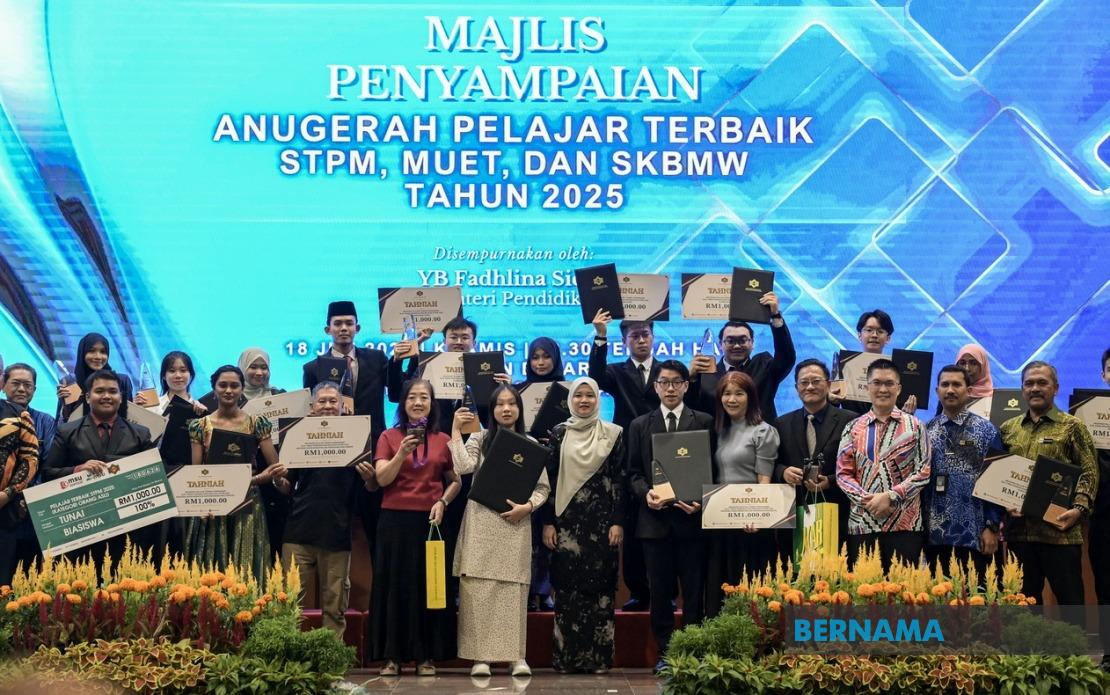
Eighteen of Malaysia's most accomplished pre-university graduates will benefit from a fresh scholarship initiative that marks a significant step in the government's push to revitalise the Form Six pathway. Education Minister Fadhlina Sidek unveiled the programme at an awards ceremony in Kuala Lumpur on June 18, designating it as part of a wider strategy to encourage students to pursue the Sijil Tinggi Persekolahan Malaysia (STPM) route rather than other pre-university alternatives.
The scholarships take the form of tuition fee waivers offered by the nation's public universities to outstanding STPM 2025 candidates. Fadhlina characterised the initiative as a deliberate effort to recognise and reward exceptional academic performance while simultaneously signalling institutional confidence in the Form Six model. By embedding scholarship opportunities directly within the university admission process, the government aims to create tangible incentives for top secondary students considering their educational pathways.
Public universities participating in the scheme will each nominate their selected scholars from the pool of high-achieving STPM graduates. This decentralised approach allows institutions to align their scholarship selections with their specific academic priorities and campus needs, while ensuring that elite performers across the country receive recognition. The breadth of this initiative—spanning 18 recipients across multiple universities—underscores the government's commitment to making the programme substantive rather than purely ceremonial.
The introduction of university-sponsored scholarships reflects deeper concerns about declining enrolment in Form Six programmes. Malaysia's secondary education system has long offered multiple pathways post-SPM, and competition from international qualifications and private pre-university colleges has historically drawn talented students away from public-sector alternatives. By offering financial incentives directly tied to STPM performance, the government hopes to shift perceptions and demonstrate that the traditional route remains viable and valued.
Fadhlina contextualised the scholarship announcement within a broader ecosystem of reforms intended to reinvigorate Form Six education. Expansion of Form Six College facilities, distribution of teaching technologies including smartboards, and provision of early schooling assistance all contribute to an integrated approach. The recently introduced MADANI Book Vouchers provide additional purchasing power for students acquiring educational materials, creating a comprehensive support infrastructure rather than isolated interventions.
Academic performance metrics released alongside the scholarship announcement offer encouraging signals. The 2025 STPM cohort achieved a national Cumulative Grade Point Average (CGPA) of 2.88, an improvement from the previous year's 2.85. While the incremental nature of this gain may seem modest, it indicates positive momentum in a system that has faced persistent scrutiny regarding educational quality and student readiness for tertiary study. Fadhlina positioned this improvement as validation of existing structural investments.
The timing of this scholarship initiative carries significance for Malaysia's broader educational trajectory. With government policy increasingly emphasising technical and vocational education as alternative pathways, Form Six occupies an uncertain middle ground—neither purely academic nor vocational in orientation. Scholarships that make Form Six financially attractive to high achievers help preserve this pathway and prevent its further marginalisation in the educational ecosystem. For students from middle and lower-income backgrounds, such sponsorships can be decisive in determining whether they can afford to remain in full-time education rather than entering the workforce.
The programme also reflects changing international competitiveness considerations. Regional competitors have long offered generous scholarship schemes to attract top students, and Malaysia's initiative brings the nation more into alignment with neighbouring educational systems. By visibly rewarding excellence at the national level, the government sends a message that Form Six completion and strong performance carry institutional weight and future opportunity.
For Malaysian universities, participation in this scholarship scheme requires strategic thinking about which candidates to select. Beyond pure academic ranking, institutions may consider discipline diversity, geographic representation, and alignment with their institutional missions. This discretionary selection process, while adding administrative complexity, allows universities to shape their incoming cohorts strategically and ensures scholarships reach talented individuals across various fields rather than concentrating solely among candidates pursuing science or commerce streams.
The broader educational implications warrant consideration. Scholarship programmes can create perverse incentives where top students cluster at the most prestigious universities, potentially widening disparities between well-resourced and underfunded institutions. The government will need to monitor whether this scheme inadvertently accelerates concentration of talent. Alternatively, deliberately allocating scholarships across the full spectrum of public universities could strengthen peripheral institutions and distribute excellence more equitably.
For Malaysian students and families evaluating educational options, the announcement provides clearer financial incentives for pursuing Form Six over competing pathways. The visibility of specific scholarship opportunities, combined with demonstrated performance improvements and infrastructure investments, creates a more compelling case for the traditional pre-university route. However, the scheme's ultimate success will depend on consistent implementation and sustained government commitment to the broader Form Six ecosystem rather than treating scholarships as isolated tokens.
The announcement also carries implications for educational equity. If scholarships flow predominantly to students from well-established secondary schools in urban centres, they may inadvertently reinforce existing disparities. The government should ensure transparent, merit-based selection processes and potentially implement targeted outreach to encourage high-achieving students from underrepresented regions to pursue STPM qualifications. This would maximise the transformative potential of scholarship opportunities for advancing genuine social mobility.
Looking forward, the sustainability and scalability of this initiative remain open questions. Starting with 18 scholarships in 2025 represents a modest beginning. Whether the government plans to expand the programme, increase per-recipient support levels, or extend benefits beyond tuition fees will shape its long-term impact. Clear communication regarding programme permanence and future expansion would help students make confident educational planning decisions.