Two hundred motorcyclists in Renggam have benefited from RM5 fuel vouchers distributed during the Jiwa@Komuniti MADANI Sembang Santai World Cup Edition programme held in Kluang on June 25. The initiative, spearheaded by the National Security Council, represents a targeted effort by the federal government to address the immediate cost-of-living pressures faced by commuters and working-class Malaysians who depend heavily on two-wheeled transportation for daily livelihood activities.
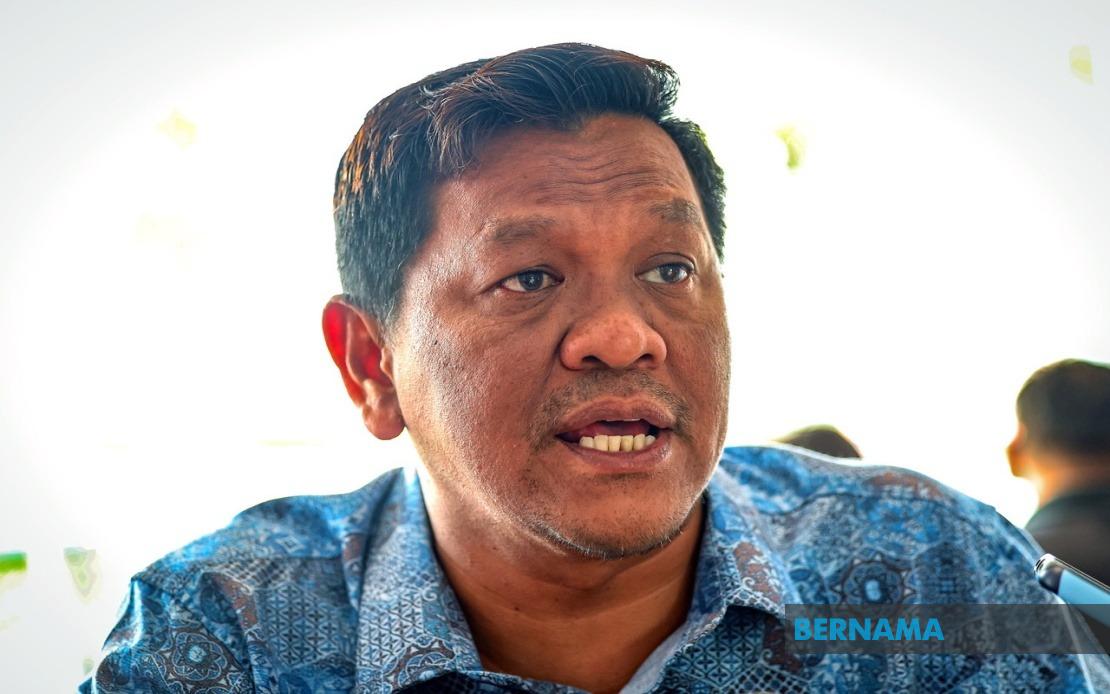
Abdullah Izhar Mohamed Yusof, political secretary to the Communications Minister, characterised the voucher distribution as a reflection of government sensitivity to grassroots economic hardship and a mechanism for reinforcing national cohesion. He framed the programme within a broader mandate to strengthen government-community relations through sustained engagement with residents at the neighbourhood level, signalling that such initiatives will recur regularly rather than function as one-off gestures. The emphasis on routine, scheduled outreach reflects an acknowledgment that sporadic assistance carries limited long-term impact on public perception or tangible relief for vulnerable segments.
Beyond the immediate financial assistance, the Renggam event incorporated several complementary components designed to enhance government communications effectiveness. Participants received briefings on contemporary policy matters alongside an interactive dialogue forum where residents could articulate local concerns and offer suggestions to government representatives. This multi-layered approach positioned the gathering as more than a simple resource distribution exercise, instead treating it as an opportunity for two-way communication between state institutions and communities. Representatives from the National Security Council, Information Department, and Department of Community Communications collaboratively facilitated the engagement.
According to Abdullah Izhar, such grassroots programmes serve a dual strategic purpose. First, they provide ordinary Malaysians with direct access to authoritative information regarding government policies and development schemes—a crucial function in an era when misinformation circulates rapidly through social media. Second, they create channels through which citizens can communicate grievances, suggestions, and feedback directly to officials, theoretically enhancing governmental responsiveness to local priorities. He underscored the government's commitment to replicating such outreach efforts across the nation, with explicit recognition that equitable information access and programme participation must extend across all demographic categories.
The programme's focus on motorcyclists is noteworthy given their economic vulnerability and numerical significance in Malaysia's transportation ecosystem. Two-wheelers remain the primary commute option for millions of Malaysian workers, particularly in semi-urban and rural zones where public transit infrastructure remains underdeveloped. Rising fuel costs disproportionately impact this segment, as motorcyclists typically operate tight household budgets without corporate fuel allowances or public transport subsidies. The RM5 voucher, while modest in absolute terms, acknowledges this specific hardship and signals government recognition of working-class transportation realities.
M. Raja, a 56-year-old recipient from Taman Sri Jaya and father of five, articulated gratitude tempered by pragmatic hope. His comment that monthly vouchers would be preferable, coupled with appreciation for the current distribution, reflects the tension between government assistance capacity and recipient aspirations. His response encapsulates broader public sentiment across Malaysia—recognition that government efforts matter, but awareness that individual support measures remain insufficient to fundamentally alter precarious economic circumstances. The fact that a grandfather-aged motorcyclist with five dependents still commutes for work underscores the persistent economic pressures affecting older, working-class Malaysians.
Hee Eeck Kwe, a 66-year-old from Kampung Baru, framed the initiative within a rural inclusion narrative. His emphasis on the government ensuring that countryside communities receive attention alongside urban counterparts reflects persistent anxieties in Malaysia's more remote areas about policy marginalisation. This perspective carries particular relevance for Southeast Asia more broadly, where rural-urban development disparities and rural communities' perception of governmental neglect remain politically significant issues. The symbolic importance of government officials personally distributing assistance in provincial areas resonates beyond immediate economic value.
The Jiwa@Komuniti MADANI framework represents an attempt to systematise grassroots engagement as a permanent governance feature rather than campaign-season activity. The inclusion of the World Cup Edition branding suggests efforts to align government communications with popular cultural moments, potentially increasing public interest and media coverage of outreach initiatives. This communications strategy reflects understanding that government messaging competes for attention within crowded media environments and requires creative hooks to penetrate public consciousness.
For Malaysian readers, the Renggam programme illustrates broader policy questions about welfare targeting and cost-of-living support. As fuel, food, and transportation costs remain politically sensitive issues, governments face pressure to provide visible relief while managing fiscal constraints. Voucher-based assistance offers advantages over universal fuel subsidies—it targets specific populations and can be calibrated according to perceived need—but individual recipients' comments suggest such measures remain insufficient to address underlying economic precarity.
The initiative also reflects regional trends across Southeast Asia toward greater government-community interface, often mediated through social programmes and information dissemination. Malaysia, Indonesia, and other regional economies face similar challenges regarding urban-rural equity, working-class welfare, and effective communication of government initiatives. The Renggam model, emphasising dialogue and targeted assistance distribution, may inform approaches elsewhere in the region.
Moving forward, the sustainability and expansion of such programmes will merit monitoring. Whether promised regular repetition materialises, how voucher values adjust to inflation, and whether assistance eventually expands to other transport-dependent workers will indicate government commitment beyond initial announcements. For vulnerable populations already struggling with household expenses, such programmes offer tangible if temporary respite, yet structural economic challenges require complementary policies addressing wage levels, employment security, and broader cost-of-living pressures.

