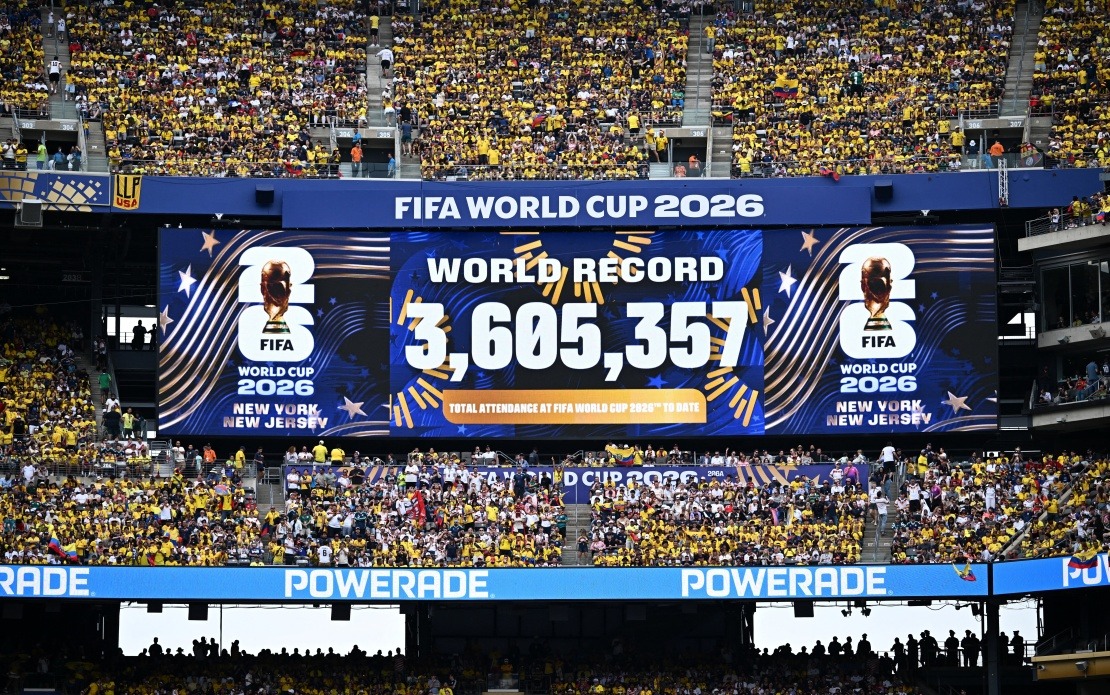
The 2026 FIFA World Cup has achieved a historic milestone in global sporting attendance, becoming the most-watched tournament in the competition's 96-year history. The landmark was reached during Germany's match against Ecuador in East Rutherford, New Jersey, when the accumulated spectator count exceeded 3.6 million—surpassing the previous record of approximately 3.6 million set when the United States hosted the tournament in 1994. The achievement was announced publicly on the stadium's giant screens, drawing enthusiastic applause from fans witnessing the moment firsthand.
What makes this record particularly remarkable is the timing of its achievement relative to the tournament's progression. With 48 matches still remaining to be played in the competition, organisers and FIFA officials project that total attendance could potentially reach nearly double the 1994 benchmark. This trajectory underscores the sustained momentum and widespread interest in the competition across all 16 host nations, suggesting that the final attendance figures will represent an unprecedented level of global engagement with the tournament.
The 1994 World Cup, which previously held the attendance crown, unfolded across 52 matches throughout its duration. The 2026 edition, by contrast, features an expanded format and geographical reach that distributes matches across multiple regions and stadiums. This structural difference, combined with the tournament's distribution across 16 host cities in the United States, Canada, and Mexico, has created multiple significant sporting destinations and allowed fans across a broader geographic area to access matches in their respective regions.
Stadium capacity utilisation throughout the 2026 tournament has been exceptional, with venues operating at an average occupancy rate exceeding 99 percent. This figure demonstrates not merely high attendance numbers but sustained demand and enthusiasm throughout the competition, indicating that the tournament is drawing substantial crowds across all fixture categories—from group-stage matches to knockout rounds. Such consistent capacity utilisation is a testament to the organisational infrastructure and the appeal of the tournament across diverse fan bases.
The expansion of the World Cup format from the traditional 32 teams to 48 teams has fundamentally altered the competition's scope and reach. This structural change necessitated additional matches and created opportunities for more nations to participate, thereby broadening the geographic base of potential supporters. The tournament's distribution across 16 host cities—itself an unprecedented number—has enabled fans from different regions to engage with matches without requiring significant travel, thereby reducing barriers to attendance and increasing accessibility for spectators.
FIFA President Gianni Infantino commented on the record-breaking achievement, framing it within the broader context of football's cultural significance and its capacity to unite diverse populations. Infantino emphasised that the tournament exemplifies the sport's universal appeal and its power to create moments of collective celebration and shared experience across national and cultural boundaries. The president highlighted that the scenes observed across the various stadiums and host cities throughout the tournament have been distinctive in character, reflecting the particular enthusiasm and community engagement present in each location.
The geographic distribution of the tournament across three nations—the United States, Canada, and Mexico—has created distinct regional narratives and fan engagement patterns. This continental approach differs markedly from traditional World Cups hosted by single nations, allowing North American fans across a vast territory to participate without requiring international travel. The accessibility factor has demonstrably contributed to the unprecedented attendance figures, as spectators from local and regional areas have been able to access matches at nearby venues.
For Malaysian and Southeast Asian sports observers, the 2026 World Cup's attendance success offers insights into football's enduring commercial viability and cultural resonance globally. While Asian nations have not significantly contributed to the tournament's host duty, the region's footballing community watches with interest as the sport continues to expand its reach and commercial dimensions. The attendance records suggest that major football events retain substantial revenue-generating potential, a consideration relevant to Asia's own aspirations for hosting future continental and global tournaments.
The tournament's success in drawing record crowds also reflects broader patterns in sports consumption and fan behaviour in North America. The combination of expanded team participation, multiple host cities, and increased match frequency has created a diverse array of attendance opportunities, catering to varied schedules and geographic locations of potential spectators. This market-oriented approach to tournament distribution has proven commercially successful, validating FIFA's strategic decision to expand the competition's format and geographic scope.
As the 2026 tournament progresses toward its conclusion, attention will focus on whether the record-breaking attendance trajectory continues throughout the remaining matches. The knockout stages, which typically command greater spectator interest than group matches, could potentially accelerate the accumulation of total attendance figures. The final attendance statistics, once the tournament concludes, will provide comprehensive data regarding fan engagement levels and may influence future decisions regarding tournament formats, host nation selection, and competitive structures in subsequent World Cup iterations.

