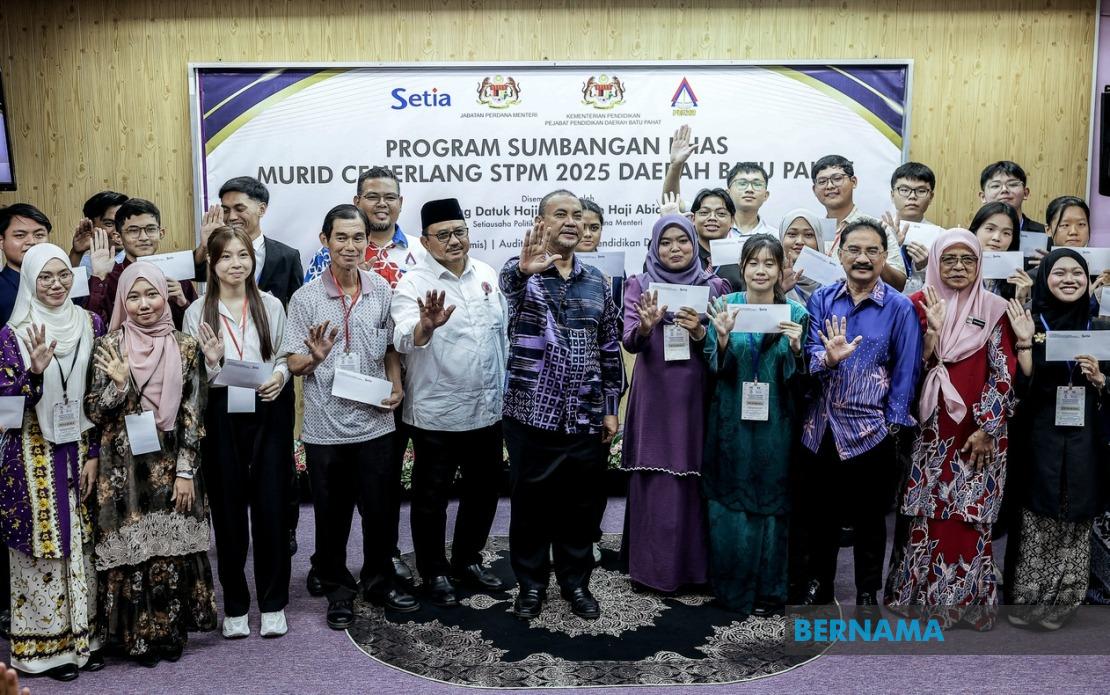
Two hundred and fourteen exceptional students who achieved distinction in this year's Sijil Tinggi Persekolahan Malaysia (STPM) examination have been recognized with special contributions awarded by the Prime Minister's Office during a ceremony held at the Batu Pahat District Education Office. The initiative, which drew together accomplished graduates from 16 secondary schools throughout the district, represents a targeted effort to celebrate scholastic achievement while providing tangible support as these students contemplate their educational futures.
Datuk Azman Abidin, serving as Political Secretary to the Prime Minister, unveiled the programme at the 2025 STPM Top Achievers Award Ceremony, explaining that the contributions constitute more than symbolic recognition. Rather, the government initiative attempts to galvanize recipients toward sustained academic performance and inspire their peers to commit to similar excellence. By extending financial support during a critical juncture in students' educational journeys, the scheme addresses practical concerns that often accompany the transition from secondary to tertiary study.
According to Azman, the government envisages this recognition programme as a sustainable initiative rather than a singular event, contingent upon budgetary availability. Officials have signalled ambitions to extend the scheme geographically, suggesting plans to replicate the programme across additional districts and constituencies nationwide. This expansion trajectory indicates official belief in the model's effectiveness at reinforcing the connection between government and educational achievement, whilst demonstrating institutional commitment to nurturing Malaysia's emerging talent pool.
The contributions themselves serve a dual purpose within the government's educational philosophy. Beyond rewarding demonstrated excellence, the scheme functions as a deliberate gesture signalling state investment in student empowerment and meritocratic recognition. By channelling resources directly toward high achievers, the initiative underscores government messaging around prioritizing education as a national development cornerstone and acknowledging individual effort within the formal schooling system.
Among the recipients was Afida Auni Airulnizam, a 20-year-old graduate from Sekolah Menengah Kebangsaan Tun Sardon in Rengit. Upon receiving her contribution, Afida articulated appreciation for both the financial assistance and the psychological validation that public recognition provided. She emphasized how the award functioned as meaningful encouragement as she contemplates her forthcoming academic trajectory, where she hopes to secure university placement in sports science programmes. Her aspiration draws inspiration from her older brother's university experience, establishing a family pattern of tertiary pursuit that the contribution now actively supports.
Another recipient, Muhd Ammar Firdaus Mohd Fadzil, a 20-year-old former student of SMK Tun Ismail, similarly highlighted the practical dimensions of the contribution scheme. He acknowledged that financial relief during preparation for higher education represented genuine assistance, particularly for families managing multiple expenses associated with university applications, entrance examinations, and preliminary studies. His response underscores how such governmental initiatives address material anxieties that accompany educational advancement, potentially removing barriers that otherwise might impede talented students from pursuing tertiary qualifications.
The Batu Pahat district programme reflects broader Malaysian governmental strategies aimed at talent development and educational accessibility. By targeting high performers specifically, authorities attempt to create demonstration effects wherein recognition of excellence motivates broader student cohorts. The involvement of 16 secondary institutions across the district suggests systematic identification processes, ensuring that the scheme captures academic achievers across diverse school environments rather than concentrating recognition within a limited subset of institutions.
For Malaysian readers and regional observers, this initiative carries implications regarding how Southeast Asian nations approach meritocratic incentivization within formal education systems. The recognition scheme aligns with government narratives emphasizing human capital development as essential to national economic competitiveness. By publicly celebrating STPM success and providing financial encouragement toward tertiary participation, Malaysia signals policy commitment to converting secondary achievement into sustained academic advancement.
The expansion ambitions articulated by Azman suggest recognition that centralizing such programmes within single districts limits their cumulative motivational impact. Nationwide implementation would create more comprehensive frameworks for acknowledging excellence and could reshape student perceptions regarding government investment in their futures. However, successful scaling depends upon sustained budgetary commitment and administrative capacity to identify and process recipients across diverse institutional landscapes.
Looking forward, the programme's sustainability hinges upon consistent funding allocation and political continuity. Educational policy shifts frequently accompany electoral changes, potentially affecting discretionary schemes lacking statutory foundation. Nevertheless, the current initiative demonstrates official acknowledgement that symbolic recognition combined with material support can meaningfully influence student trajectories, particularly during psychologically significant moments when examination success transitions into tertiary decision-making.

