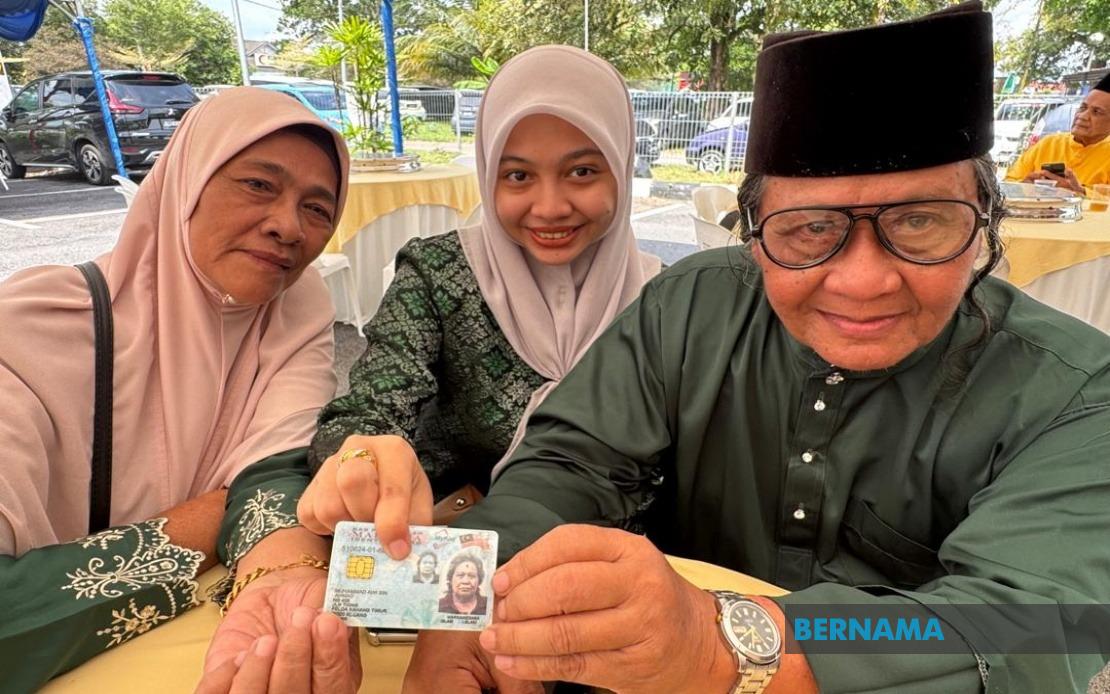
A milestone moment arrived in Johor's farming communities this month when the state government formally handed over land ownership titles to thousands of Felda settlers, providing long-overdue certainty to families who have cultivated their plots for generations. The Johor Felda Settlers Land Title Handover Ceremony, held at Dewan Dato' Onn in Kluang, distributed titles to 210 recipients across three districts—Kluang, Kota Tinggi and Mersing—marking a symbolic turning point for a population that has endured decades of bureaucratic limbo. For Muhammad Awi Ahmad, now 75 years old, the timing could not have been more personal: he received his title on his birthday, capping a journey that began when he started farming the land in 1986 and filed his first ownership application fourteen years later.
The resolution of this land tenure issue represents more than a administrative completion for these settlers. Muhammad Awi's experience encapsulates the frustration that has plagued Felda communities: his initial applications in 1990 and 2000 were rejected, leaving him in a state of perpetual uncertainty about assets he had invested decades developing. Under the administration of Menteri Besar Datuk Onn Hafiz Ghazi, the process has accelerated dramatically, with applications now being processed within approximately a year. This shift signals a genuine policy reorientation within the Johor state government, moving from the historical inertia that characterised earlier decades to a more responsive approach toward settler grievances.
The scale of this resolution is substantial. Data released alongside the ceremony reveals that 99.9 per cent of Felda settlers in Johor who submitted applications—27,639 out of 27,642—have now received their titles. This near-universal achievement distinguishes Johor among Malaysia's states and suggests that a systematic approach to clearing the backlog has proven effective. The remaining handful of unresolved cases likely involve complex disputes or documentation issues rather than policy barriers. For a population that represents a significant portion of Johor's agricultural workforce and rural society, this represents the formal recognition of their property rights and economic stake in the state's development.
The second generation of settlers brings a different but equally compelling perspective to this resolution. Norliyani, daughter of Muhammad Awi and herself now 25 years old, articulates a concern that extends beyond her father's generation. She emphasises that while first-generation settlers retain ties to ancestral villages and could theoretically relocate, the younger cohorts have grown up in Felda communities and regard them as home. This generational dimension is critical to understanding why the land title issue mattered so profoundly: without formal ownership, these families faced the prospect of displacement or loss of inheritance. Norliyani's point that unresolved tenure uncertainty would continue cascading through subsequent generations frames the stakes clearly—this was not merely about the current generation's security but about whether families could build sustainable long-term futures in their communities.
The practical implications for family continuity and economic planning have been substantial. Mohd Farhan Mohamad's case illustrates how the absence of titles created multigenerational paralysis. His father, Mohamad Masek, began farming in the 1980s, yet it took nearly twenty years for his son to initiate the formal application process, and another fifteen years before approval. During that interval, the family operated under constant threat of non-recognition, unable to leverage the land for formal credit, unable to bequeath it with legal certainty, and unable to plan investments with confidence. The approval of Mohd Farhan's application this year, after a submission the previous year, demonstrates how streamlined processes can resolve longstanding problems once administrative will is mustered.
The historical context of this resolution underscores its significance for regional policy. Federal Land Development Authority (Felda) schemes have been foundational to Malaysia's rural development strategy since their inception in the 1950s, yet the question of settler ownership has remained contentious and administratively unresolved for decades. Johor's near-complete resolution of its settler land title backlog establishes a template that other states administering Felda schemes could emulate. The process reveals that the barrier has not been legal complexity—land title issuance procedures are well-established—but rather bureaucratic prioritisation. Menteri Besar Hafiz's intervention suggests that treating this as a governance priority, rather than a routine administrative matter, can accelerate resolution substantially.
For Malaysian economic policy, the distribution of these titles carries implications for rural wealth accumulation and intergenerational asset transfer. Felda settlers have historically occupied a particular niche in Malaysia's social structure—neither fully proletarianised agricultural workers nor independent landholders with unambiguous property rights. Title formalisation shifts settlers toward clearer property rights and creates potential for credit access, inheritance planning, and economic decision-making based on actual ownership rather than precarious occupancy. For younger-generation settlers like Norliyani, this formalisation could enable investments in education, business diversification, or land improvement that had been impossible while tenure remained uncertain. The economic multiplier effects of 27,600 families gaining formal property rights should not be underestimated.
The regional significance extends to Southeast Asia's broader agricultural development challenges. Countries across the region grapple with similar land tenure issues, particularly in smallholder farming communities. Malaysia's resolution of its Felda settler title backlog offers a case study in how sustained administrative focus can address seemingly intractable distribution problems. The relatively rapid processing times now being achieved—roughly one year per application—could serve as a benchmark for other jurisdictions attempting to formalise land rights among dispersed rural populations. Johor's experience suggests that the constraint is typically political will and administrative coordination rather than technical complexity.
The handover ceremony itself functioned as both practical administration and symbolic affirmation of settler status. That Menteri Besar Hafiz personally attended and oversaw the distribution of titles signals official recognition that settlers are not merely beneficiaries of historical schemes but rightful property owners meriting state affirmation. This symbolic dimension matters for community morale and confidence in government responsiveness. For settlers who have experienced decades of bureaucratic runaround, the physical receipt of land titles represents not just legal recognition but emotional vindication of their decades of labour and investment.
Looking forward, the near-complete resolution of Johor's Felda settler land title backlog raises questions about other unresolved settler grievances. Beyond land ownership, Felda communities have historically pressed for improvements in agricultural support, infrastructure development, and social services. The momentum generated by resolving the title issue could potentially be redirected toward these ancillary concerns. Additionally, the Johor model may prompt other states to accelerate their own settler title resolution processes, as the disparity between Johor's 99.9 per cent completion rate and other states becomes increasingly apparent. For settlers elsewhere awaiting resolution, Johor provides both hope and a concrete example that change is possible when applied systematically.
The personal stories embedded in this administrative resolution remind us that land tenure is not merely an economic abstraction but a question touching the deepest aspects of family security, generational continuity, and community identity. Muhammad Awi's 75th birthday gift and Mohd Farhan's two-decade-long application journey represent thousands of similar narratives compressed into data points. As Johor moves past this particular chapter of unfinished business, the settlers who now hold their titles in hand can finally close a chapter of uncertainty that has defined their adult lives and shaped their children's futures. The broader lesson—that sustained administrative commitment can resolve legacy policy problems—may prove as valuable as the titles themselves.

