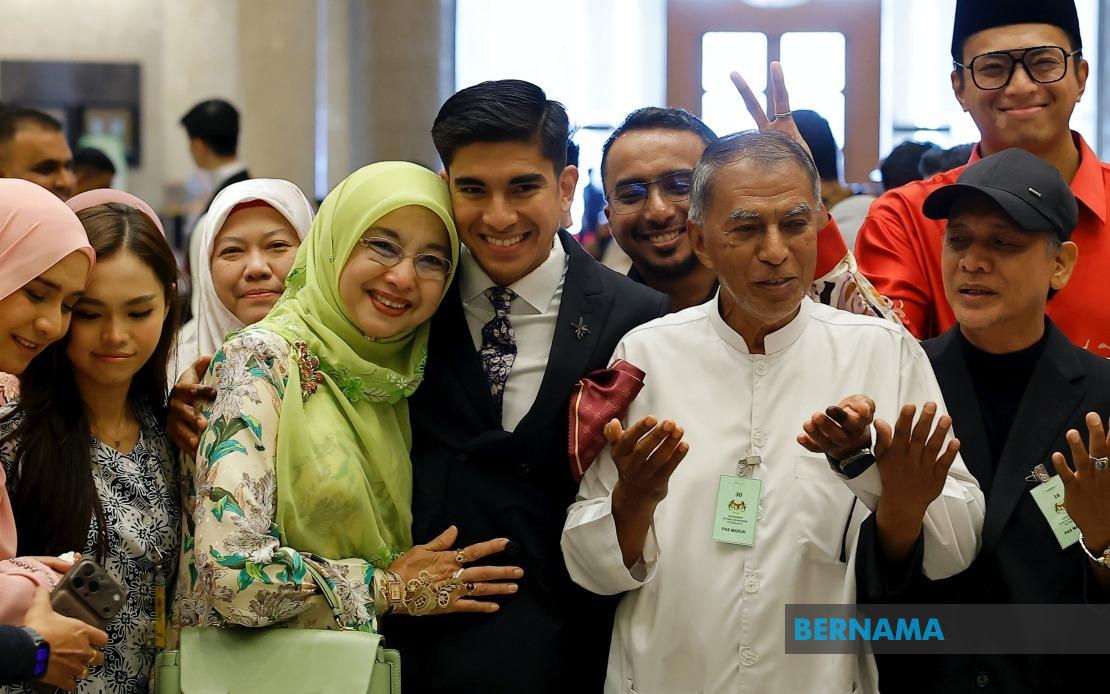
The Federal Court has upheld the acquittal of Muar Member of Parliament Syed Saddiq Syed Abdul Rahman, bringing closure to a gruelling six-year legal battle that saw him face four charges of abetting criminal breach of trust, misappropriation of property, and money laundering connected to funds belonging to Angkatan Bersatu Anak Muda, the youth wing of Bersatu. The 33-year-old politician marked the momentous occasion by performing a sujud syukur with his family at the Palace of Justice in Putrajaya, demonstrating the personal significance of the court's verdict.
In his remarks to journalists, Syed Saddiq articulated the relief of having his name cleared while emphasising the broader implications of his vindication for Malaysia's judicial system. He described the experience as one that had tested not merely his own resolve but had rippled through his family circle, political associates, and the wider political establishment. The trajectory of his case has made him a symbolic figure in conversations about the rule of law and the independence of Malaysia's courts—institutions he has characterised as foundational to the nation's stability and credibility.
Syed Saddiq reflected on the philosophical lessons drawn from half a decade under legal scrutiny. His framing of the ordeal centred on the virtue of unwavering principle, suggesting that maintaining integrity even amid apparent hopelessness constitutes a form of courage rooted in moral conviction. This perspective may resonate particularly within Malaysian civil society, where questions about political justice and the selective prosecution of opposition figures have periodically stirred debate. The former youth and sports minister positioned his acquittal as vindication of faith in both divine providence and institutional rectitude, an appeal designed to reconcile personal vindication with broader confidence in the system that judged him.
The implications of the Federal Court's decision extend beyond Syed Saddiq's personal circumstances. His acquittal on charges concerning misuse of party funds arrives during a period when Malaysian politics continues to grapple with questions of financial propriety and accountability within political movements. The verdict suggests that courts have demanded rigorous evidential standards in such cases, a development that might influence how authorities approach similar allegations against political figures across the spectrum. For Bersatu, which has experienced significant internal turbulence in recent years, the closure of this high-profile case removes a source of reputational entanglement.
Remarkably, Syed Saddiq indicated that despite the vindication, he intends to step back from active political engagement in the near term. He stated that while remaining formally affiliated with MUDA, the party he co-founded, his immediate priorities centre on personal recovery and family matters. This withdrawal, albeit temporary, underscores the cumulative toll that extended legal proceedings can exact on political figures. The need to reorganise personal affairs and proceed with long-deferred plans such as his wedding reflects the practical disruptions that criminal charges—even when ultimately unsuccessful—impose on individuals caught within the judicial machinery.
His obligation to attend parliamentary sittings notwithstanding, Syed Saddiq signalled his intention to reconnect with his Muar constituents through a gathering, suggesting that maintaining local political relationships remains important despite his broader step back. This balancing act—honouring parliamentary responsibilities while limiting wider political involvement—may foreshadow a period of recalibration for the Muar MP as he determines his longer-term role within Malaysia's political landscape. His parents' endorsement of his wedding plans adds a personal dimension to his anticipated respite from the intensity of political life.
Syed Saddiq's legal counsel, Datuk Hisyam Teh Poh Teik, expressed gratitude to the judicial panel and acknowledged the client's confidence in the defence team throughout the protracted proceedings. The acknowledgment of such legal support underscores the significance of consistent professional representation in cases of this magnitude and duration. For aspiring Malaysian politicians facing serious criminal allegations, the robustness of one's legal team and their capacity to sustain a coherent defence over years of litigation can prove decisive.
The prosecution's response, articulated through Deputy Public Prosecutor Datuk Wan Shaharuddin Wan Ladin, indicated that authorities had not yet determined whether to pursue a review of the Federal Court's judgment. The prosecution's stated intention to await direction from the Attorney General suggests that any potential further legal action would require approval at a senior institutional level. This restraint may reflect recognition of the case's sensitivity and the potential ramifications of prolonging proceedings that have already consumed considerable judicial and prosecutorial resources.
The case exemplifies the protracted nature of serious criminal prosecutions in Malaysia's legal system. A six-year trajectory from initial charges to final acquittal at the apex court highlights both the thoroughness that complex financial crime cases demand and the extended uncertainty that defendants must endure. For policymakers concerned with judicial efficiency and the psychological welfare of individuals caught in lengthy legal proceedings, Syed Saddiq's experience offers sobering illustration of systemic delays, though these may sometimes prove necessary to ensure rigorous examination of evidence.
Syed Saddiq's acquittal arrives amid a broader Malaysian political moment characterised by realignments and evolving public discourse around institutional credibility. His insistence that the verdict validates faith in Malaysia's courts may also signal an attempt to burnish the reputation of judicial independence—a matter of considerable political salience given periodic public scepticism about the evenhandedness of prosecution decisions. Whether his personal vindication translates into renewed public confidence in judicial impartiality across the political spectrum remains a question for Malaysian observers to assess.
Looking forward, the implications for Syed Saddiq's political trajectory remain uncertain. His commitment to MUDA and his parliamentary seat suggest that a complete withdrawal from politics remains unlikely, yet his articulated need for personal recuperation indicates that any return to prominence may require considerable time. The verdict, however definitive from a legal perspective, cannot immediately restore the years lost to litigation or fully compensate for the personal and familial disruptions that criminal prosecution invariably entails. His anticipated period of relative quiet from the political arena may ultimately prove beneficial both for his personal wellbeing and for his long-term political sustainability.

