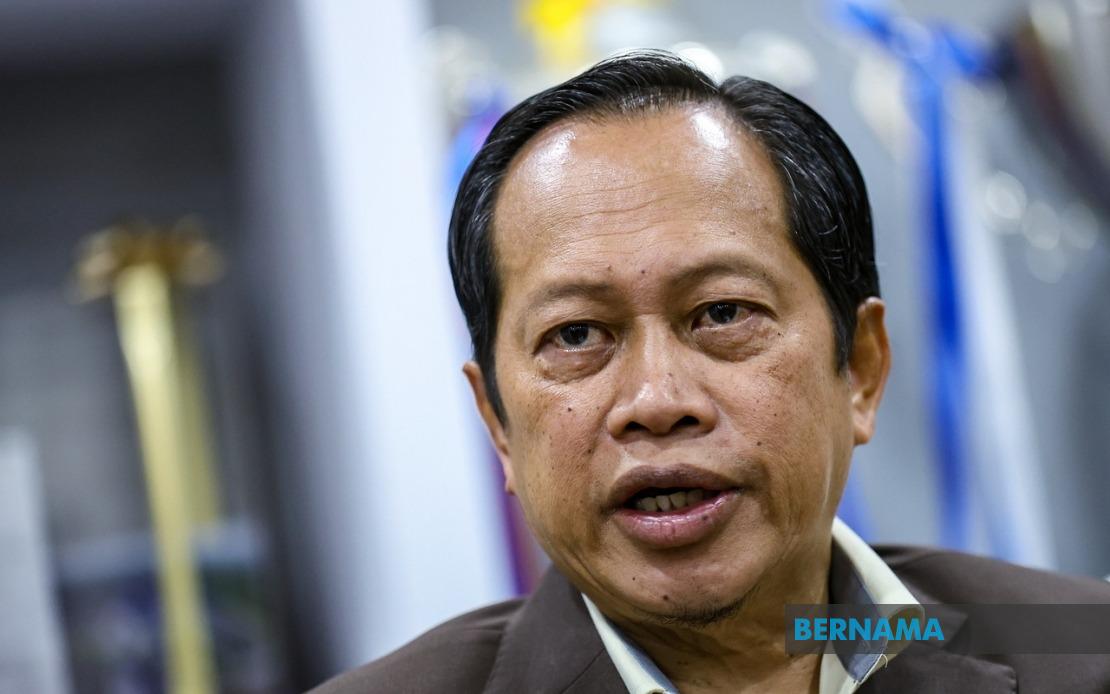
Datuk Seri Dr Ahmad Maslan, the Johor Barisan Nasional deputy chairman and Deputy Works Minister, has publicly declared that he will not be a candidate in the forthcoming Johor state election, putting to rest weeks of speculation about his electoral intentions. The announcement came during a working visit to the Johor Public Works Department headquarters in Iskandar Puteri on June 15, when Ahmad spoke to reporters and made his position unambiguously clear to the local media and party observers.
The decision effectively removes Ahmad from contention for two state seats that had been widely discussed as potential options for the senior federal politician: Benut and Pulai Sebatang, both of which fall within the Pontian parliamentary constituency where Ahmad currently serves as the Member of Parliament. His explicit confirmation that he has no interest in seeking either seat closes the door on a matter that had generated considerable conjecture within political circles and among observers tracking pre-election positioning.
Ahmad's reasoning reflects a deliberate calculation about party renewal and democratic opportunity. He emphasised to journalists that he had already communicated his withdrawal from the race to the senior leadership of the Barisan Nasional and UMNO structures, indicating this was a coordinated decision rather than a sudden personal choice. His stated rationale—that other candidates should be given an opportunity to contest for these positions—suggests a recognition that the party benefits from broadening the pool of contenders and allowing fresh voices and talent to emerge within the electoral framework.
This approach carries particular significance in the Malaysian political context, where established politicians of Ahmad's seniority often face pressure to secure state assembly seats alongside their parliamentary positions. By voluntarily stepping aside, Ahmad is signalling a shift in his political priorities that could shape his role within the party apparatus beyond the election cycle. The move may allow the party to project an image of generational renewal while retaining his administrative and organisational influence at federal and state party levels.
Despite confirming his non-participation as a candidate, Ahmad has made clear that his commitment to the Barisan Nasional and UMNO cause in Johor remains undiminished. He stated he would maintain an active involvement in campaign activities and ground operations designed to secure electoral victory for the coalition in the 16th Johor state election. This distinction—between stepping back from personal candidacy while remaining engaged in broader party efforts—allows him to preserve his influence over party strategy and candidate selection without bearing the personal electoral risk of contesting a state seat.
The timing of this announcement carries strategic weight as the state election machinery moves into its final preparatory phases. The Elections Commission has scheduled nomination day for June 27, providing interested candidates with just over a week to formally register their intent to contest. This relatively compressed timeline means that Ahmad's early clarification of his position allows the Johor BN leadership to firm up its candidate slate without uncertainty about whether the sitting Pontian MP would seek a state assembly mandate alongside his federal representation.
For the Pontian parliamentary constituency specifically, Ahmad's decision to focus exclusively on his federal seat while playing a supporting role in state politics may actually strengthen BN's coordination between federal and state-level campaigns. By not dividing his attention across parliamentary and state assembly duties, he can dedicate greater effort to safeguarding the Pontian parliament seat, which remains a crucial component of the coalition's overall electoral architecture in Johor.
The broader context of Johor politics adds nuance to this development. The state has historically been a cornerstone of BN strength, and maintaining that dominance requires careful attention to candidate quality and voter confidence. Ahmad's withdrawal may reflect internal discussions within the coalition about optimal candidate deployment, particularly as the party seeks to balance retaining experienced senior figures in key roles while simultaneously demonstrating commitment to bringing forward new talent capable of connecting with evolving voter expectations and constituencies.
The polling schedule established by the Elections Commission structures the remaining campaign period with early voting set for July 7 and the actual polling day on July 11. This compressed electoral calendar—less than a month between nomination day and polling—means campaigns must move at considerable speed to reach voters and consolidate support. Ahmad's clarification of his status ahead of nomination day prevents any last-minute confusion about candidate lineups and allows party machinery to proceed with clearly defined expectations about the contenders representing Barisan Nasional in Pontian's state assembly divisions.
For Malaysian political observers, Ahmad Maslan's decision illustrates the complex calculations that senior politicians must make regarding when to consolidate power through direct electoral competition and when to exercise influence through strategic positioning and organisational roles. His continued prominence within Johor BN leadership structures, combined with his retreat from state-level candidacy, creates a profile that blends seniority with flexibility—a positioning that could prove advantageous for the party if internal realignments become necessary during or after the election campaign.
The implications extend beyond Pontian to the broader Johor election landscape. By voluntarily opening state assembly seats that might otherwise have accommodated a senior federal politician, Ahmad helps create space for emerging UMNO and BN figures to develop their political careers within the state assembly context. This generational dynamic, if replicated across multiple constituencies, could contribute to the coalition presenting a revitalised candidate roster that combines experienced national-level figures with ambitious second-tier politicians eager to make their mark at the state assembly level where direct constituency service remains paramount.

