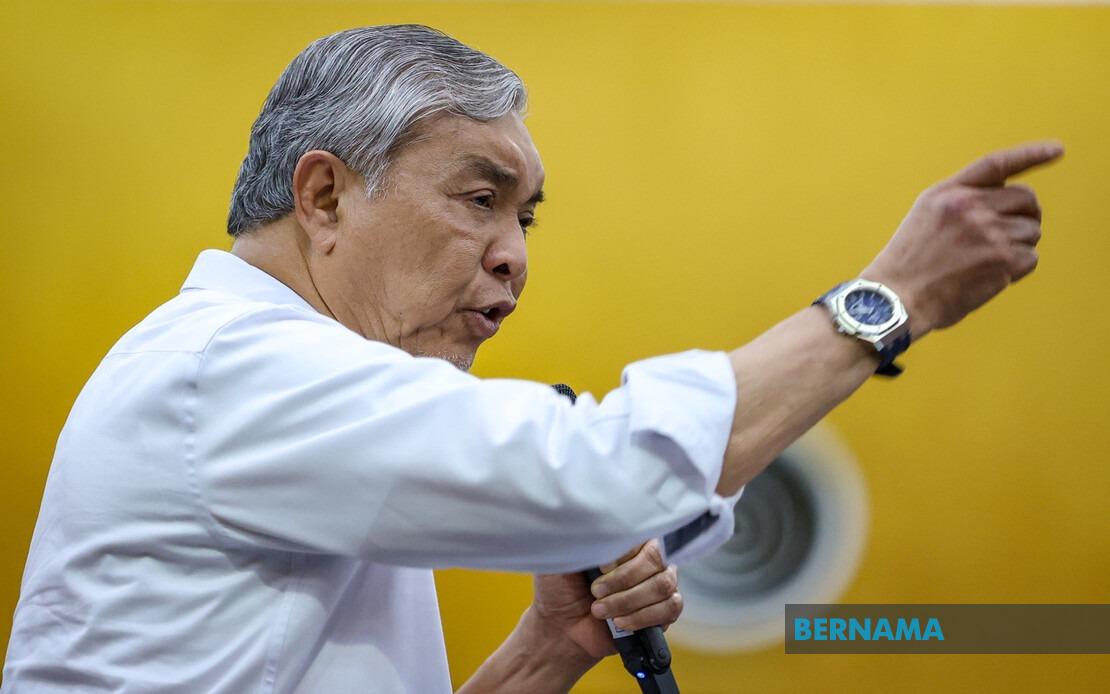
Deputy Prime Minister Datuk Seri Dr Ahmad Zahid Hamidi has unveiled an initiative to strengthen political literacy among campus leaders, proposing that Student Representative Councils (MPPs) across Malaysian higher education institutions participate in dedicated courses on leadership and political engagement. Speaking in Johor Bahru on July 9, Ahmad Zahid outlined a vision for nurturing a generation of student activists equipped with comprehensive knowledge of the nation's democratic frameworks and the contemporary political terrain they will eventually navigate as voters and citizens.
The proposal represents a deliberate effort to create what Ahmad Zahid characterises as institutional maturity among youth leadership structures on campuses. Rather than leaving student political development to chance or informal peer learning, the initiative would formalise exposure to democratic principles, parliamentary procedure, political history, and the substantive policy challenges confronting Malaysia. This structured approach reflects recognition that student leaders often wield significant influence over campus discourse and peer attitudes toward civic participation, yet frequently lack formal grounding in how political systems function or how major policy decisions are formulated.
Financial support forms a critical pillar of the proposal. Ahmad Zahid indicated the government stands ready to fund these educational programmes nationwide, contingent on formal requests from individual MPPs and subject to approval by Higher Education Minister Datuk Seri Dr Zambry Abd Kadir. This removes budgetary barriers that might otherwise prevent institutions from implementing such initiatives, particularly at newer or resource-constrained campuses where student services funding remains limited. By centralising funding through the federal government rather than requiring each institution to absorb costs independently, the scheme could achieve broader reach across Malaysia's higher education sector.
The timing of Ahmad Zahid's announcement warrants consideration within the broader political context. With Johor preparing for a state election on Saturday involving fifty-six contested seats, the proposal arrives amid heightened electoral activity and intensified political messaging across the state. While Ahmad Zahid frames the initiative in terms of institutional strengthening and democratic participation, it simultaneously reflects the Barisan Nasional coalition's interest in deepening engagement with younger demographics who have demonstrated volatility in voting patterns during recent electoral cycles. Student leaders represent multiplier effects within their peer networks, meaning influence extended to this cohort potentially reverberates across broader student populations.
Ahmad Zahid's personal narrative underscores his conviction that early political engagement sharpens civic consciousness. He referenced his own trajectory as a student leader at Universiti Malaya, where involvement in campus politics catalysed his broader political trajectory. This biographical foundation suggests he views student political activity not as peripheral to national democratic health but as a formative experience that produces more engaged, informed citizens regardless of whether they pursue careers in electoral politics. The implication is that even students who ultimately pursue non-political professional paths benefit from deeper understanding of political dynamics affecting national direction.
Critically, Ahmad Zahid distinguished between political literacy and mandatory political activism. He emphasised that young voters aged eighteen and above need not pursue active involvement in partisan politics to derive value from such educational programmes. Rather, the objective centres on ensuring that when first-time voters cast ballots, they do so from a foundation of informed understanding about political platforms, leadership records, and policy implications rather than impulse or social peer pressure. This framing potentially broadens the target audience beyond student activists to encompass the general student population who remain unaffiliated with political organisations but nonetheless constitute swing voters in electoral outcomes.
The emphasis on informed voting reflects genuine concerns about electoral behaviour among younger demographics in Malaysia. Previous elections have illustrated that youth participation, while theoretically significant given demographic proportions, sometimes manifests through reactive rather than reflective decision-making. Informal polling and anecdotal evidence suggest portions of young voters base decisions on social media narratives, celebrity endorsements, or single-issue preoccupations rather than comprehensive assessments of candidate records or institutional platforms. Educational initiatives addressing this pattern could theoretically strengthen electoral legitimacy by reducing uninformed participation while simultaneously empowering voters through genuine comprehension of political choices available to them.
The proposal also reflects evolving approaches to student politics within Southeast Asia more broadly. Several regional neighbours have similarly invested in structured political education for campus leaders, recognising that institutional capacity for democratic deliberation strengthens when student councils operate from shared foundational knowledge about governance principles and political processes. These initiatives frequently include exposure to comparative politics, allowing student leaders to contextualise Malaysian democratic practices within regional and global frameworks, thereby deepening analytical sophistication beyond purely domestic perspectives.
Implementation mechanics remain partially undefined, with Ahmad Zahid's comments providing directional intent rather than operational specifics. Questions naturally arise regarding curriculum content, delivery mechanisms, duration of programmes, and institutional responsibilities for coordination. Whether courses would be mandatory for all MPP members or optional for interested students; whether they would be delivered by government personnel, academic specialists, or external facilitators; and how quality assurance would occur across different institutions all require clarification through discussions with the Higher Education Ministry. These logistical details will substantially influence the initiative's effectiveness and reach.
Looking forward, the proposal signals Barisan Nasional's calculated interest in reconnecting with younger demographic cohorts whose voting patterns have become increasingly unpredictable. By framing engagement through educational enhancement rather than partisan recruitment, the initiative presents itself as serving national democratic interests while simultaneously creating opportunities for coalition messaging to reach influential youth influencers within campus ecosystems. Whether student councils embrace the opportunity enthusiastically or approach it with scepticism will reveal broader attitudes toward institutional political engagement among Malaysia's next generation of citizens and potential leaders.

