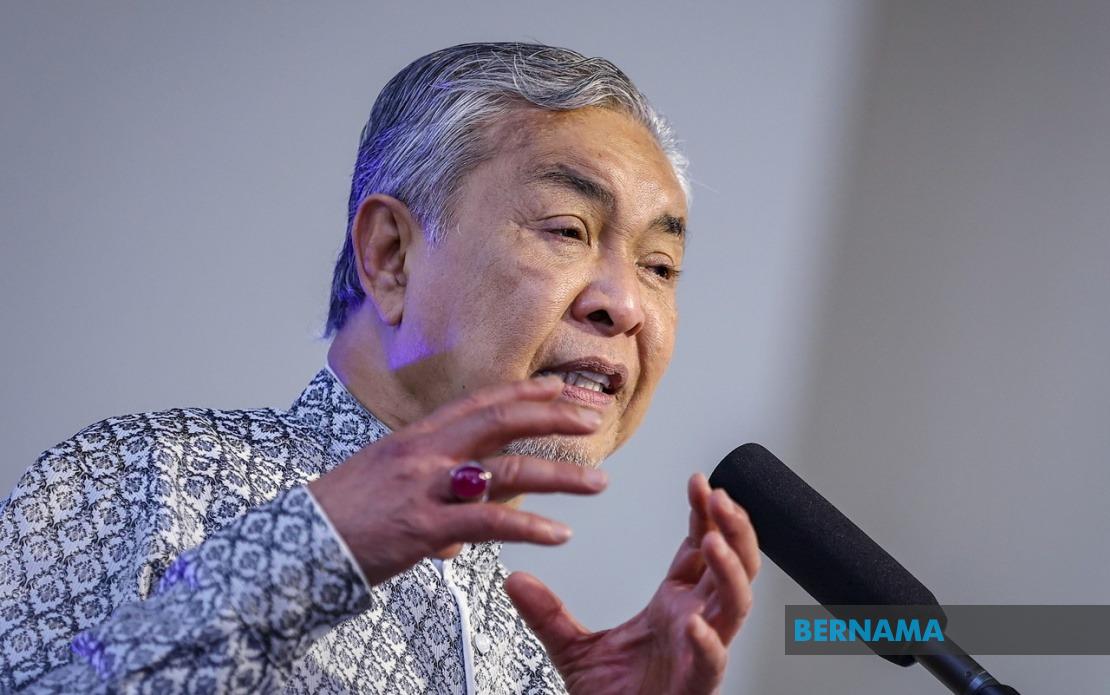
Barisan Nasional chairman Datuk Seri Dr Ahmad Zahid Hamidi has made a pointed appeal for political maturity during the Johor state election campaign, urging all contesting parties to shelve old disputes and concentrate on substantive policy differences rather than historical baggage. Speaking after a community engagement in the Kempas constituency, the Deputy Prime Minister emphasised that the forthcoming electoral contest should turn on the strengths of individual candidates and their concrete offerings to voters, not on grievances from the past that bear little relevance to the state's current needs and future direction.
The timing and framing of Ahmad Zahid's remarks reveal the delicate political ecosystem governing Malaysia's federal-state relationships. Several parties now competing in Johor simultaneously hold ministerial positions in the federal Cabinet, a reality that Ahmad Zahid highlighted as reason enough to avoid inflammatory rhetoric. His suggestion that federal coalition partners might face awkwardness at Cabinet meetings if regional political campaigns turn acrimonious underscores the tension between cooperation at the national level and competition in state contests. This balancing act has become increasingly important as Malaysia's political landscape fragments into more complex multi-party coalitions, where yesterday's electoral opponents may be tomorrow's governing partners.
Ahmad Zahid also pushed back against suggestions that Barisan Nasional approaches the July 11 election with overconfidence. Despite controlling the state apparatus and contesting all 56 seats, the party has characterised itself as the underdog, a positioning that reflects genuine concern about shifting voter preferences, particularly among younger demographics. The BN's performance in the previous state election, when it secured 40 seats, provides a baseline that the coalition acknowledges it must improve upon. This self-assessment stands in contrast to traditional narratives of BN dominance and suggests that party strategists recognise significant ground has shifted beneath their feet in Johor.
Demographic change constitutes perhaps the most significant challenge confronting BN's reelection bid. More than half of Johor's electorate now consists of young voters, a cohort whose political preferences remain less crystallised and more responsive to contemporary messaging than older generations. This demographic reality fundamentally alters the political calculus in the state and explains why BN has made youth-focused policies central to its campaign narrative. The party's manifesto, championed by Menteri Besar Datuk Onn Hafiz Ghazi, accordingly prioritises youth concerns, with particular emphasis on employment pathways and skills development.
The skills development agenda reflects a pragmatic policy response to documented employment challenges among young Malaysians. Ahmad Zahid cited the recent decline in the unemployment rate to 2.9 per cent as evidence of broader economic improvement, yet he simultaneously acknowledged that headline unemployment figures mask deeper structural issues. Young jobseekers in Johor and across Malaysia increasingly require access to premium-wage employment that offers genuine career advancement and economic security. Generic job creation, the BN argument suggests, remains insufficient if those positions offer only subsistence-level remuneration and limited prospects for upward mobility.
Technical and Vocational Education and Training (TVET) has thus emerged as the centrepiece of BN's appeal to young Johorians. The party's campaign messaging emphasises the role of skills development in unlocking higher-wage opportunities and productive employment aligned with Malaysia's evolving economic structure. This positioning frames the state election partly as a referendum on competing visions for youth economic participation and future prosperity. By anchoring its campaign to concrete proposals around vocational pathways and skills acquisition, BN attempts to shift the terms of electoral debate away from abstract political narratives toward tangible policy outcomes that resonate with voter material interests.
The appeal to young voters in Johor carries particular significance given the state's role in Malaysian politics and economics. Johor has historically served as a crucial electoral bellwether and maintains substantial economic weight as an industrial and commercial hub. Developments in the state consequently reverberate across regional politics and influence broader assessments of political momentum. A strong BN performance in Johor would reinforce the coalition's narrative of recovery and stability, while a disappointing result would embolden opposition parties and complicate the federal government's political standing.
Ahmad Zahid's injunction against raising unrelated historical issues also functions as a strategic manoeuvre within the BN coalition itself. Barisan Nasional comprises multiple constituent parties that have occasionally engaged in acrimonious disputes, and maintaining campaign discipline across these diverse elements requires party leadership to establish acceptable parameters for political competition. By publicly appealing for a focus on substantive issues rather than historical grievances, Ahmad Zahid attempts to establish norms that will constrain intra-coalition sniping and preserve party unity through polling day.
The practical mechanics of the Johor election reinforce the significance of disciplined campaigning and voter mobilisation. With early voting scheduled for July 7 and polling day set for July 11, the campaign period remains compressed. BN must efficiently deploy its resources and messaging across all 56 constituencies while contending with opposition parties that have similarly organised their efforts. The compressed timeframe leaves little room for diversions into peripheral disputes or defensive posturing about past controversies, placing a premium on forward-looking campaign narratives that speak directly to voter concerns and aspirations.
Ahmad Zahid's appeal for political maturity ultimately reflects an understanding that electoral contests in contemporary Malaysia operate within a constrained institutional environment. Federal-state power dynamics, inter-party coalition relationships, and the imperative to maintain governing capacity at both levels all impose discipline on how parties conduct regional campaigns. The challenge for BN lies in mobilising sufficient voter support among Johor's increasingly youth-dominated electorate while managing the delicate political relationships that bind the federal coalition together. Whether the party's skills-and-employment-focused messaging proves sufficient to overcome demographic headwinds and opposition competition will become apparent when Johorians cast their votes.

