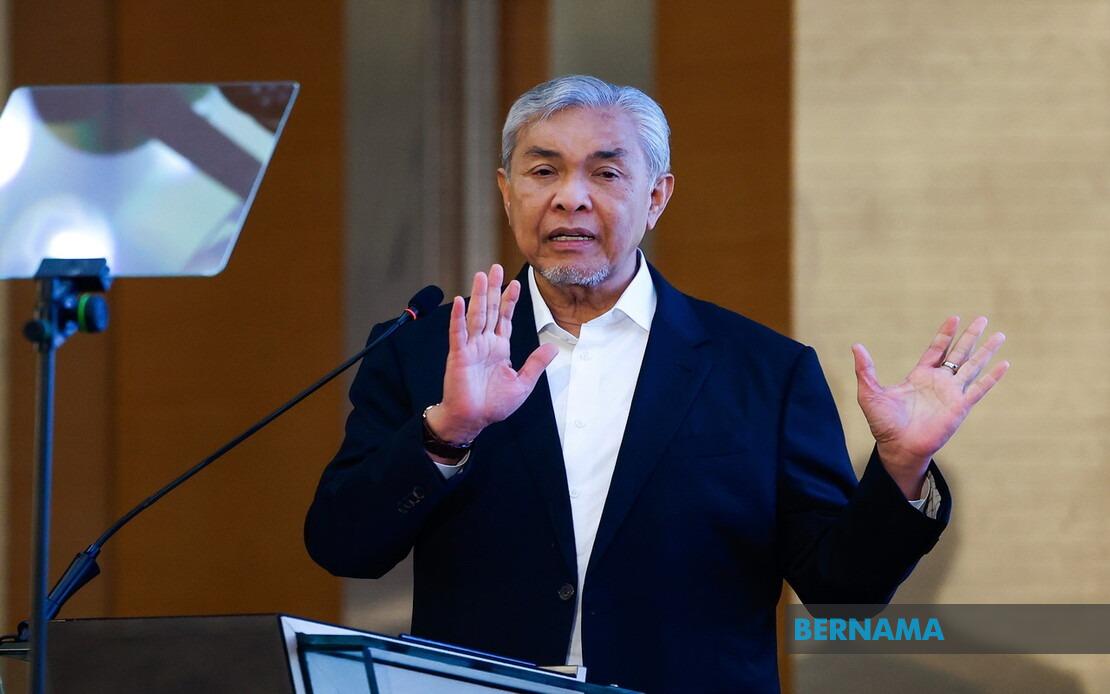
Deputy Prime Minister Datuk Seri Dr Ahmad Zahid Hamidi has called on all political parties contesting the Negeri Sembilan state election to comply with guidance issued by the Negeri Sembilan Palace to respect the monarchy and avoid controversial issues centred on race, religion and royalty during the campaign period. Speaking in Seremban on July 27, Ahmad Zahid stressed the importance of honouring the institutional framework that underpins Malaysia's constitutional monarchy, signalling that the Barisan Nasional coalition views such restraint as fundamental to maintaining political stability during electoral contests.
The Deputy Prime Minister's intervention follows an advisory from the Negeri Sembilan Palace explicitly requesting that contesting parties refrain from involving the royal institution in their ceramah sessions and campaign messaging. This type of palace guidance, while not uncommon in Malaysian electoral processes, underscores the sensitivity surrounding the monarchy's position within the nation's political framework and the potential risks when electoral competition becomes entangled with matters touching on constitutional institutions. Ahmad Zahid's public reiteration of this message demonstrates the government's commitment to reinforcing these boundaries ahead of polling.
In his remarks, Ahmad Zahid emphasised that Barisan Nasional has maintained a consistent position of defending the institution of the Malay Rulers and has never deployed 3R-related content as campaign material. He extended this principle specifically to the Negeri Sembilan context, noting that the coalition recognises the particular significance of the Undang Yang Empat—the four paramount rulers of Negeri Sembilan—within the state's constitutional and cultural landscape. This statement reflects the broader understanding within BN that respect for royal institutions is not merely a political nicety but a core element of governance philosophy that transcends electoral cycles.
The reminder issued by the palace carries particular weight in Negeri Sembilan, a state where the institution of the Undang Yang Empat holds constitutional authority over matters of state governance. Unlike some other Malaysian states where the role of the ruler is more ceremonial, Negeri Sembilan's system involves these four paramount chiefs in executive decision-making processes. This arrangement necessitates a careful political environment where parties recognise the boundaries between electoral competition and respect for institutional roles. Ahmad Zahid's comments acknowledge this delicate balance and suggest that campaign conduct during the state election should reflect awareness of these constitutional nuances.
When discussing the reminder from the palace, Ahmad Zahid characterised it as positive guidance that parties should embrace voluntarily rather than resist. His framing suggests that compliance should emerge from recognition of institutional importance rather than from legal compulsion, though Malaysian election law does contain provisions restricting campaign content that could be deemed disrespectful to the monarchy. By positioning the palace's guidance as constructive counsel, Ahmad Zahid attempted to establish a tone where political parties could demonstrate maturity and institutional respect without appearing to be constrained by external pressure.
The Deputy Prime Minister also used the occasion to address speculation about tensions between Barisan Nasional and Perikatan Nasional, dismissing suggestions that disputes between the two coalitions had prevented collaborative arrangements. Ahmad Zahid characterised the relationship between BN and PN as fundamentally sound, built on mutual understanding rather than antagonism. This assertion becomes contextually important for the Negeri Sembilan election, as the composition and behaviour of opposition parties could influence the campaign environment and the degree to which various political actors might be tempted to breach established norms regarding 3R issues.
The Negeri Sembilan state election represents an important test of electoral discipline across Malaysia's political spectrum at a time when the country continues to grapple with questions about the appropriate boundaries of political discourse. The state's constitutional arrangement, which vests significant authority in the Undang Yang Empat, creates a distinctive context where the monarchy is not merely a symbolic institution but an active participant in governance. Political parties operating in this environment face particular obligations to ensure their campaign messaging respects these constitutional realities.
For Malaysian voters and observers in the region, the emphasis on institutional respect during electoral campaigns reflects a broader tension within contemporary Southeast Asian democracies between vigorous political competition and reverence for constitutional frameworks. Malaysia's approach of seeking voluntary compliance with palace-issued guidance represents one model for managing this tension, though the effectiveness of such appeals depends significantly on the political maturity and self-restraint of competing parties. Ahmad Zahid's public reinforcement of this principle suggests that the government views the upcoming campaign as an opportunity to demonstrate that competitive elections and institutional respect are compatible.
The presence of Deputy Rural and Regional Development Minister Datuk Rubiah Wang and Majlis Amanah Rakyat chairman Datuk Dr Asyraf Wajdi Dusuki at the event where Ahmad Zahid made these comments underscores the multi-institutional coordination involved in preparing for the state election. This coordination extends beyond narrowly electoral functions to encompass broader governance considerations, reflecting the view that elections must be conducted within a framework that reinforces rather than undermines constitutional institutions. The participation of MARA's leadership particularly signals attention to development and entrepreneurial dimensions of the election, suggesting that the campaign discourse should remain focused on substantive policy matters affecting constituents' livelihoods.
As political parties prepare their campaign strategies for Negeri Sembilan, Ahmad Zahid's remarks establish clear expectations about what constitutes acceptable electoral conduct. The call for respecting 3R boundaries is not presented as an impediment to vigorous political competition but rather as a necessary framework within which such competition can occur responsibly. For political parties seeking to build credibility with Negeri Sembilan voters and with the broader Malaysian electorate, demonstrating commitment to these principles may itself become an electoral advantage, signalling seriousness and maturity to voters who increasingly expect their political leaders to balance competitive instincts with institutional respect.

