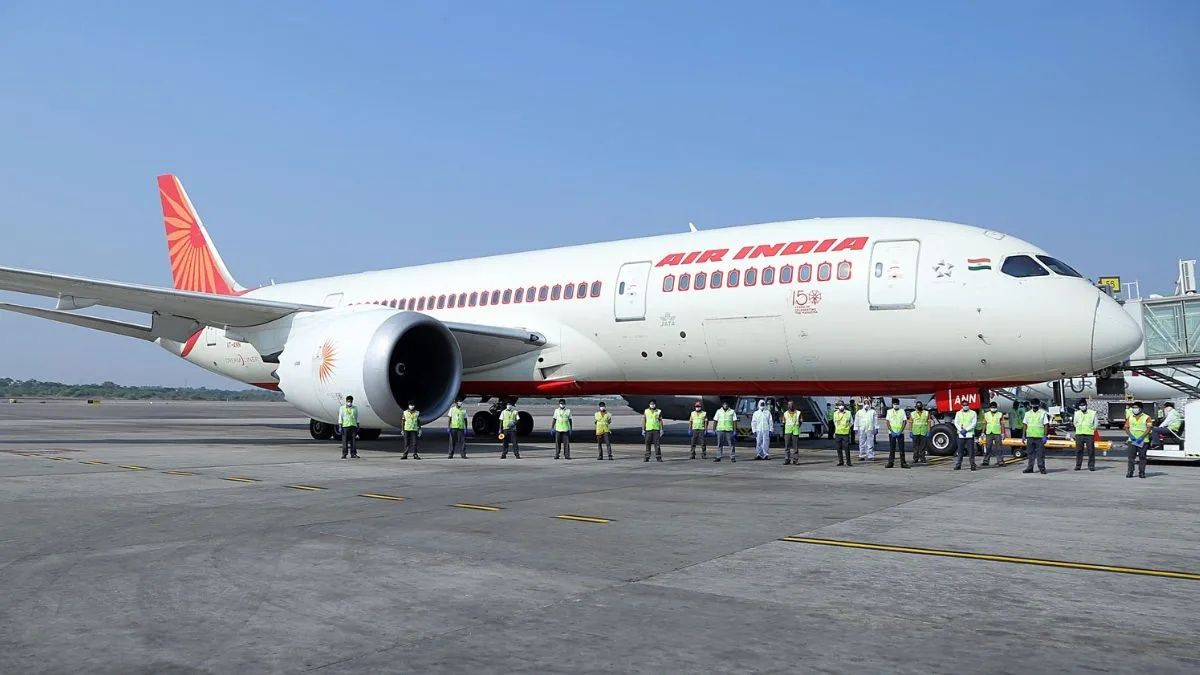
An Air India Airbus A321 operating between Delhi and Amritsar inadvertently entered Pakistani airspace on Monday night following a malfunction in its onboard navigation systems, authorities confirmed this week. The incident underscores the technical vulnerabilities that persist in cross-border aviation operations within South Asia, where the margin for error remains razor-thin given the proximity of major air routes to international boundaries. Flight AI-463 departed from Delhi's Indira Gandhi International Airport at 9:18pm on June 22, beginning what should have been a routine shuttle service to Punjab's principal airport.
Minutes into the flight, the aircraft's navigation apparatus experienced a technical failure that proved consequential enough to alter the aircraft's trajectory significantly. Rather than maintaining its prescribed northwesterly heading toward Amritsar, the aircraft began drifting westward, a deviation that would carry it across the International Border separating the two nations. The precise nature of the navigational system malfunction remains undisclosed by both Air India and India's aviation regulator, the Directorate General of Civil Aviation, though such incidents typically involve failures in inertial reference systems, GPS processing units, or the integrated avionics architecture that modern commercial aircraft depend upon for precise course management.
The unintended incursion was detected not by Indian authorities but by Pakistan's air traffic control infrastructure, which maintains constant radar surveillance of its airspace. Pakistani air traffic controllers, observing the aircraft's unexpected presence on their screens, promptly contacted the flight crew to alert them to the situation. This cross-border coordination, while necessary for safety, reflects the delicate balance that South Asian aviation maintains—despite periodic political tensions, the practical necessities of air traffic management demand reliable professional communication between neighbouring nations' aviation authorities. The pilots aboard the Airbus A321, upon receiving notification of the airspace breach, immediately initiated corrective measures and guided the aircraft back across the International Border into Indian territory.
The incident might have concluded there had weather and airspace congestion not intervened. As Flight AI-463 approached Sri Guru Ram Dass Jee International Airport in Amritsar around 10:30pm, the airport was experiencing substantial air traffic congestion that precluded immediate landing operations. Air traffic controllers at Amritsar, constrained by the lack of available landing slots and broader operational pressures, made the decision to vector the aircraft back toward Delhi rather than place it in a holding pattern. This second diversion extended the aircraft's journey considerably, requiring the flight to retrace its path across Punjab and return to the capital's airspace.
The aircraft landed safely at Delhi for a technical inspection, where maintenance personnel could examine the navigation systems and identify the source of the failure. Once engineers completed their diagnostics and the aircraft received all necessary operational clearances to resume service, the flight departed Delhi again for Amritsar. The second attempt proved successful, and Flight AI-463 finally touched down in Amritsar at approximately 2:20am on Tuesday morning, nearly four hours behind its originally scheduled arrival time. While no safety incident occurred and all passengers and crew remained secure throughout the diversion sequence, the delay highlighted the cascading consequences that technical issues can create within the region's interconnected aviation network.
Aviation authorities in India have launched a routine investigation to establish the precise circumstances of the navigation system failure and whether any contributory factors may have increased the aircraft's susceptibility to the malfunction. The Directorate General of Civil Aviation typically examines such incidents comprehensively, reviewing maintenance records, crew actions, weather conditions, and system logs to determine causation and identify whether corrective measures might prevent recurrence. Air India similarly conducts its own internal safety review processes, though neither the airline nor the regulator has released detailed technical findings to the public.
This episode is neither unprecedented nor unique to Air India operations. The region has experienced similar incidents periodically, reflecting the inherent challenges of operating commercial aviation in an environment where multiple nations' airspaces converge with limited geographical separation. Last month, a Pakistan International Airlines flight inadvertently entered Indian airspace during adverse weather conditions before being guided back to its proper route by Indian air traffic controllers. These reciprocal incidents demonstrate that both nations' aviation authorities maintain professional protocols for managing such situations, even amid broader geopolitical considerations.
For Malaysian aviation authorities and regional carriers, the incident carries implications regarding airspace security, navigation system reliability, and the importance of robust cross-border coordination mechanisms. Malaysia's position as a major aviation hub with extensive international flight operations means that Malaysian airlines and their crews regularly transit multiple international boundaries. The technical failures that can trigger unintended airspace incursions—whether stemming from equipment malfunction, pilot error, or weather-related navigation challenges—represent universal aviation safety concerns that transcend national borders. Regional cooperation on air traffic management standards, navigation system redundancy requirements, and crew training protocols remains essential for maintaining safety across Southeast Asia's increasingly congested skies.
The incident also highlights the critical role that air traffic control systems play in detecting and managing unintended deviations before they escalate into more serious situations. Pakistani air traffic control's swift identification of the aircraft and timely notification to the flight crew prevented what could have become a far more serious diplomatic and safety situation. Similarly, Indian air traffic control's subsequent management of the aircraft's return demonstrates the professionalism that characterises South Asian aviation operations despite occasional technical and operational challenges. These moments of professional cooperation provide a counterweight to periodic tensions in civil aviation between neighbouring nations.

