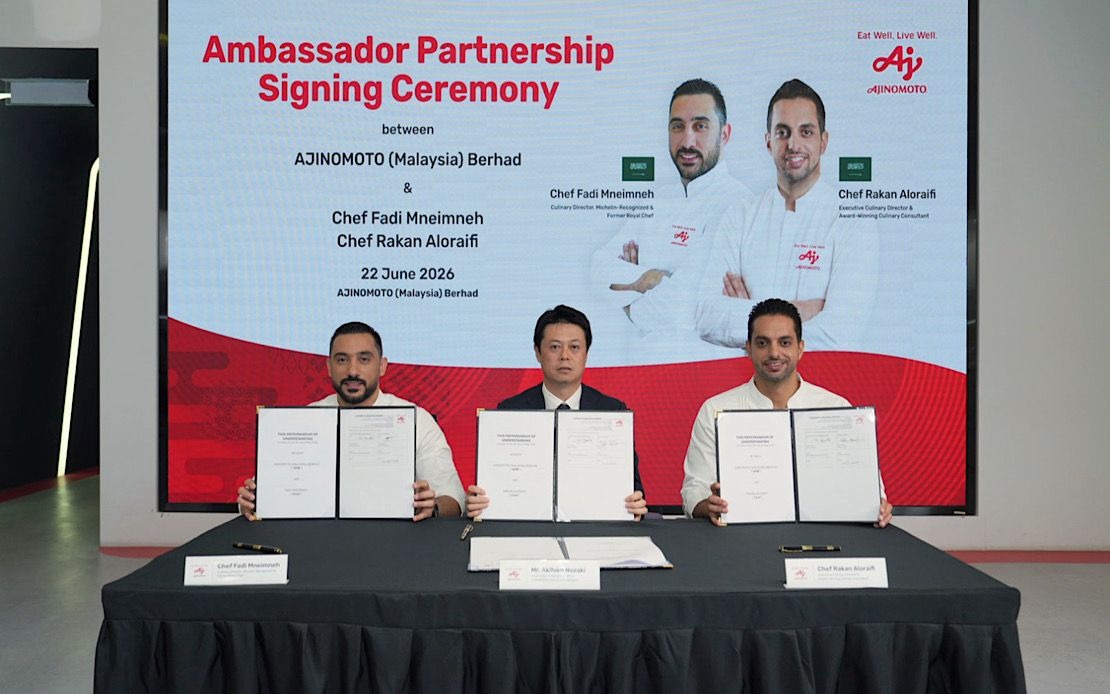
Ajinomoto (Malaysia) Berhad is making a calculated push into the lucrative Middle Eastern market by aligning itself with two of Saudi Arabia's most prominent culinary personalities, capitalising on surging regional appetite for premium halal food solutions. The strategic partnership with Chef Fadi Mneimneh, a Michelin-starred culinary director and former member of a royal household, and Chef Rakan Aloraifi, an acclaimed executive director and food consultant, signals the company's intent to establish deeper credibility within Arabia's sophisticated food service and hospitality ecosystems.
For Malaysian food manufacturers seeking overseas expansion, this collaboration exemplifies a increasingly common playbook: deploying celebrity endorsements and industry influencers to navigate unfamiliar markets and build consumer trust rapidly. By tapping into the two chefs' established networks and reputational capital, Ajinomoto circumvents traditional barriers to market entry that foreign brands typically encounter when competing against entrenched local competitors or regional players.
The partnership materialised following an exclusive facility tour at Ajinomoto's Bandar Enstek manufacturing complex in Negeri Sembilan, where the visiting chefs explored production standards, halal certification protocols, and the company's technical mastery in umami extraction and application. This controlled environment visit served a dual purpose: it provided tangible reassurance about product integrity to influential decision-makers while simultaneously generating authentic content and testimonials that carry weight among Middle Eastern hospitality professionals and procurement executives.
Umami—often described as the fifth taste dimension characterised by savoury depth—represents an underutilised selling point in Middle Eastern culinary traditions, where flavour profiles tend towards spices, herbs, and aromatic complexity rather than the subtle enhancement umami provides. By educating high-profile chefs about how umami compounds can enrich rather than overshadow authentic regional recipes, Ajinomoto positions its product line not as foreign substitution but as complementary innovation that respects cultural culinary heritage whilst modernising technique.
The live culinary demonstrations executed during the chefs' visit proved instrumental in translating technical product benefits into practical, visual learning experiences. Witnessing how Ajinomoto ingredients integrated seamlessly into recognisable Middle Eastern dishes dismantled potential scepticism about adopting Japanese food science within traditional Arab cuisine. This methodology resonates strongly in the HORECA sector—hotels, restaurants, and catering establishments—where operational efficiency and consistency matter as much as culinary integrity.
Saudi Arabia specifically represents a high-value market entry point for halal-certified food producers. As the Islamic world's most influential custodian of halal standards and home to major regional food service chains, Saudi procurement decisions cascade across the Gulf Cooperation Council and beyond. Establishing credibility with Saudi decision-makers and celebrity chefs effectively opens doors throughout the Levant, Emirates, and adjacent territories where Saudi industry trends carry outsized influence.
The participation of Ajinomoto's Brunei distributor representative during the facility visit underscores the company's regional ecosystem thinking. Rather than pursuing Saudi expansion in isolation, the company recognised an opportunity to strengthen coordination across existing Southeast Asian distribution networks whilst simultaneously exploring adjacencies—such as Brunei-Saudi bilateral business development—that might yield unexpected synergies. This networked approach to market building reflects sophistication beyond simple product export.
The planned HORECA events scheduled for October 2026 in Riyadh and Jeddah represent the natural evolution of this partnership strategy. By securing the two chefs as live demonstration leads targeting procurement professionals and hospitality decision-makers, Ajinomoto transforms individual culinary personalities into semi-permanent brand ambassadors embedded within industry conferences. This positioning ensures sustained visibility and influence beyond one-off publicity moments, building cumulative credibility within the sector.
For Malaysian businesses observing this playbook, several strategic lessons emerge. First, halal certification alone no longer constitutes sufficient differentiation in Middle Eastern markets; consumers and professionals demand narrative context explaining product philosophy and cultural respect. Second, deploying local influencers and celebrity figures generates trust exponentially faster than conventional advertising, particularly in hierarchical business cultures where personal relationships and individual reputations carry exceptional weight. Third, manufacturing facility transparency and educational programming about production standards assuage regulatory and quality concerns that Middle Eastern importers systematically evaluate.
The halal food manufacturing sector itself continues expanding at double-digit annual growth rates across Southeast Asia and the Middle East combined, driven by rising middle-class consumer standards, increasing regulatory scrutiny of religious compliance, and globalisation of Islamic dietary requirements beyond traditional Muslim-majority populations. Ajinomoto's expansion strategy anticipates these secular market forces rather than responding reactively to them.
Ajinomoto's approach also reflects broader recognition that the Middle East represents not merely a sales outlet but a sophisticated culinary and commercial partner capable of developing co-innovation opportunities, reverse-engineering demand signals, and potentially serving as a springboard for African and European market expansion where halal credentials increasingly matter. By investing in relationship-building with regional opinion leaders now, the company positions itself advantageously for multi-decade regional presence rather than ephemeral transactional engagement.
This partnership ultimately demonstrates how Malaysian food manufacturers can leverage national halal expertise and manufacturing excellence into genuine competitive advantages when combined with strategic international relationship-building and sector-specific stakeholder engagement. The model proves particularly effective in culturally sensitive markets where foreign brands require local validation and credible interpreters capable of translating innovation into culturally coherent narratives.

