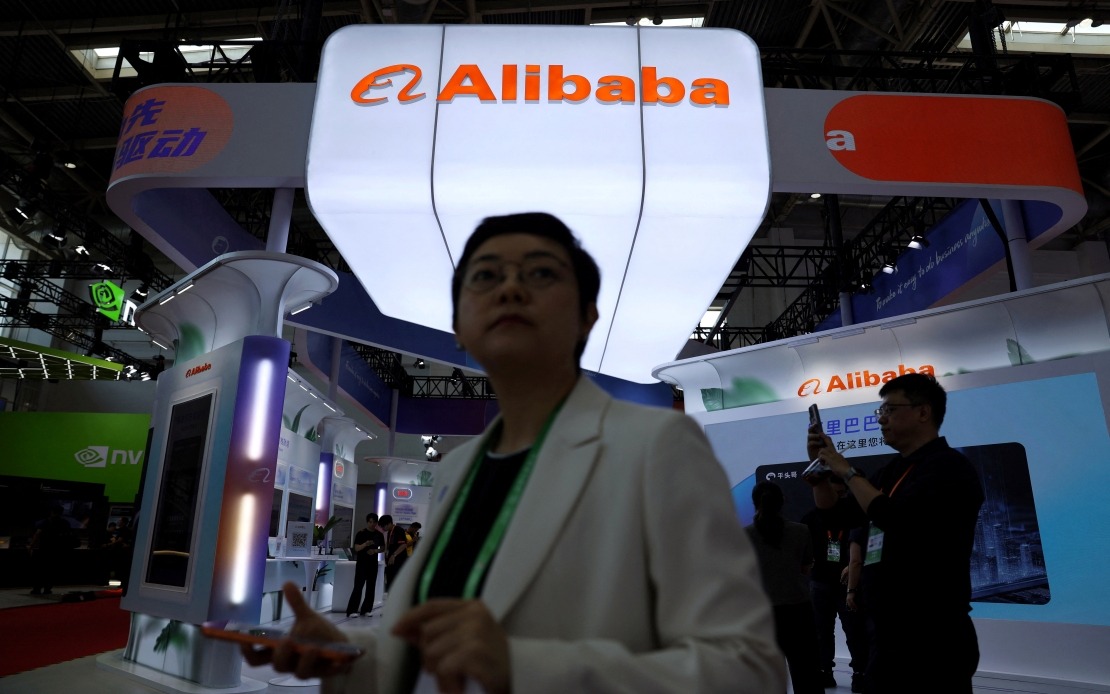
Alibaba, the Chinese e-commerce and technology conglomerate, has initiated legal proceedings against the United States Department of Defense to challenge its recent designation as an entity linked to China's military-industrial complex. The lawsuit, filed in federal court and disclosed Tuesday, represents a significant escalation in the company's pushback against American regulatory restrictions that have increasingly targeted prominent Chinese technology firms.
The Pentagon's designation places Alibaba among 188 companies added to a sensitive government list in June, a classification that carries substantial consequences for the firm's operations and market access. Alongside Alibaba, the Department of Defense included other major Chinese technology and manufacturing names such as Tencent, a leading gaming and social media platform, and BYD, the world's largest electric vehicle manufacturer. This broad sweep of designations reflects the deepening technological rivalry between Washington and Beijing, with American policymakers seeking to restrict investment flows and business relationships involving entities deemed to support China's defence capabilities.
In its legal challenge, Alibaba argues strenuously that the military designation fundamentally mischaracterises its business structure and operations. The company emphasises that its board of directors contains no members with military backgrounds or affiliations, a point the lawsuit raises to contest the premise that it operates under state or military direction. This governance distinction is significant in American regulatory thinking, as companies controlled or influenced by military entities face heightened scrutiny and restrictions under various sanctions and investment screening mechanisms.
Alibaba's defence strategy centres on clarifying the actual scope and purpose of its commercial activities. The company states explicitly that all products and services under its corporate umbrella are designed and deployed exclusively for civilian applications spanning retail operations, logistics networks, and enterprise information technology solutions. This categorisation is crucial because it attempts to separate Alibaba's mainstream business operations from any potential military application, a distinction that has become central to how American regulators assess Chinese technology companies.
The lawsuit further documents Alibaba's contractual and policy frameworks as evidence of its commitment to civilian-only applications. According to the filing, the company's contracts contain explicit prohibitions on military usage, and its compliance procedures are structured to prevent defence-sector involvement. Additionally, Alibaba stresses that it lacks military certifications or licences, pointing to the absence of formal relationships with Chinese defence procurement systems. These details underscore the company's argument that its designation rests on faulty assumptions rather than documented connections to military activities.
For Malaysian and Southeast Asian observers, this legal challenge illuminates the intensifying bifurcation of global technology governance. As American authorities expand their definition of military-linked entities, Chinese technology companies face mounting pressure in Western markets, potentially driving them to deepen their focus on Asian markets where regulatory barriers remain lower. Alibaba's lawsuit thus carries implications beyond the courtroom, signalling how Chinese firms may increasingly contest Western restrictions rather than accept them passively.
The Pentagon's June designation reflected broader American strategic concerns about technological leakage to China's defence establishment. However, critics of such sweeping designations argue that the classifications often lack granular analysis of actual business operations, potentially harming companies that have legitimate civilian operations but incur collateral damage from the blanket approach. Alibaba's legal position rests partly on this critique, suggesting that the Pentagon conflated association with China's broader technology sector with direct military involvement.
The timing of this lawsuit also merits attention. As US-China technology competition intensifies, particularly in artificial intelligence, semiconductors, and cloud computing, both governments are hardening their positions on capital flows and technology access. For Alibaba, a company with substantial international operations and multiple stakeholder interests, the military designation threatens access to American capital markets, technology partnerships, and defence-adjacent contracts that might otherwise be available to neutral commercial entities.
The case will likely take months or years to resolve, but it represents an important test of how far American regulators can extend military designations without clear evidence of defence connections. Should Alibaba succeed, it could establish precedent limiting the Pentagon's authority to unilaterally classify companies, potentially affecting how dozens of other Chinese firms currently under scrutiny are treated. Conversely, if the designation withstands legal challenge, it may embolden more aggressive American classifications of Chinese technology entities.
For Southeast Asian markets already heavily dependent on Chinese technology investment and services, the outcome carries economic significance. Many regional companies utilise Alibaba's cloud services, logistics platforms, and fintech solutions; military designations could disrupt these relationships or create compliance complexities for regional users. The lawsuit therefore extends beyond corporate litigation to touch questions of technological sovereignty and market access across Asia.
Alibaba's challenge also reflects the company's strategic calculation that litigation offers a more viable path than diplomatic channels or regulatory negotiation. By engaging American courts, the company signals confidence in the rule of law while simultaneously putting its governance and operational details into public record, a calculated transparency bet. The outcome will reveal whether American courts view military designations as sufficiently final to survive judicial scrutiny or whether such classifications must meet higher evidentiary standards.

