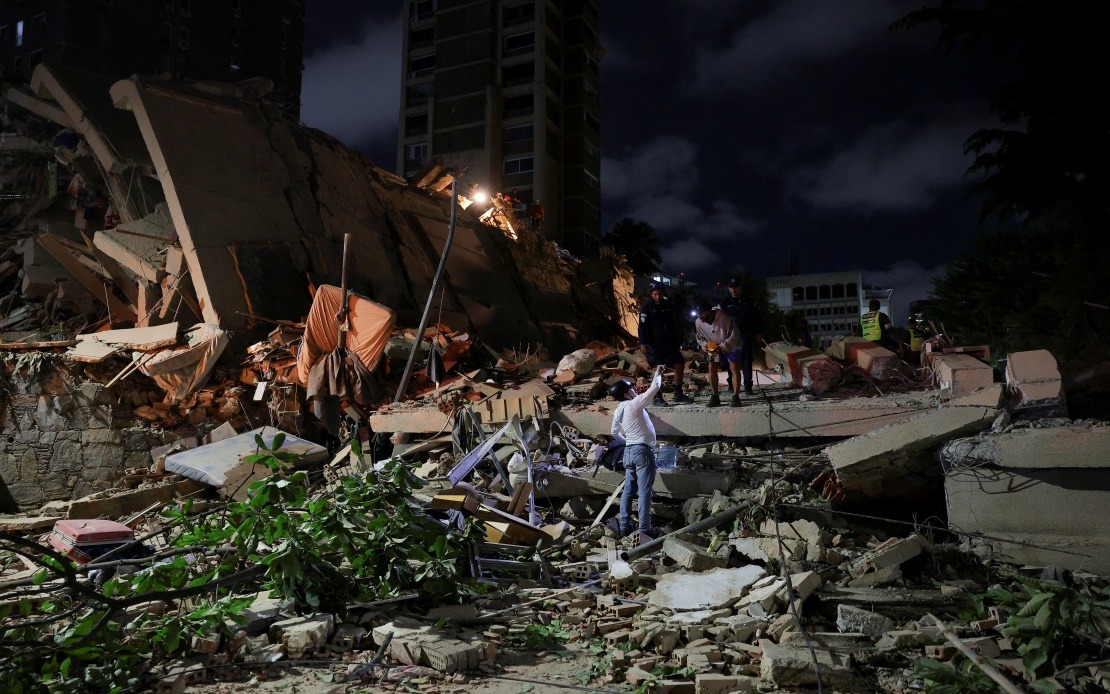
The Malaysian Foreign Ministry has confirmed that all registered Malaysian nationals currently in Venezuela remain safe and accounted for in the aftermath of two significant seismic events that struck the South American nation on Wednesday. The ministry, through a statement released on Thursday from Putrajaya, indicated that it is maintaining close oversight of the unfolding situation as Venezuelan authorities work to assess the full scope of the disaster.
The two earthquakes registered magnitudes of 7.2 and 7.5 on the Richter scale, making them substantial natural disasters by international standards. The epicentres were located approximately 21 kilometres from Moron and roughly 168 kilometres west of Caracas, Venezuela's capital city. The tremors were experienced across a wide geographical area, extending to major urban and regional centres including Caracas itself, as well as the states of Trujillo, Carabobo, Miranda, and La Guaira, causing widespread structural damage and the collapse of multiple buildings.
While the Malaysian Foreign Ministry confirmed the safety of registered nationals, it acknowledged that Venezuelan authorities are still in the preliminary stages of their damage assessment. Officials have yet to release comprehensive casualty figures or detailed evaluations of the infrastructure damage inflicted by the seismic activity. This assessment phase is critical for understanding the broader humanitarian impact and determining what assistance may be required for affected populations across the region.
The Embassy of Malaysia in Caracas has established itself as the operational centre for Malaysia's response, maintaining active communication channels with local Venezuelan emergency services and government authorities. This coordination ensures that the embassy can quickly relay critical safety information to Malaysian citizens and respond swiftly to any emerging concerns. The embassy's ongoing engagement with local authorities also positions Malaysia to offer humanitarian assistance if needed, depending on how the Venezuelan government's response unfolds.
For Malaysian nationals currently in Venezuela, the Foreign Ministry has issued comprehensive safety guidance. Citizens are advised to exercise extreme caution, maintain heightened vigilance, and strictly follow all safety instructions and updates distributed by Venezuelan emergency services. This is particularly important given that aftershocks and secondary structural failures are common in the days following major earthquakes, and residents may face significant risks from unstable buildings and disrupted infrastructure including compromised water, electricity, and sanitation systems.
A significant concern expressed by the ministry relates to Malaysian citizens who have not yet formally registered their presence in Venezuela through official channels. The Foreign Ministry has strongly encouraged all such individuals to register immediately via the e-Konsular online platform at https://ekonsular.kln.gov.my. This registration process is essential for the government's ability to locate, communicate with, and provide assistance to its citizens during emergencies. In a major disaster scenario, unregistered nationals may face substantial difficulties accessing consular support or being included in evacuation or assistance programmes.
Malaysians facing immediate consular needs or those with information about other nationals potentially affected by the earthquakes have been provided with direct contact channels through the Embassy of Malaysia in Caracas. Two telephone numbers have been designated for emergencies: (+58-212) 720 4257 and (+58-424) 222 1338. Additionally, citizens can communicate via email at [email protected]. These channels ensure that urgent situations can be escalated quickly and that intelligence about missing or endangered Malaysians can be gathered and acted upon promptly.
The occurrence of powerful earthquakes in Venezuela reflects the broader seismic vulnerability of the Caribbean and northern South American region, which sits along the boundary zone between the Caribbean Plate and the South American Plate. Major earthquakes in this zone, whilst not as frequent as those in the Pacific Ring of Fire, can still generate significant damage and disruption to populations and infrastructure. The secondary effects—including landslides, damaged water systems, disrupted supply chains, and compromised building integrity—often create humanitarian challenges that persist for weeks or months following the initial event.
For Malaysian businesses and nationals with economic interests in Venezuela, the earthquake presents potential complications. Supply chain disruptions are likely to occur, infrastructure repair and reconstruction will demand resources and attention from local authorities, and the general operating environment may become more difficult in the short to medium term. Companies should monitor developments closely and assess their operational resilience in Venezuela, particularly those dependent on specific infrastructure or regional supply networks.
The Foreign Ministry has committed to providing updated information as the situation develops, signalling its intention to maintain transparency with the Malaysian public and affected families. The ministry's proactive outreach through the e-Konsular system and its direct communication with Venezuelan authorities demonstrates Malaysia's systematic approach to protecting its citizens abroad during crises. As Venezuela moves through the critical recovery phase, continued coordination between the Malaysian embassy and Venezuelan authorities will remain essential for ensuring the safety and welfare of the approximately 1,000 Malaysian nationals believed to be residing in the country.

