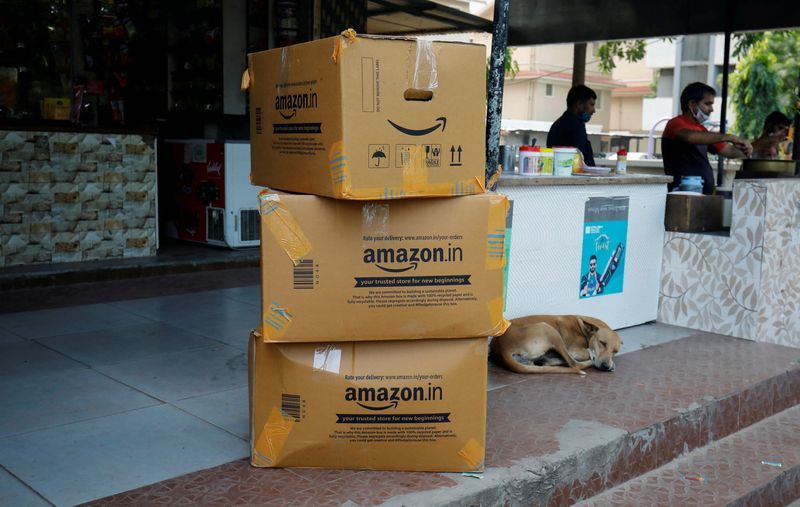
Amazon has committed to taking disciplinary action against M&M Logistics Solutions, a third-party delivery partner operating across northern India, once authorities complete their investigation into a warehouse fire that claimed two lives on June 5 in Uttarakhand. The e-commerce giant's pledge comes as scrutiny intensifies over working conditions at its logistics network and the safety standards upheld by its contracted partners across the subcontinent.
The incident at the M&M Logistics facility has exposed significant gaps in workplace safety compliance. According to police documentation reviewed by international media, the warehouse where the fatal fire occurred lacked elementary fire safety infrastructure: no valid fire safety clearance from authorities, no functioning fire alarm system, absent smoke detection equipment, and inadequate emergency evacuation routes. These deficiencies represent basic protections mandated under Indian building and occupational safety codes, raising questions about how a major e-commerce operator's partner could operate a facility with such critical shortcomings.
Amazon has initiated its own internal investigation into the circumstances of the deaths, according to sources familiar with the company's response. The retailer's statement to media indicated that it would implement "appropriate action in line with our policies" following the conclusion of the official police inquiry, though no timeline was specified for either investigation or subsequent disciplinary measures. The cautious language suggests Amazon may be navigating both accountability expectations and legal implications as investigations proceed.
M&M Logistics Solutions operates an extensive network across northern India, managing 45 delivery centers distributed across 21 cities, according to Amazon's own public disclosures from 2023. This reach underscores the significant volume of Amazon's business flowing through the partner's infrastructure and the scale of potential exposure should safety practices prove systematically inadequate. The company has not responded to media inquiries about the fire or the investigations underway.
This incident arrives against a backdrop of escalating labour and safety concerns at Amazon's Indian operations. Earlier in 2024, India's National Human Rights Commission scrutinised the company over allegations of labour law violations during a severe heatwave at a warehouse facility near New Delhi. That inquiry resulted in state authorities initiating legal proceedings under India's labour protection statutes, demonstrating growing official willingness to hold the e-commerce giant accountable for worker conditions across its supply chain.
Amazon's vendor code of conduct explicitly prohibits unsafe working environments and specifically addresses fire hazards and uncontrolled combustion risks. The code provides for suspension or termination of third-party contractors found violating these standards, establishing a clear contractual basis for enforcement action should investigations confirm safety breaches at M&M Logistics. However, applying such sanctions involves complex considerations around business continuity, worker displacement, and legal liability.
The Amazon India Workers Union has demanded a judicial investigation into the deaths, framing the incident as indicative of "grave failure of workplace safety and protection of human dignity" within Amazon's contracted logistics ecosystem. This statement reflects growing labour activism within India's e-commerce sector and mounting pressure on the platform to demonstrate genuine commitment to worker protection rather than relying on assurances about safety priorities.
For Malaysian and Southeast Asian observers, this incident carries particular relevance as regional e-commerce platforms rapidly expand their logistics networks through similar third-party partnership models. The gaps exposed in India's case—inadequate safety infrastructure, minimal regulatory oversight of partner facilities, and delayed accountability mechanisms—mirror structural vulnerabilities that exist across much of Southeast Asia's developing logistics sector. As Malaysian companies contemplate similar growth strategies, the Indian experience provides cautionary evidence that rapid scaling without rigorous safety integration can produce tragic consequences.
Amazon's repeated public assertions that worker safety constitutes its "top priority" now face credibility tests as investigations into systemic safety failures advance. The company's willingness to enforce its code of conduct standards—potentially terminating or substantially penalising a major regional logistics partner—will signal whether such statements reflect genuine operational commitments or mere public relations positioning. The outcome could influence how other regional e-commerce platforms approach safety compliance across their partner networks.
The broader context suggests that India's regulatory framework may be tightening around e-commerce logistics operations. With the National Human Rights Commission, state labour departments, and now criminal investigations all scrutinising Amazon's supply chain practices, the company faces compounding pressure to demonstrate substantive improvements rather than procedural adjustments. This regulatory momentum could establish precedents affecting how e-commerce logistics operate not just in India but across South Asia and beyond.
For workers throughout Amazon's extended supply chain across India and the region, these investigations represent a potential turning point. Whether they result in systemic safety improvements or merely token gestures will depend on whether regulatory authorities maintain investigative pressure and whether labour unions continue mobilising accountability demands. The deaths at M&M Logistics warrant not only Amazon's stated action but also broader examination of how third-party logistics networks can be held to consistent safety standards across sprawling regional operations.

