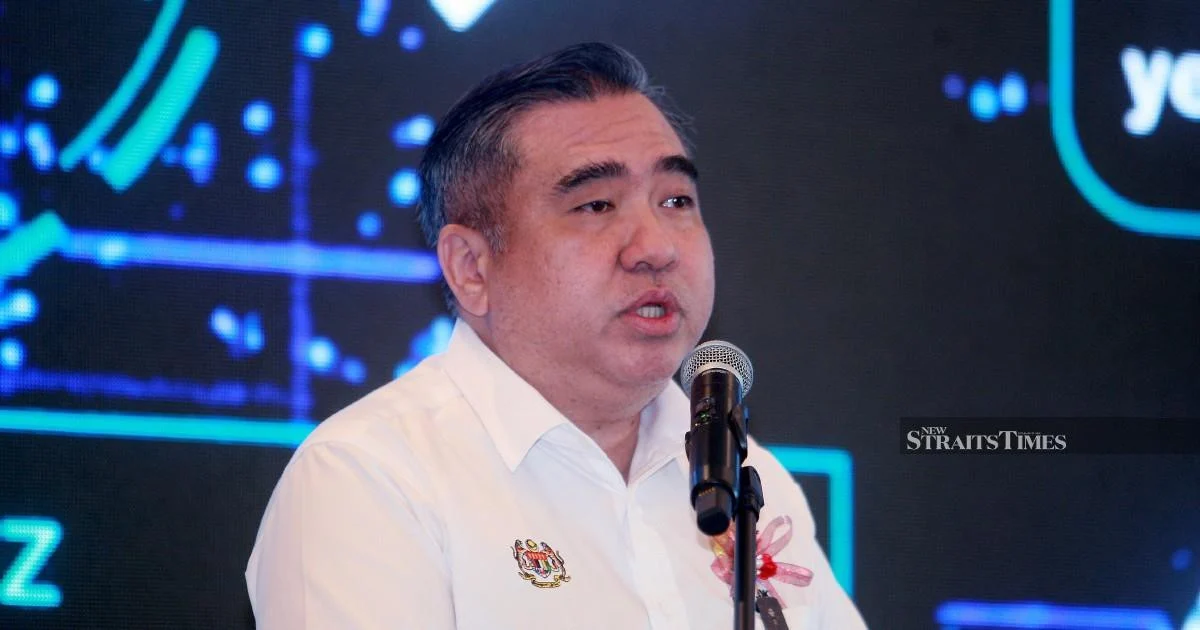
Transport Minister Anthony Loke's recent pronouncement that Malaysian motorists will not face enforcement action for using removable sunshades has inadvertently sparked widespread uncertainty among drivers about the precise boundaries of the regulation. The minister's clarification, intended to provide relief to the motoring public, has instead raised fundamental questions about how traffic authorities will apply and interpret the rule in practice, leaving many Malaysians uncertain whether they fall within the enforcement scope or operate in a grey zone.
The confusion arises from a gap between the ministerial assurance and the mechanics of everyday traffic enforcement. While Loke's statement offers reassurance that removable sunshades will not trigger penalties, the detail concerning what constitutes a "removable" shade remains inadequately defined for ordinary drivers. Motorists struggle to determine whether their specific sunshade configuration qualifies as removable, semi-permanent, or permanently affixed, categories that could significantly influence their liability to enforcement action. This ambiguity places the burden of interpretation on individual drivers navigating road rules, an approach that typically breeds non-compliance rather than compliance.
The situation reflects a broader challenge in Malaysian traffic regulation: the disconnect between policy announcements from the ministry and the practical implementation by frontline enforcement officers. When a transport minister issues guidance that appears to contradict or soften existing regulations, traffic police and local authority enforcement teams must still operate within the legal framework established by primary legislation and statutory rules. Officers in the field may interpret removability differently, potentially leading to inconsistent enforcement across different states and municipalities. A driver penalised in one jurisdiction might argue that identical behaviour should escape penalty elsewhere, creating fairness concerns that undermine public trust in the regulatory regime.
From a Malaysian driver's perspective, the clarification raises legitimate questions about the intended scope of sunshade regulations. Sunshades serve a practical purpose in Southeast Asia's intense tropical climate, reducing interior vehicle temperatures that can otherwise become uncomfortably high and potentially damage upholstery and dashboard components. Many drivers view sunshades as a safety and comfort necessity rather than a cosmetic enhancement. The apparent softening of enforcement, while welcome, leaves uncertainty about whether the underlying prohibition on sunshades remains formally in effect, or whether the rule itself has been revised to accommodate removable varieties.
The distinction between removable and non-removable sunshades also carries practical implications that most drivers understand intuitively. Removable shades can be deployed during parking and removed when the vehicle is in motion, whereas permanently installed tints or non-removable sunshade systems cannot be easily adjusted. Drivers operating removable sunshades typically store them in the vehicle, removing them before driving, a practice that differs fundamentally from darkly tinted windows that cannot be altered without professional intervention. However, without explicit regulatory guidance defining these categories with precision, drivers cannot confidently determine whether their practice aligns with the minister's clarification.
The enforcement implications extend beyond individual compliance to questions of traffic officer discretion. When ministers issue public statements that appear to limit enforcement against a particular behaviour, traffic police face pressure to align their actions with these pronouncements. Yet if the underlying rules remain unchanged, officers technically retain authority to enforce. This creates potential for inconsistent application, where some officers exercise discretion in light of the ministerial statement while others maintain strict enforcement of the formal regulation. The resulting patchwork undermines the rule of law principle that regulations should be applied consistently and predictably.
For Malaysian motorists, this situation illustrates the importance of clear, detailed regulatory communication that bridges the gap between policy aspiration and enforcement reality. Drivers need to know not just what the general principle is, but specifically what configurations, dimensions, and deployment methods fall within or outside acceptable parameters. Public consultations before regulations take effect, or clear ministerial guidelines establishing enforcement parameters, would help drivers navigate these requirements with confidence. The current approach—broad statements followed by driver confusion—generates non-compliance even among motorists motivated to follow the rules.
The sunshade question also reflects broader tensions in Malaysian vehicle regulation between climate adaptation and road safety considerations. Tropical vehicle owners face genuine practical challenges that temperate-climate regulations might not address. Sunshades help manage extreme interior temperatures that can reach dangerous levels within minutes, particularly concerning for child safety and vehicle maintenance. Progressive regulation would acknowledge these realities while maintaining legitimate safety objectives. A regulatory framework that categorically prohibits all sunshades, or that creates enforcement uncertainty through unclear distinctions, risks driving compliance underground rather than achieving genuine traffic safety improvements.
Moving forward, the transport ministry should issue detailed enforcement guidelines clarifying which sunshade types, attachment methods, and deployment practices fall within acceptable parameters. These guidelines should be publicly accessible and communicated through multiple channels to reach diverse driver populations. Enforcement training should ensure that traffic officers consistently apply these standards across Malaysia, reducing the geographic arbitrariness that currently affects drivers' experiences. Clear communication benefits both compliance and fairness, the foundational elements of effective traffic regulation.
The sunshade controversy ultimately reveals that transport policy effectiveness depends equally on clear ministerial communication and practical implementation consistency. Loke's attempt to provide relief to motorists deserves credit, but the execution has fallen short of clarity. For Malaysian drivers now uncertain about enforcement expectations, the path forward requires more detailed guidance that removes ambiguity and enables consistent, fair application. Without this clarity, the rule risks remaining opaque to the public it governs while creating inconsistent enforcement outcomes that undermine respect for traffic regulations generally.

