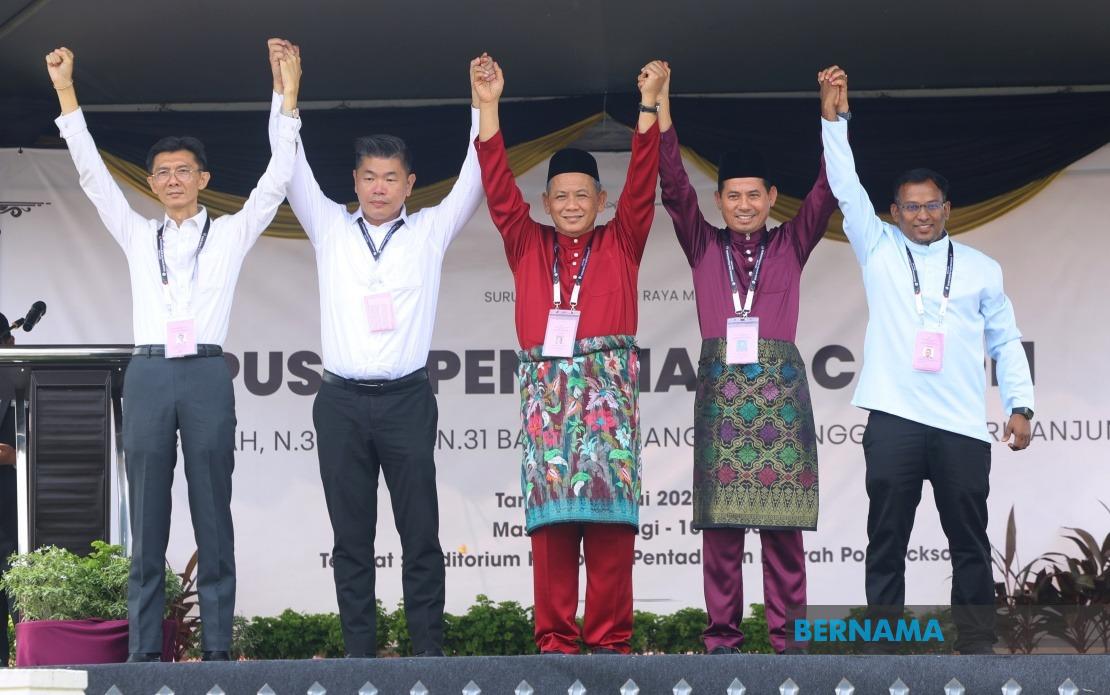
Negeri Sembilan Menteri Besar Datuk Seri Aminuddin Harun is banking on ambitious infrastructure ambitions to shake up the political landscape in Linggi, one of Barisan Nasional's traditionally secure constituencies. The Pakatan Harapan leader outlined proposals for a port facility and industrial estate during nomination proceedings at the Port Dickson District Administration Complex Auditorium on July 18, framing these projects as catalysts for economic expansion and job creation across the state constituency.
The twin developments represent a calculated strategy to address longstanding infrastructure gaps in the district whilst simultaneously demonstrating PH's commitment to material improvement in residents' living standards. By anchoring his campaign message around tangible development outcomes rather than abstract political rhetoric, Aminuddin is attempting to reposition the narrative around what voters might expect from a change in political leadership. The proposals signal an understanding that rural and semi-urban constituencies increasingly vote on the basis of economic dividend rather than traditional party loyalty alone.
Aminddin acknowledged the formidable challenge ahead, openly recognising that wresting Linggi from BN control represents unconventional political territory for his party. The constituency has long been regarded as reliable BN territory, a designation that typically translates into substantial organisational advantages, entrenched voter networks, and institutional resources. However, the Menteri Besar's willingness to contest in such challenging ground suggests confidence in both his personal standing and the broader electoral momentum PH believes it can generate heading into the August 1 polling date.
The three-cornered contest adds complexity to an already competitive race. Aminuddin faces incumbent Datuk Mohd Faizal Ramli from BN and Datuk Zamri Md Said representing Bersatu, meaning anti-BN votes will be divided across two separate candidates. This configuration potentially benefits the incumbent if opposition support fragments, though it also creates opportunities if either PH or Bersatu can consolidate challenger sentiment more effectively than their rivals. The fracturing of the opposition vote has historically played to BN's advantage in peninsular Malaysian elections, a dynamic Aminuddin's team must overcome.
For PH strategists in Negeri Sembilan, the port and industrial zone proposal carries symbolic weight beyond its immediate economic merit. These are infrastructure-class projects that suggest state-level capital commitments and federal alignment—suggesting that a PH government in Selangor or at national level would prioritise Linggi's development. By tethering his campaign to specific, visualisable projects rather than nebulous governance promises, Aminuddin is attempting to give voters a concrete reason to take a political risk on an unfamiliar party in their district.
Mohd Faizal's cautious response, urging a campaign free from excessive provocation and baseless allegations, reveals BN's defensive posture despite its historical dominance in the seat. The incumbent's call for a clean campaign, whilst superficially diplomatic, reflects underlying anxiety that BN cannot take voter loyalty as assured. His admonition against slander and personal attacks suggests the coalition expects a vigorous ground campaign from challengers and seeks to contain potential reputational damage through an appeals-to-decorum strategy—a tactic typically employed by frontrunners seeking to constrain more aggressive competitors' ability to set the campaign agenda.
The broader Negeri Sembilan political landscape has shifted in recent election cycles, with PH making notable inroads in previously BN-secure areas. The state's economic structure, demographic changes, and younger voter cohorts' different political alignments have all contributed to this evolution. Linggi, whilst traditionally conservative, is not immune to these broader currents. Aminuddin's willingness to challenge in this constituency reflects PH's assessment that conditions favour insurgent campaigns in previously untouchable BN strongholds, though success remains far from assured.
Infrastructure-led development strategies have proven potent campaign tools across Southeast Asia, where voters increasingly evaluate political parties on their demonstrated capacity to deliver tangible improvements in economic opportunity and quality of life. A port facility and industrial zone speak directly to employment generation, wage growth, and long-term prosperity—concerns that transcend traditional partisan divides. By centring his pitch around these development outcomes, Aminuddin is tapping into voter priorities that polling consistently identifies as paramount across Malaysian constituencies, regardless of demographic or geographic characteristics.
The two-week campaign period leading to August 1 will determine whether PH can convert infrastructure rhetoric into electoral performance. Aminuddin's personal standing as sitting Menteri Besar provides credibility advantages compared to opposition candidates in other constituencies, though this must be balanced against Linggi voters' historical attachment to BN and Mohd Faizal's incumbency. The campaign will likely hinge on whether PH can convince undecided and swing voters that political change carries manageable risk and meaningful economic upside—a threshold that has proven challenging for opposition parties seeking to dislodge entrenched incumbents in traditionally secure seats.
For Malaysian observers and regional analysts monitoring electoral dynamics in Southeast Asia's democracies, the Linggi contest exemplifies how infrastructure investment and economic development arguments are increasingly muscling out identity-based or personality-driven campaign messaging. Whether Aminuddin's port and industrial zone proposal proves electorally decisive will offer important insights into contemporary voting behaviour in Malaysian constituencies and the effectiveness of development-focused political strategies in contexts of traditional partisan allegiance.

