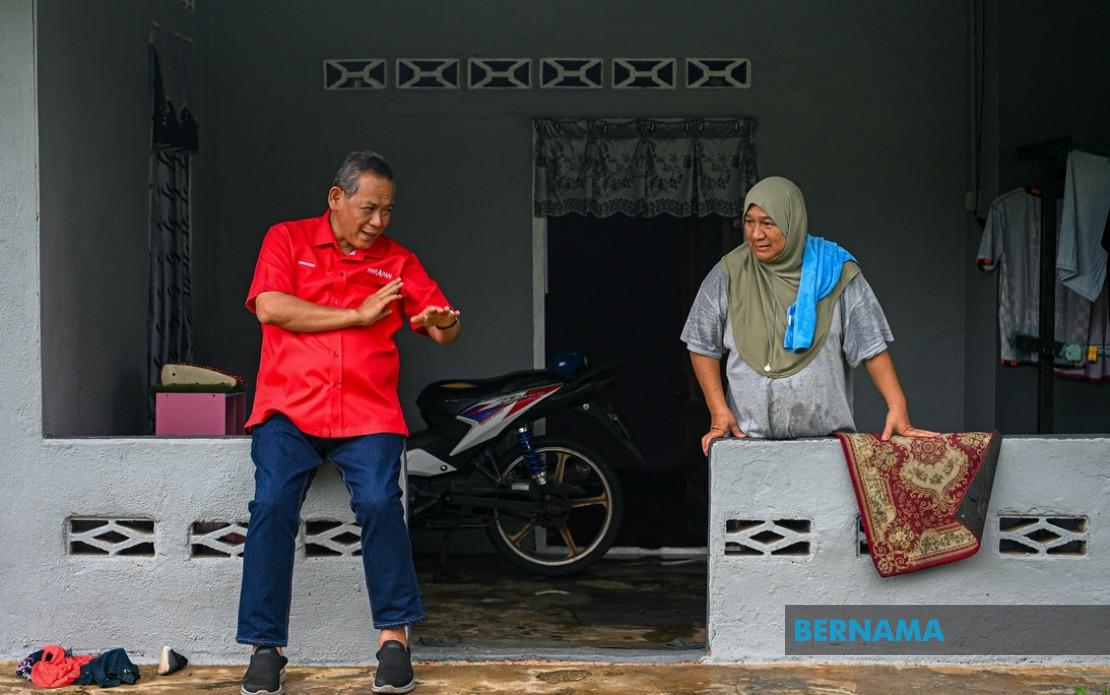
Pakatan Harapan's strategy for retaining control of Negeri Sembilan hinges on the administrative credentials and public trust built by incumbent Menteri Besar Datuk Seri Aminuddin Harun over nearly two consecutive terms in office. As campaigning entered its fourth day ahead of the August 1 polling, coalition officials projected confidence that voters would reward continuity and responsible stewardship over the uncertainty that a change in government might bring to the state's development trajectory.
The coalition's election director, Datuk Seri Amirudin Shari, characterised the early campaign response as encouraging, noting that the electorate appeared receptive to PH's central messaging around clean governance and accountability. Speaking in Seremban, Amirudin—who doubles as Selangor Menteri Besar—highlighted that preliminary feedback from party machinery and grassroots interactions suggested Aminuddin's leadership remained popular despite the typical midterm fatigue that often dogs incumbent administrations. This positive reception, he suggested, reflected voter satisfaction with the absence of major scandals or administrative failures during PH's tenure since 2018.
Crucially, Amirudin emphasised that while large public rallies might not fully capture sentiment, the granular feedback from party workers across Negeri Sembilan's 36 state constituencies painted a picture of solid support. This distinction between headline gatherings and sustained grassroots organisation matters significantly in Malaysian electoral contests, where traditional machinery often proves more decisive than symbolic mass campaigns. The PKR vice-president's confidence appeared rooted in tangible voter interactions rather than mere optimism, suggesting PH's ground organisation remained intact and energised.
The coalition's confidence extends beyond Aminuddin's personal standing to encompass broader structural advantages. PH's well-established grassroots network in Negeri Sembilan, refined through successive elections since 2018 and bolstered by recent victories in Johor and Selangor, represents institutional capacity that opposition parties have struggled to match in recent years. This machinery advantage potentially offsets any complacency risks that might accompany incumbent status, enabling PH to mobilise voters efficiently across both urban and rural constituencies.
Prime Minister and PH chairman Datuk Seri Anwar Ibrahim's national leadership also figures prominently in the coalition's calculations. Amirudin explicitly referenced Anwar's growing stature as a stabilising force in national governance, noting that the premier's popularity had measurably boosted PH candidates in the recent Johor state election. This demonstration effect—where federal leadership translates into state-level electoral advantage—underscores how centralised Malaysian politics has become, with voter confidence in the prime minister rippling through to perceptions of state-level competence and stability.
Negeri Sembilan's electoral landscape presents a three-cornered contest with distinct implications for PH's retention strategy. In the 2023 state election, PH captured 17 of the 36 state assembly seats, securing a clear mandate but hardly overwhelming dominance. Barisan Nasional's 14 seats kept the opposition respectable, whilst Perikatan Nasional's five seats, though modest, indicated the fragmentation that has characterised recent Malaysian electoral politics. This arithmetic means PH must retain most of its 2023 gains whilst potentially making inroads into marginal BN seats to expand its majority, a challenging balancing act that requires disciplined execution.
The coalition's manifesto, scheduled for launch concurrent with this campaign phase, reportedly blends ongoing development initiatives with fresh policy proposals aimed at sustaining economic dynamism and strengthening household incomes across Negeri Sembilan. This two-pronged approach—consolidating past achievements whilst articulating a forward-looking vision—reflects sophisticated campaign strategy that acknowledges voter expectations for both stability and progress. In Southeast Asian democracies, incumbent parties increasingly recognise that resting on past laurels invites complacency, necessitating credible articulation of future directions.
Demographic and logistical factors shape the electoral environment in ways that potentially advantage or disadvantage PH. Approximately 889,490 registered voters are eligible to participate, comprising 867,151 ordinary voters alongside 16,884 military personnel and their spouses and 5,455 police personnel casting early votes. The military and police voters traditionally lean toward establishment parties, though this generational assumption has weakened as younger security personnel exhibit more independent voting patterns. Early voting on July 28, preceding general polling by four days, follows the now-standard practice of enabling security personnel to vote prior to deployment, though this mechanism has occasionally provoked debate regarding potential institutional pressure on voting behaviour.
The timing of Negeri Sembilan's election—sandwiched between recent state elections in Johor and Selangor that delivered decisive PH victories—creates both opportunity and expectation. Momentum from those victories provides psychological advantage and suggests voter appetite for PH's national direction, yet simultaneously raises expectations that campaign observers will interpret Negeri Sembilan results as a bellwether for the coalition's trajectory heading toward the next federal election. Any significant underperformance could undermine the narrative of resurgent PH dominance that recent state victories have constructed.
For Malaysian politics more broadly, Negeri Sembilan's election tests whether voter preferences have genuinely shifted toward rewarding institutional stability and clean governance over the populist appeals that characterised earlier phases of Malaysia's democratic cycle. Aminuddin's near-spotless administrative record—the absence of corruption allegations, major policy failures, or government dysfunction—represents something increasingly rare in Malaysian politics. If such sobriety and competence proves electorally rewarding, it may signal important shifts in what voters prioritise, potentially elevating governance standards as a central electoral factor beyond mere partisan loyalty.
The stakes extend to Negeri Sembilan's specific development priorities, which include expanding port operations at Port Dickson, diversifying the state's manufacturing base beyond traditional automotive and rubber sectors, and managing rapid urbanisation in the Seremban metropolitan area. PH's campaign messaging implicitly promises continuity in managing these complex challenges, whereas electoral uncertainty might disrupt ongoing initiatives. This practical dimension—beyond abstract notions of clean government—likely resonates with voters in constituencies directly affected by infrastructure projects or economic diversification efforts.

