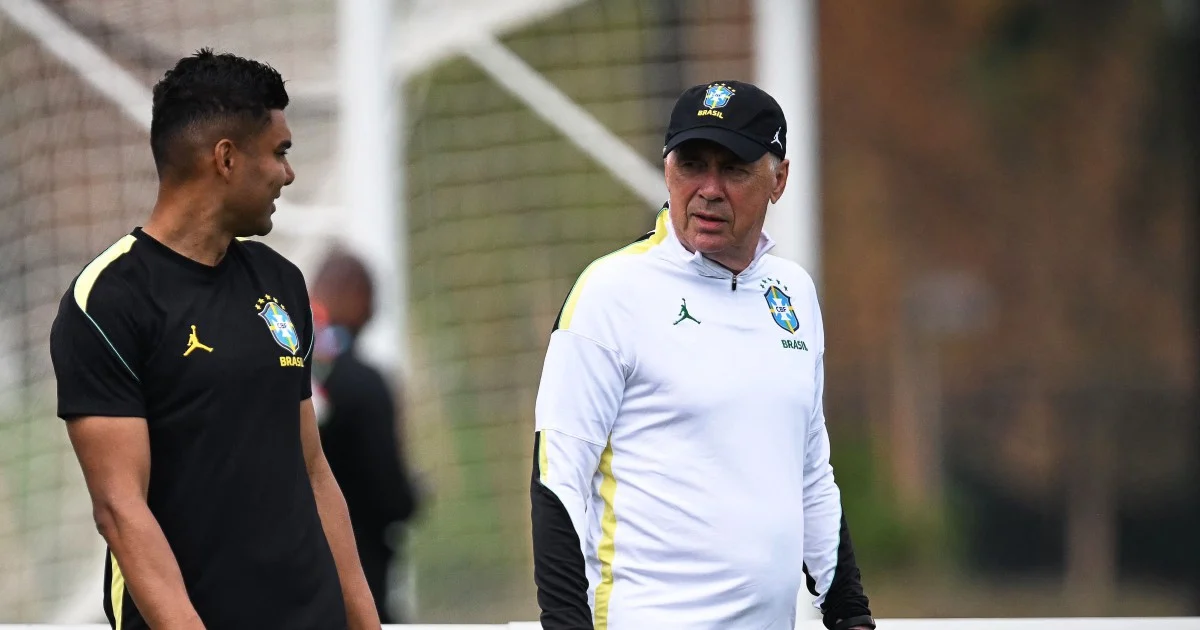
Brazil's World Cup campaign has begun with an unsatisfying result, but coach Carlo Ancelotti is resisting the urge to overreact following the team's 1-1 draw against Morocco. Rather than viewing the stalemate as a cause for alarm, the experienced Italian tactician has adopted a measured approach, using Friday's Group C clash with Haiti as a platform to implement corrections and demonstrate the quality expected of the five-time world champions.
Ancelotti's calm demeanor reflects his considerable pedigree in football management. Having guided clubs and national teams through countless pressure situations across Europe's elite competitions, he understands that a single opening-match result, particularly a draw rather than a defeat, does not define a tournament campaign. His refusal to enter crisis mode sends an important signal to the Brazilian media, supporters, and most crucially, his own players—that Wednesday's performance against Morocco, while imperfect, contains retrievable lessons rather than fatal flaws.
The Morocco encounter exposed several weaknesses that demand urgent attention before Haiti arrives in Philadelphia on Friday. Brazil's defensive organization appeared fragile at times, while the team's rhythm in midfield occasionally faltered against well-organized opposition. Ancelotti has identified these specific areas as targets for tactical adjustments and renewed emphasis on shape and discipline. Rather than wholesale changes, expect refinements to positioning and decision-making that capitalize on the technical superiority the squad possesses.
Haiti represents a vastly different challenge from the well-structured North African side Brazil faced in their opener. The Haitians, competing at a significantly different competitive level, will likely approach the match with defensive intent and the objective of avoiding heavy defeat. This tactical scenario should theoretically provide Brazil with greater opportunities to control possession, dictate tempo, and execute the attacking patterns that constitute their traditional strengths. For players who felt constrained by Morocco's defensive setup, the Haiti match offers psychological redemption and confidence restoration.
The importance of this fixture extends beyond mere point accumulation in World Cup qualifying. Group C standings are still taking shape, and a comprehensive victory against Haiti would substantially improve Brazil's position while signaling to rival nations that Wednesday's draw was merely a minor detour rather than evidence of deeper troubles. Ancelotti has highlighted the psychological value of a convincing win in erasing the disappointment of the opening result and restoring the dominant mentality that has historically defined Brazilian football.
Ancelotti's strategic approach also reflects broader wisdom about tournament football. Early matches often reveal technical issues and areas requiring adjustment; how teams respond determines their trajectory. Brazil possesses sufficient quality to bounce back, and the coaching staff has clear diagnostic data regarding the specific problems requiring resolution. Panic-driven decisions often prove counterproductive, whereas calm analysis of video footage, tactical discussion, and targeted corrections yield superior outcomes.
From a regional perspective, Brazil's performance carries implications for South American football more broadly. As the continent's most successful nation and a benchmark standard, Brazilian struggles inevitably attract intense scrutiny and comparative analysis. A decisive victory over Haiti would reinforce the narrative of Brazilian football recovering its traditional standards and competing at the expected level. Conversely, further disappointing results would fuel questions about the team's current competitive standing relative to other continental powers.
Ancelotti's squad contains world-class talent spanning multiple European clubs, representing a concentration of individual quality that should theoretically overwhelm opponents like Haiti. The challenge often lies in translating that talent into cohesive team performance, particularly when opponents adopt cautious defensive strategies designed to frustrate and nullify rather than compete positively. Ancelotti's role involves maximizing collective efficiency and ensuring the team's superior resources translate into concrete advantages.
The coach's experience managing under pressure in high-stakes competitions provides confidence that Brazil will recalibrate effectively. Ancelotti has demonstrated this capacity repeatedly throughout his career, consistently extracting improvements from teams facing setbacks or underperforming in specific matches. His reputation for creating stable, professional environments where problems receive analytical rather than emotional treatment serves Brazil well during this transitional phase of the qualification campaign.
Friday's encounter therefore represents both opportunity and responsibility for the Brazilian contingent in Philadelphia. The immediate objective remains securing three points, but the secondary goal—restoring the team's confidence and demonstrating the corrective measures implemented since Wednesday—carries equal importance for tournament trajectory and player morale. Ancelotti's composed public demeanor provides appropriate context for understanding how Brazil approaches this crucial fixture, with professionalism and focused intent replacing panic or desperation.