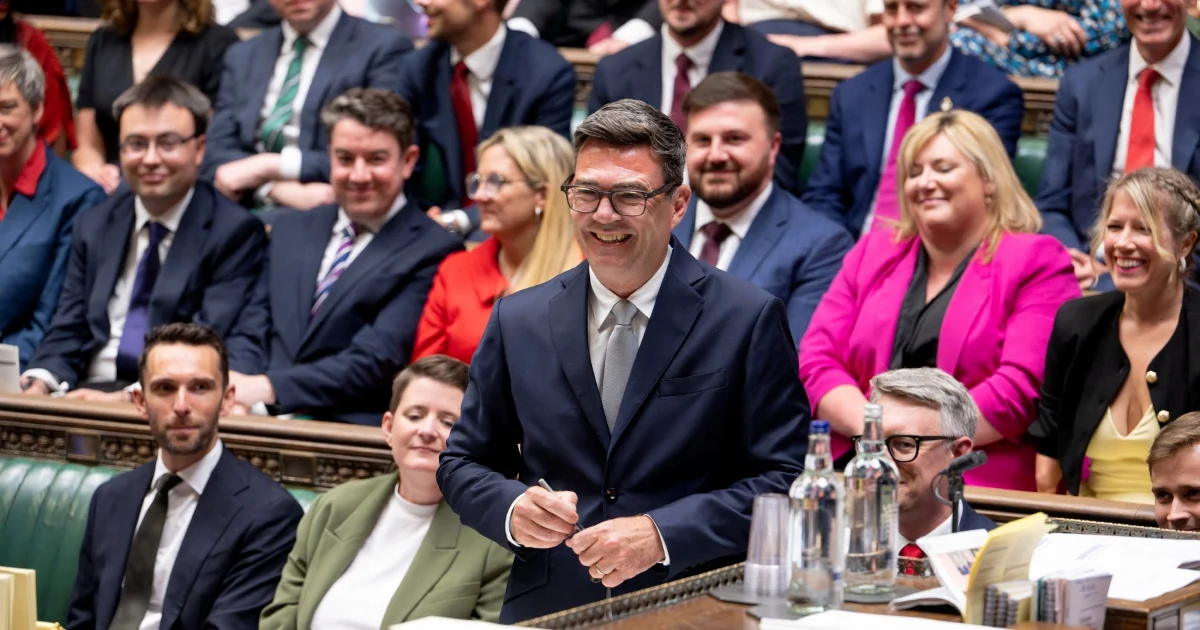
Andy Burnham has positioned himself as the frontrunner to become Britain's next Labour prime minister, receiving a triumphant reception in parliament on Monday after Keir Starmer announced his intention to step down from the party leadership. The development marks a significant turning point in British politics, with Burnham's profile elevating considerably within Labour circles and among the wider public.
Burnham's rise from his base in Greater Manchester reflects a broader political strategy that has seen him build substantial regional power and credibility over the past decade. As Mayor of Greater Manchester since 2017, he has cultivated an image as a populist politician capable of connecting with working-class voters, a demographic that has grown increasingly detached from Labour in recent election cycles. His tenure in Manchester has allowed him to develop a distinct political identity separate from Westminster establishment politics, which could prove valuable in a leadership contest.
The timing of Starmer's resignation announcement has created immediate momentum for potential successor candidates, with Burnham appearing well-positioned to benefit from the ensuing leadership vacuum. His parliamentary reception on Monday demonstrated significant support among Labour MPs, suggesting he commands considerable backing among elected representatives. This level of parliamentary support could prove decisive in any formal leadership election process.
Burnham's background encompasses previous roles as Health Secretary and Work and Pensions Secretary under Ed Miliband, giving him substantive government experience at senior Cabinet level. This ministerial history provides him with credibility on policy matters and demonstrates his ability to manage large government departments. However, his previous Labour leadership campaign in 2015 ended unsuccessfully, which some observers view as indicating his political limitations at the highest level.
Regional politics has become increasingly important in British electoral calculations, and Burnham's Manchester base offers distinct advantages in reconnecting Labour with northern England. The so-called "Red Wall" constituencies that Labour lost to the Conservatives require the kind of grassroots political presence and regional focus that Burnham has cultivated through his mayoral role. His northern credentials and working-class connection stand in contrast to some other potential leadership candidates who maintain stronger connections to London and southern England.
For Malaysian and Southeast Asian observers, the dynamics unfolding in British Labour politics reflect broader challenges facing centre-left parties globally. Like other democracies, Britain is experiencing fragmentation among traditional party constituencies, with politicians seeking to rebuild connections across regional and class divides. The emphasis on regional leadership as a pathway to national office mirrors patterns seen in other Westminster democracies, including Australia and Canada.
Burnham's potential ascension would represent a significant shift in Labour's political direction and priorities. His regional focus and emphasis on connecting with traditional working-class Labour voters suggests a movement away from the metropolitan liberal politics that some argue characterised Starmer's leadership. Whether this represents an opportunity for Labour to recapture lost support or a strategic miscalculation will likely define the party's electoral prospects in the coming years.
The formal succession process remains unclear, with Labour's rules governing leadership elections potentially allowing for an extended timeline or accelerated process depending on party decisions. This uncertainty means that while Burnham appears to be in a strong position currently, other candidates may emerge with alternative visions for the party's direction. The coming weeks will reveal whether Burnham can maintain his current momentum or whether internal party dynamics shift during the formal campaign process.
International observers are closely watching Britain's Labour leadership transition, as it signals broader direction for progressive politics in a major Western democracy. The contest between maintaining a centrist positioning versus pivoting toward a more regionally-focused, working-class oriented strategy will have implications for Labour's electoral strategy and could influence debates within progressive parties across the Commonwealth and beyond.
Burnham's profile in Greater Manchester extends beyond ceremonial mayoralty, encompassing substantial autonomy over local public health, transport, and economic development decisions. This hands-on executive experience distinguishes him from some other potential leadership candidates and provides him with tangible policy achievements to highlight. His handling of the Manchester local economy and public services responses offers material for demonstrating practical competence beyond parliamentary rhetoric.
The broader Labour Party membership will ultimately have significant influence in determining the next party leader, and their preferences may diverge from those of parliamentary colleagues. While Burnham's reception among MPs appears positive, winning over the broader membership—which has previously supported more ideologically ambitious candidates—will present a different political challenge requiring distinct messaging and strategic positioning.
As Britain navigates this period of political uncertainty, Burnham represents a particular vision for Labour's future grounded in regional engagement and working-class reconnection. Whether this approach proves sufficient to restore Labour's electoral fortunes and whether Burnham can successfully translate his regional success into compelling national leadership remain significant open questions as the party begins its formal succession process.

