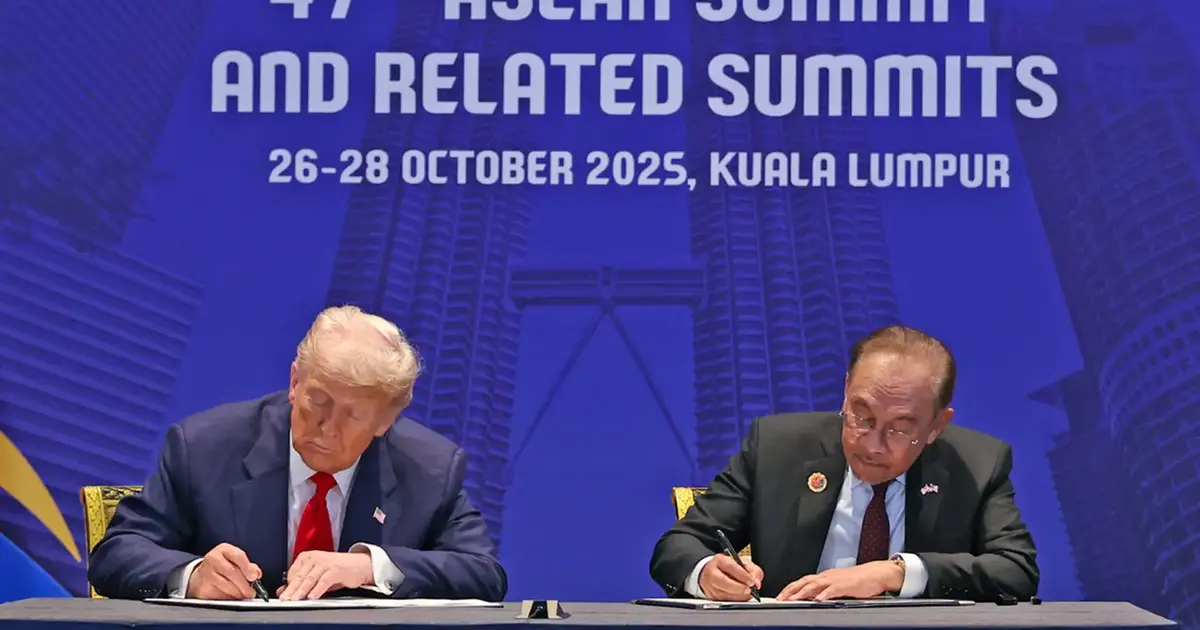
Prime Minister Anwar Ibrahim's government has moved to dismiss a legal challenge mounted by opposition Members of Parliament against the reciprocal trade agreement negotiated with the United States, setting the stage for a significant constitutional showdown over the executive's authority to conclude international trade compacts without parliamentary approval.
The application to strike out the suit represents the administration's formal response to a case that strikes at fundamental questions about the separation of powers in Malaysia's political system. The opposition MPs had initiated proceedings questioning whether the Malaysia-US trade deal was entered into with proper constitutional oversight and legislative validation. By seeking to dismiss the case entirely, the government is essentially arguing that the matter falls outside the scope of judicial review or that the plaintiffs lack standing to challenge the agreement.
Simultaneously, the opposition lawmakers have lodged a separate application requesting that the Federal Court examine constitutional questions arising from the trade accord. This two-pronged legal strategy by the MPs suggests they believe the agreement may have infringed parliamentary sovereignty or violated constitutional provisions requiring legislative consent for binding international obligations. The constitutional referral pathway offers an alternative mechanism to adjudicate these weightier questions of governmental authority, should the court find merit in the procedural issues at stake.
The Malaysia-US reciprocal trade relationship carries significant economic implications for Southeast Asia's largest economy. Trade flows between Kuala Lumpur and Washington have expanded considerably in recent years, with American investment in manufacturing, technology, and services sectors playing an increasingly important role in Malaysia's development trajectory. The nature of any trade agreement therefore affects not merely bilateral commerce but also regional supply chains and Malaysia's competitive positioning within ASEAN.
For Malaysian readers, this legal dispute encapsulates a broader tension within the nation's constitutional framework regarding how much discretion the executive possesses in concluding international agreements. While the Prime Minister and cabinet traditionally hold authority to negotiate foreign treaties, the question of whether certain agreements—particularly those with trade implications affecting domestic industries and employment—require explicit parliamentary approval remains contested. The opposition's challenge suggests they view this particular accord as sufficiently consequential to warrant legislative scrutiny before implementation.
The government's decision to challenge the suit's admissibility rather than defending the agreement's merits on substantive grounds is a notable tactical choice. It suggests confidence in the legal procedural arguments but may also reflect concerns about opening the agreement to detailed public examination through courtroom proceedings. Striking out applications typically succeed when courts find that a plaintiff lacks legal standing, that the claim is premature, or that existing law does not provide a remedy for the alleged injury.
The constitutional questions raised by the MPs likely centre on whether the agreement constitutes a treaty requiring ratification, whether it imposes obligations that conflict with Malaysian law, or whether it should have been tabled before Parliament under existing constitutional conventions. These are not trivial matters; they go to the heart of how Malaysia's Westminster-derived system allocates decision-making authority between elected representatives and the executive branch. A Federal Court finding against the government could establish important precedents for how future trade negotiations are conducted.
International trade agreements occupy an ambiguous space within many Commonwealth-influenced legal systems, including Malaysia's. Some agreements are classified as executive decisions requiring no legislative approval, while others are deemed treaties necessitating parliamentary ratification. The classification often depends on factors such as whether the agreement creates binding obligations on the state, whether it requires domestic legislation to implement, and whether it affects rights and duties of Malaysian citizens. The opposition's legal challenge essentially seeks judicial clarification on where the Malaysia-US accord falls within this spectrum.
From a regional perspective, the outcome of this dispute could influence how other Southeast Asian nations approach trade negotiations. Malaysia's legal framework and constitutional principles are often referenced by neighbouring countries grappling with similar questions about executive authority and parliamentary oversight. A ruling that expands or restricts the government's ability to conclude trade deals unilaterally could have ripple effects across ASEAN, potentially affecting how regional governments structure their own international economic commitments.
The timing of this legal contest coincides with broader regional discussions about trade liberalisation, digital commerce, and supply chain resilience in the post-pandemic era. Malaysia has positioned itself as a strategic partner for Western economies seeking to diversify supply chains away from China, making trade relationships with countries like the United States particularly valuable. However, this strategic importance makes it all the more critical that any major agreements enjoy legitimacy through proper constitutional channels, whether through judicial endorsement or explicit parliamentary approval.
For Anwar's administration, the stakes extend beyond this single trade agreement. How the government handles this legal challenge sends signals about its commitment to constitutional governance and parliamentary oversight. While a successful motion to strike out the suit would represent a legal victory, it could simultaneously generate political costs if voters perceive the government as overly dismissive of parliamentary input on major policy matters. Conversely, a defeat on the striking out application would force the government to either defend the agreement substantively or consider returning to Parliament for a vote of confidence in the deal.
The Federal Court's treatment of both the striking out application and the constitutional referral request will provide crucial guidance on the scope of judicial review over executive trade decisions. Whether judges view trade agreements as political matters deserving deference to executive judgment or as justiciable questions requiring constitutional scrutiny will shape how future administrations conduct international negotiations. The opposition's persistence in pursuing multiple legal avenues suggests they expect a lengthy process before final resolution.

