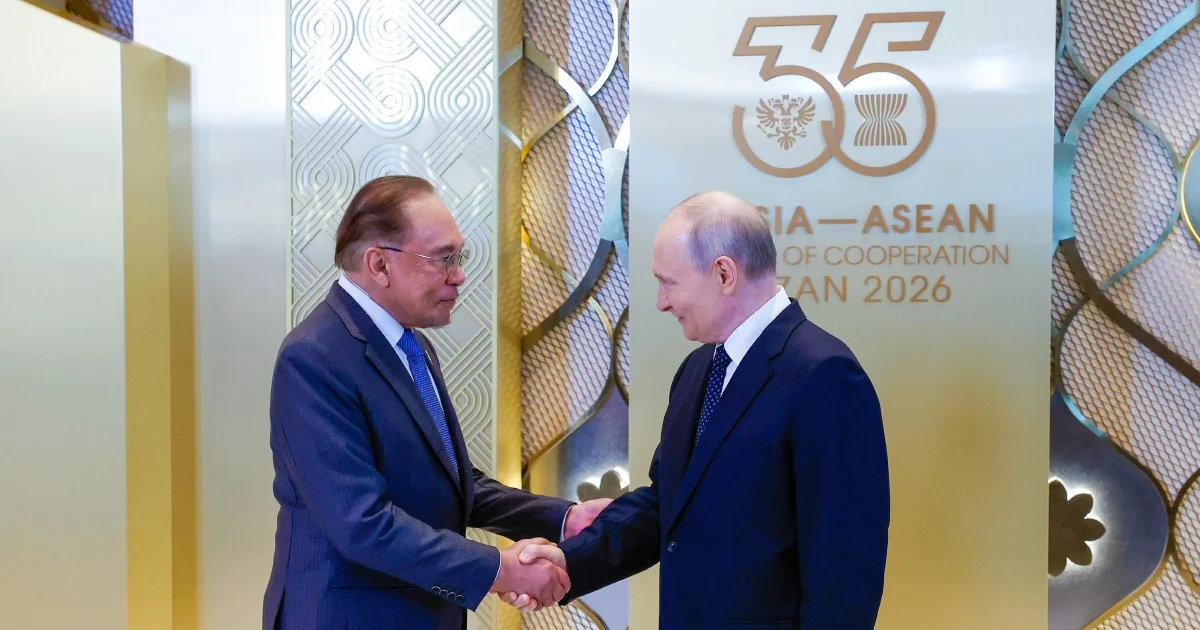
Prime Minister Datuk Seri Anwar Ibrahim has held substantive talks with Russian President Vladimir Putin, with both leaders prioritising the expansion of energy cooperation and bilateral commerce as cornerstones of their nations' strategic relationship. The discussions underscore Malaysia's deliberate effort to strengthen ties with Russia despite broader geopolitical tensions in other regions, reflecting Kuala Lumpur's independent foreign policy approach and its pursuit of mutually beneficial economic partnerships across multiple continents.
The emphasis on energy security demonstrates how resource-dependent Southeast Asian economies like Malaysia view their partnership with Russia through a pragmatic lens. As global energy markets remain volatile and pricing mechanisms contested among major powers, Malaysia's willingness to engage substantively on this front suggests the country is hedging its energy portfolio beyond traditional Middle Eastern suppliers and Australian producers. For Malaysia, which relies on imports to supplement domestic petroleum and gas production, diversifying energy partnerships reduces vulnerability to supply disruptions and pricing leverage by any single supplier or geopolitical bloc.
Trade denominated in local currencies has emerged as a strategic priority for both nations, reflecting a broader shift within the Global South toward reducing dependency on United States dollar-based transactions. This mechanism allows Malaysia and Russia to conduct commerce while circumventing international sanctions that Moscow faces and insulating bilateral trade from currency fluctuations. For Malaysian businesses and policymakers, such arrangements open pathways for easier market access in Russia while strengthening the ringgit's role as a regional currency and potentially positioning Malaysia as a financial intermediary within Southeast Asia.
The timing of these discussions carries significance within the context of Malaysia's foreign relations. Under Prime Minister Anwar Ibrahim's leadership, the country has maintained a carefully balanced diplomatic posture, engaging constructively with both Western nations and non-aligned powers. This conversation with Putin reinforces that Malaysia views dialogue and economic cooperation as preferable to isolating any major global actor, a position consistent with the nation's historical commitment to non-alignment and respect for national sovereignty in international affairs.
For the broader Southeast Asian region, Malaysia's active engagement with Russia on economic matters signals that the region will not automatically align with Western-led efforts to marginalise Moscow. Vietnam, Indonesia, and Thailand have similarly maintained pragmatic relationships with Russia despite international sanctions, suggesting that Southeast Asian nations prioritise economic self-interest and regional stability over participation in broader geopolitical contests between major powers. This regional posture creates both opportunities and risks, as engagement with Russia can potentially draw unwanted scrutiny from Western trading partners while also offering diversification benefits.
The energy dimension of these discussions also reflects changing global power dynamics in the commodities sector. Russia, despite sanctions limiting its crude oil and natural gas export markets, remains one of the world's most significant energy producers. Malaysia, as a developing economy with growing energy demands, benefits from establishing reliable supply relationships. Simultaneously, discussions on energy security may encompass technological cooperation on renewable transitions, as both nations face pressure to address climate commitments while managing energy-intensive growth trajectories.
Local currency trade arrangements carry additional implications for Malaysia's financial sector development. By conducting commerce in ringgit and ruble rather than dollars, Malaysia strengthens its currency's international usage and potentially creates opportunities for Malaysian banks and financial institutions to develop expertise in non-dollar settlement systems. This experience could position Malaysia advantageously as the region potentially develops alternative payment mechanisms independent of Western-dominated systems, particularly if trade tensions with Western markets increase.
From a domestic perspective, expanding energy cooperation with Russia could potentially moderate fuel prices for Malaysian consumers and industries, providing economic relief at a time when governments across Southeast Asia face inflationary pressures. Reliable energy supplies underpin manufacturing competitiveness and industrial development, making energy security dialogues between leaders both a strategic and economically pragmatic necessity. Malaysia's petrochemical sector, in particular, depends on stable energy inputs for cost-effective production.
The bilateral engagement also demonstrates Russia's continued interest in building partnerships within Asia despite international isolation. For Moscow, relationships with Southeast Asian nations provide economic outlets, diplomatic legitimacy, and strategic counterweight to Western influence in the region. Malaysia, as the largest Muslim-majority nation in Southeast Asia and a member of ASEAN with significant global trade networks, represents a particularly valuable partner for Russia seeking to maintain influence and economic viability through sanctions.
Moving forward, the concrete outcomes of these discussions will likely materialise in expanded trade volumes, perhaps new bilateral agreements on energy supplies, and possibly joint ventures in sectors complementary to both nations' development priorities. Malaysian companies may gain increased access to Russian markets, while Russian energy suppliers could secure long-term buyers in Malaysia and potentially use the country as a hub for regional distribution. The success of local currency trade mechanisms will depend on both nations' willingness to invest in financial infrastructure and their ability to demonstrate tangible benefits to domestic businesses.
The long-term significance of Malaysia-Russia energy and trade cooperation extends beyond bilateral relations into broader questions about how Southeast Asian nations will position themselves within an increasingly multipolar global order. As traditional alliances shift and new economic blocs form, Malaysia's willingness to engage substantively with major powers regardless of geopolitical alignments reflects a matured foreign policy approach centred on national economic interests and regional stability rather than ideological alignment.

