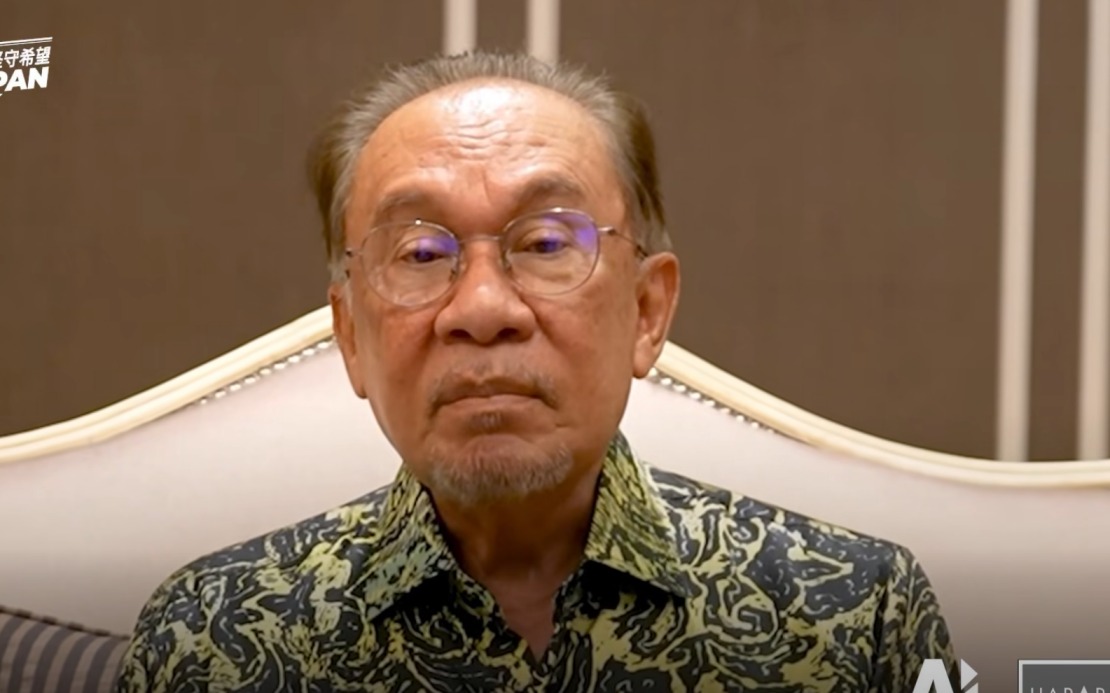
Prime Minister Datuk Seri Anwar Ibrahim made a direct appeal to members of the Malaysian Armed Forces and Royal Malaysia Police, along with their families, to cast their votes in favour of Pakatan Harapan candidates during the upcoming 16th Negeri Sembilan State Election. Through a video message posted on social media, the PH chairman framed the electoral contest as an opportunity for the ruling coalition to continue its mandate and build upon initiatives aimed at enhancing the living standards of the nation's security personnel.
The Prime Minister's outreach reflects a strategic acknowledgement that military and police voters represent a concentrated demographic bloc whose preferences could prove decisive in state-level contests. In Negeri Sembilan, early voting on Tuesday will see approximately 16,884 military personnel and their spouses, alongside 5,455 police officers, exercising their ballot rights across 38 dedicated voting centres scattered throughout the state. The broader polling exercise is scheduled for August 1, setting the stage for what many observers view as a critical test of PH's electoral fortunes outside the federal sphere.
Anwar's messaging strategy centred on the government's track record in addressing grievances long articulated by defence and law enforcement communities. He explicitly highlighted improvements in compensation packages, infrastructure provision for families, and access to education and healthcare services. The Prime Minister referenced two targeted assistance programmes—Sumbangan Tunai Rahmah and Sumbangan Asas Rahmah—as concrete examples of the coalition's commitment to material support for lower-income earners, including frontline personnel whose salaries often remain modest relative to private sector counterparts.
The appeal carries particular significance given broader debates within Malaysia's political ecosystem surrounding the relationship between elected governments and uniformed services. Security personnel have historically maintained professional distance from partisan politics, yet their collective voting power cannot be ignored during competitive elections. By framing support for PH as an extension of mutual respect and reciprocal obligation, Anwar sought to position the government not as a partisan actor but as a custodian of institutional welfare.
The timing of this appeal underscores Negeri Sembilan's importance within PH's electoral calculus. State elections serve as barometers of voter sentiment between federal contests, offering governing coalitions opportunities to demonstrate effectiveness and consolidate support. The Negeri Sembilan result will carry implications for federal-level calculations, particularly as Malaysia approaches the subsequent general election cycle. A strong showing would vindicate PH's administrative record, while a disappointing performance might signal erosion of confidence in key constituencies.
Anwar's acknowledgement that improvement remains possible despite government efforts reflects a pragmatic political stance. He did not claim comprehensive resolution of security sector grievances but rather positioned the current administration as committed to ongoing progress. This incremental framing may resonate with personnel accustomed to bureaucratic limitations and budgetary constraints affecting public sector compensation. The implicit message—that continued PH governance offers the most reliable pathway toward sustained welfare enhancement—presents voting as an investment in future advocacy rather than a reward for past performance.
The targeting of military and police households represents a bifurcated campaign strategy. Spouses and dependent family members often participate in electoral decisions, expanding the effective voter base beyond uniformed personnel themselves. Household-level discussions about workplace conditions, salary adequacy, and family welfare considerations may translate individual professional experiences into broader electoral choices. This multiplier effect means that messaging reaching security personnel reaches extended networks of voters with direct interest in government policies affecting defence and internal security budgets.
Negeri Sembilan's particular demographic composition and historical political dynamics add contextual layers to this electoral appeal. The state maintains significant military installations and police training facilities, making it a natural concentration point for defence and security sector employees. Traditional patterns of support within these communities, combined with newer voter cohorts from urban centres, create a complex electoral landscape where appeals to institutional loyalty intersect with broader performance-based assessments of government effectiveness.
The election itself represents a broader test of PH's resilience following its formation and subsequent governance record since 2018. Internal coalition dynamics, competing interests among component parties, and shifting voter preferences across different demographic groups have complicated the coalition's trajectory. A demonstration of continued support among orderly, hierarchically-oriented constituencies like the military and police could reinforce narratives of institutional stability and predictable governance—valuable assets during uncertain political periods.
Anwar's framing of voting as an act of collective partnership between government and security services reflects evolving campaign rhetoric that emphasizes collaboration over conflict. Rather than leveraging patronage or implicit threats regarding institutional budgets, the Prime Minister appealed to shared interests in national dignity and citizens' welfare. This softer, inclusive messaging may reflect calculation that heavy-handed appeals could alienate middle-class and professional voters whose support PH requires across urban electoral battlegrounds.
The early voting mechanism itself carries significance, as it concentrates security personnel's participation into discrete temporal windows and geographic spaces. This administrative arrangement may facilitate campaign coordination and voter mobilization efforts by PH machinery, though similar organizational advantages presumably extend to opposition coalitions. The 38 voting centres represent logistical accommodations for personnel unable to vote on the main polling date due to operational requirements, underscoring the state's recognition of security sector electoral participation as valuable and worthy of institutional facilitation.
Looking beyond this specific election, Anwar's appeal illustrates how Malaysian political actors navigate the sensitive relationship with uniformed services. Neither overtly courting their political allegiance nor ignoring their numerical significance, the Prime Minister positioned security personnel as stakeholders in national development whose professional dedication deserved governmental recognition and material reward. This calibrated approach reflects awareness that excessive partisanship toward security services generates controversy and accusations of politicization—risks that careful messaging and emphasis on welfare rather than loyalty can mitigate.

