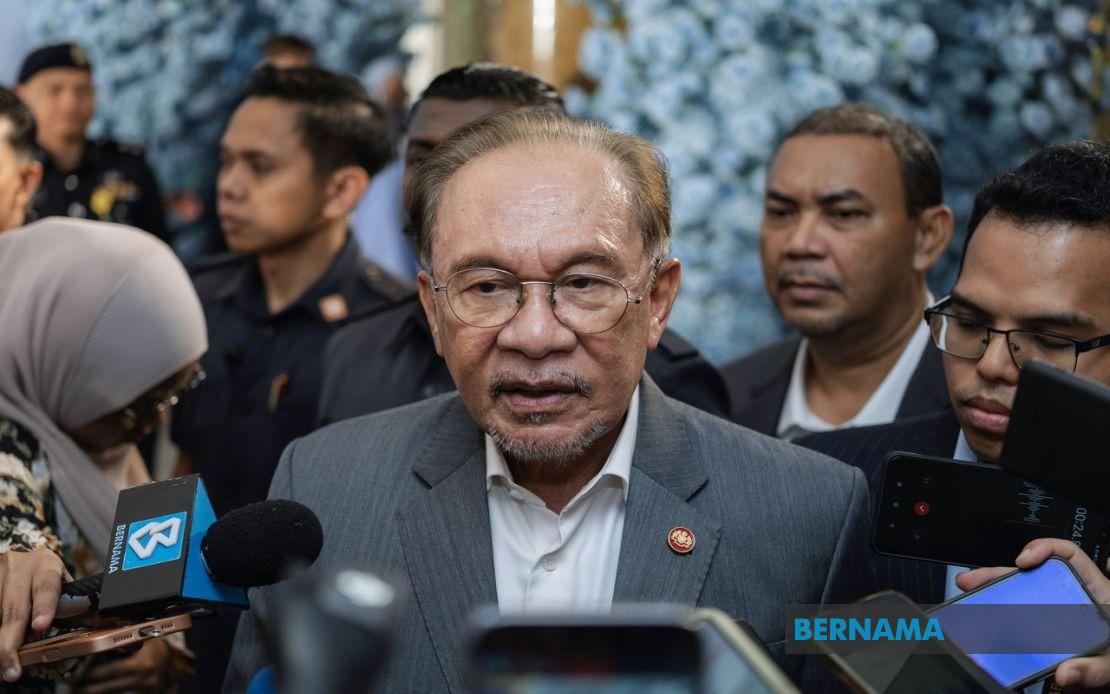
Prime Minister Datuk Seri Anwar Ibrahim remains in the dark about the circumstances leading to four Melaka DAP state assemblymen abandoning their positions in the state government, having received no formal briefing from party officials on the matter as of mid-July. Speaking to reporters in Kuala Lumpur, the Pakatan Harapan chairman acknowledged the gap in his information while committing the coalition's leadership to addressing the issue in due course, though he declined to specify a timeline for that intervention.
The withdrawal marks a significant fracture within Melaka's ruling coalition just hours after the State Legislative Assembly approved amendments to the state constitution. These amendments introduced a controversial mechanism permitting the appointment of additional state assemblymen without requiring them to have been elected by voters, a development that evidently catalysed the immediate exodus of the four DAP representatives.
Allex Seah Shoo Chin, Low Chee Leong, Leng Chau Yen, and Kerk Chee Yee—representing the constituencies of Kesidang, Kota Laksamana, Banda Hilir, and Ayer Keroh respectively—acted in concert to resign their government positions. Their decision underscores deepening tensions within DAP's Melaka branch regarding the direction of state governance and raises questions about the party's influence within the broader coalition framework that governs the state.
The timing of the constitutional amendments appears deliberately designed to strengthen the ruling coalition's parliamentary position through unelected appointments, a practice that has become increasingly common in Malaysian state legislatures. Such measures typically face resistance from democratically-oriented parties, and DAP's traditional emphasis on electoral transparency and representative accountability makes their members particularly susceptible to principled objections against nominated-seat mechanisms.
Anwar's earlier appeal to the DAP quartet to reconsider their departure and redirect their energies toward development priorities and public welfare fell short of persuading them to maintain their governmental roles. That the Prime Minister felt compelled to make such a public plea suggests senior leadership understood the potential reputational damage to Pakatan Harapan if the withdrawal proceeded unchallenged, yet his intervention proved insufficient to reverse their decision.
The absence of immediate briefing materials reaching Anwar's office indicates either communication breakdowns within the coalition's internal structures or deliberate delays by Melaka DAP in formally notifying headquarters of their intentions. Either scenario reflects organisational dysfunction at a sensitive moment when coalition cohesion remains fragile across multiple state administrations. The delay in briefing the coalition chairman suggests that Melaka DAP may have acted with relative autonomy, perhaps to present the Prime Minister with a fait accompli that would constrain his options for intervention.
For Malaysian politics more broadly, the incident exemplifies ongoing tensions between democratic principles and pragmatic coalition-building. While nominated-seat arrangements expand ruling coalition numbers on paper, they simultaneously erode the legitimacy of state governments and invite accusations of autocratic tendencies. That Pakatan Harapan—ostensibly committed to democratic governance—has permitted such mechanisms in states it controls represents a significant compromise of its foundational political messaging.
The four departing assemblymen effectively signalled that certain red lines remain intact within DAP's ideological framework, despite party participation in coalition governments that frequently require moral compromises. Their coordinated action demonstrates that rank-and-file party members retain capacity to register protest against decisions perceived as fundamentally undemocratic, even when such protests damage coalition stability.
Anwar's stated intention to orchestrate follow-up action from the coalition's apex hierarchy suggests recognition that the matter requires senior-level attention and potential conflict resolution. Whether that follow-up encompasses efforts to reverse the constitutional amendments, negotiate the four representatives' return, or simply prevent further defections remains unclear. The vagueness of his public commitment reflects uncertainty about optimal coalition strategy.
For Melaka residents, the withdrawal diminishes DAP representation in state government without proportionally diminishing the assembly's legislative composition, given the newly-enabled nominated-seat provisions. This geographical imbalance in accountability—whereby unelected figures enjoy the same voting rights as elected representatives—creates governance complications that extended developmental priorities and public welfare cannot simply overcome.
The broader implications extend across Southeast Asian coalition politics, where similar mechanisms have destabilised governments in neighbouring jurisdictions. Malaysia's experience with nominated seats has historically preceded periods of heightened political volatility and citizen disengagement from electoral processes. That Anwar's coalition government has embraced such instruments despite explicit campaign pledges to restrict them represents a fundamental contradiction that opposition parties will undoubtedly exploit during future electoral cycles.

