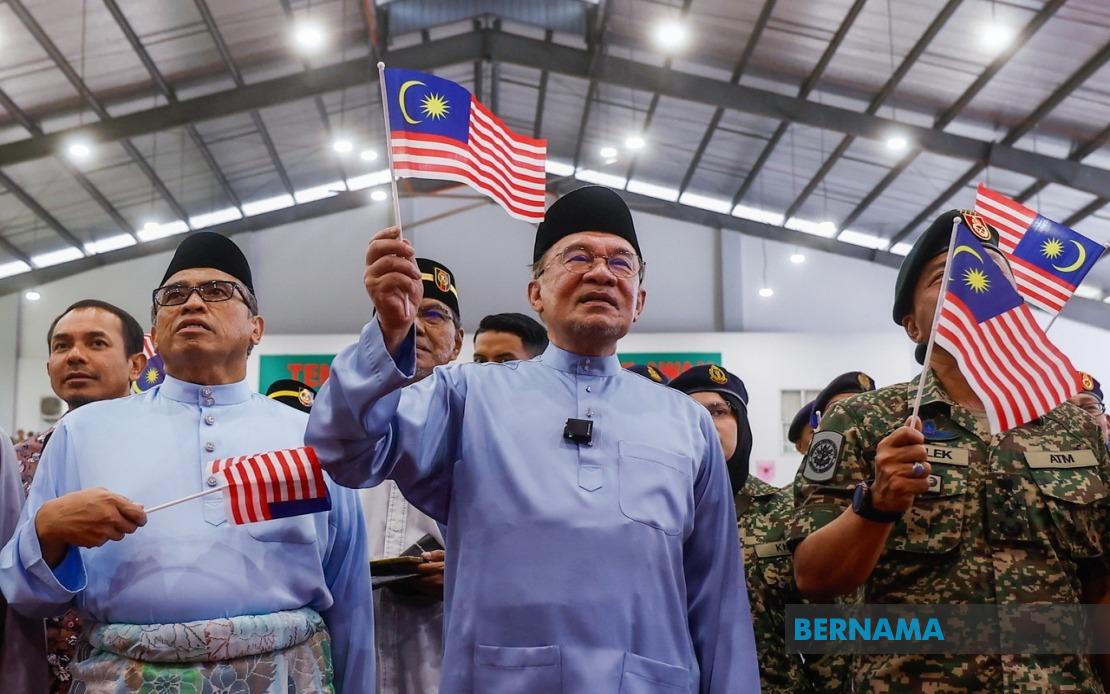
Prime Minister Datuk Seri Anwar Ibrahim has called on all political players to resist the temptation of weaponising false information and personal attacks during the campaign for the 16th Negeri Sembilan state election, delivering a forceful message about the corrosive effect of unsubstantiated claims on Malaysia's political culture. Speaking in Port Dickson on July 24, Anwar drew from his own troubled political history to illustrate how misinformation spreads unchecked through modern discourse, warning that the practice threatens the integrity of electoral contests and erodes public trust in democratic institutions.
The Prime Minister revealed that he had recently been confronted with a fabricated claim alleging that he had organised gatherings to disseminate propaganda among serving military personnel and veterans during his campaign activities. He expressed visible frustration at the speed with which false narratives circulate, emphasising that the allegation represented a particularly serious distortion given Malaysia's constitutional arrangement placing the military outside partisan politics. Anwar's comments reflected broader anxieties about digital misinformation and the ease with which statements can be doctored, redistributed, and presented as authentic without verification or context.
Drawing on decades of political experience marked by serious legal challenges and imprisonment on charges he has consistently denied, Anwar positioned his willingness to acknowledge personal shortcomings as a foundation for demanding greater responsibility from political opponents. He acknowledged his own imperfections and willingness to apologise for genuine mistakes, yet drew a clear distinction between accepting legitimate criticism and tolerating what he characterised as deliberate character assassination. This framing allowed him to simultaneously appear magnanimous while establishing a moral baseline for acceptable political conduct, an approach that carries particular weight given his status as the nation's chief executive.
The timing of Anwar's remarks carries significance within the Malaysian political context, where state elections frequently serve as barometers of public sentiment ahead of national contests. The Negeri Sembilan election represents an important test for the Pakatan Harapan coalition that Anwar leads, with the grouping fielding candidates across all 36 state seats. The composition of the coalition's slate demonstrates its continuing internal balance, with PKR contesting 16 positions, DAP fielding 11 candidates, and Amanah putting forward nine aspirants. This distribution reflects careful negotiation among the three parties and suggests that PH remains committed to contesting the state as a unified force rather than fragmenting along party lines.
The electoral schedule has been compressed compared to typical state election cycles, with early voting set for July 28 and polling day falling on August 1. This accelerated timeline means that campaigns operate under particular time pressure, potentially creating conditions where rigorous fact-checking and careful messaging take a backseat to rapid response tactics and high-volume content distribution. The compressed schedule also affects voters' capacity to absorb and evaluate campaign messages, potentially making populations more susceptible to viral misinformation that spreads faster than corrections or rebuttals can be disseminated.
Anwar's call for ethical campaign conduct extended beyond his personal grievances to encompass broader institutional concerns. He emphasised the responsibility of the civil service to maintain political neutrality while supporting government initiatives related to national stability and peace. This framing positioned administrative reform and policy implementation as national priorities that transcend electoral cycles, subtly suggesting that partisan attacks distract from these essential governmental functions. The presence of senior defence and administrative officials at the event, including Chief Secretary to the Government Tan Sri Shamsul Azri Abu Bakar, Chief of Defence Forces General Tan Sri Malek Razak Sulaiman, and Army chief General Tan Sri Azhan Md Othman, underscored the institutional weight behind Anwar's message and signalled coordination across government structures.
For Malaysian voters navigating the Negeri Sembilan contest, Anwar's intervention provides a baseline for evaluating campaign messaging and identifying misinformation. The Prime Minister's explicit acknowledgment that he had been specifically targeted by false claims legitimises voter skepticism toward unverified allegations and encourages critical consumption of campaign content. Given Malaysia's experience with viral hoaxes and coordinated disinformation campaigns, particularly those leveraging military or security sensitivities, Anwar's warning carries practical implications for how citizens should assess campaign discourse.
The emphasis on personal experience as a teaching tool reflects a broader trend in Malaysian politics where figures drawing on difficult histories attempt to mentor the political community toward greater ethical standards. Anwar's own trajectory, marked by imprisonment, political rehabilitation, and ultimate ascension to the premiership, provides him with unusual moral authority to lecture others about resilience and fair dealing. However, this approach also carries risks, as opponents may interpret his warnings as attempts to suppress aggressive criticism or establish asymmetrical standards of accountability.
The broader context of Anwar's remarks involves Malaysia's ongoing struggle with digital transformation and its political implications. Social media platforms have created unprecedented opportunities for rapid information dissemination but have also enabled coordinated disinformation campaigns and the viral spread of fabricated content. Political operatives across the ideological spectrum have experimented with these tools, creating an environment where voters face constant verification challenges. Anwar's warning reflects recognition that technological change has outpaced institutional mechanisms for ensuring campaign integrity, placing greater responsibility on individual actors to maintain ethical standards.
Looking forward, the Negeri Sembilan election will test whether Anwar's call for elevated campaign standards resonates with voters and influences how competing parties conduct their campaigns. The result may also provide insights into whether warning against misinformation effectively reduces its prevalence or whether such appeals represent symbolic gestures that do little to change entrenched tactical approaches. For observers of Malaysian politics and governance, the episode demonstrates how electoral contests increasingly function as venues for testing broader questions about institutional health, democratic maturity, and the nation's capacity to manage political competition without sacrificing social cohesion.

