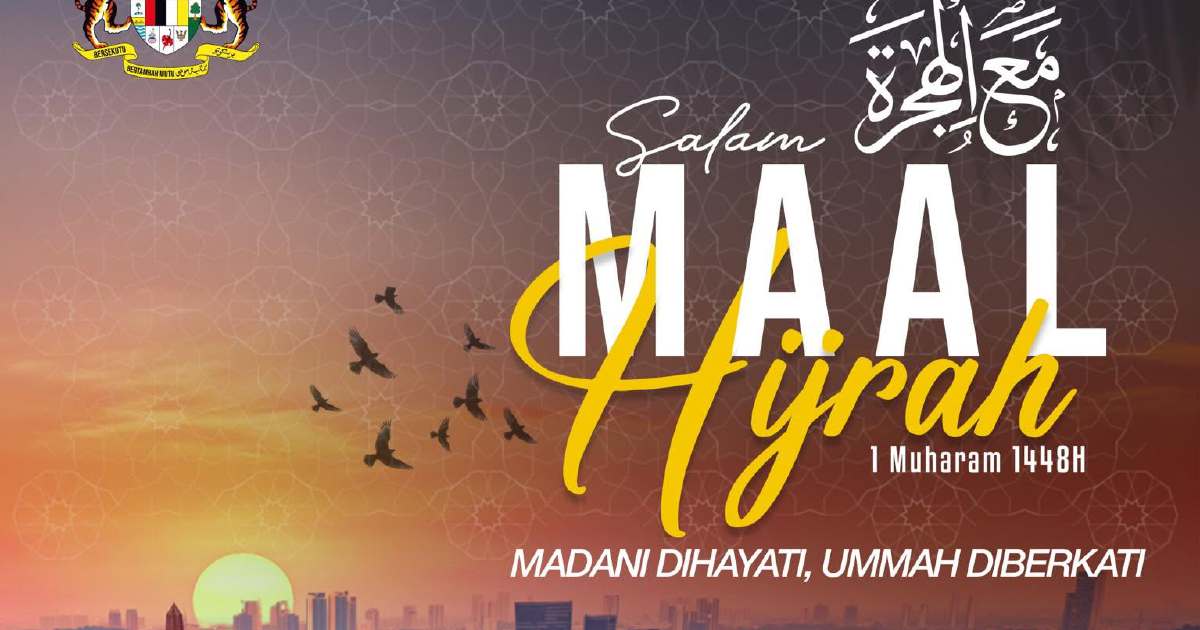
Prime Minister Datuk Seri Anwar Ibrahim has made a fresh appeal to Malaysians to internalise the principles embodied in the concept of Hijrah, positioning it as a guiding philosophy rooted in commitments to truthfulness, economic prosperity and collective security. The call reflects his administration's effort to articulate a moral and spiritual framework that transcends religious boundaries while drawing from Islamic heritage.
The notion of Hijrah, traditionally understood as Prophet Muhammad's migration from Mecca to Medina in 622 CE, carries broader philosophical weight in contemporary Malaysian discourse. Beyond its historical religious context, Hijrah has become employed as a metaphor for positive transformation, personal and national renewal, and a deliberate shift away from practices deemed incompatible with foundational values. Anwar's invocation of these principles appears aimed at fostering national cohesion around shared ideals rather than pursuing divisive political messaging.
Emphasis on truth as a foundational pillar carries particular resonance in Malaysia's current political landscape, where public trust in institutions has been tested by decades of corruption allegations, judicial proceedings against former leaders, and cycles of political upheaval. By centring truthfulness as a central virtue, the Prime Minister appears to be signalling his administration's commitment to transparency and accountability—priorities that resonate across Malaysia's diverse constituencies and have become benchmarks by which his government's performance is measured.
The prosperity dimension of Anwar's message speaks to Malaysia's economic challenges following the pandemic, inflationary pressures, rising cost of living concerns, and the need to maintain the nation's competitive position in Southeast Asia. Economic advancement remains among the most pressing public concerns, with citizens from all communities yearning for improved living standards, job security, and sustainable growth. Framing prosperity as integral to Hijrah spirit seeks to connect spiritual and ethical frameworks with tangible economic objectives, suggesting that moral governance and sound economic management are inseparable pursuits.
Security, the third pillar referenced by the Prime Minister, encompasses both physical safety and the broader concept of national stability. Malaysia faces multifaceted security considerations ranging from transnational crime and terrorism to internal communal tensions and geopolitical uncertainties in the Indo-Pacific region. By positioning security as a core element of Hijrah spirit, Anwar emphasises that national wellbeing depends on collective commitment to maintaining social cohesion, respecting institutional frameworks, and rejecting extremism in all its manifestations.
The timing and framing of such messages hold strategic importance in Malaysian politics. Anwar's coalition government has sought to position itself as an inclusive administration capable of bridging Malaysia's ethnic and religious divides while maintaining Islamic principles as guides for governance. This approach differentiates his administration from both the previous Barisan Nasional government and opposition forces that have employed more divisive messaging. By appealing to universal values expressed through Islamic terminology, Anwar attempts to build consensus across Malaysia's Muslim-majority population and its substantial non-Muslim communities.
Historically, appeals to Hijrah spirit have featured in Malaysian political discourse, though their deployment has varied significantly. Some leaders have utilised the concept to promote moral reform and social progress, while others have weaponised Islamic frameworks for narrow political advantage. Anwar's articulation appears aligned with the former tradition, emphasising inclusive national development over sectarian positioning. This carries implications for how his administration may approach contentious issues ranging from constitutional amendments to religious law to economic policy.
For Southeast Asian observers, Malaysia's navigation of Islam's role in governance remains instructive. Unlike regional neighbours pursuing either secular nationalism or theocratic frameworks, Malaysia attempts to weave Islamic principles throughout its political system while maintaining constitutional protections for religious minorities. The success of this balancing act depends significantly on leadership choices about how religious concepts are deployed in public discourse. Anwar's emphasis on universally valued outcomes—truth, prosperity and security—rather than sectarian observance suggests an approach prioritising inclusive nation-building.
The challenge confronting the Prime Minister involves translating rhetorical commitments into concrete policy implementation visible in citizens' daily experiences. Statements about embracing Hijrah spirit, however eloquently articulated, require substantiation through measurable improvements in economic conditions, demonstrable reductions in corruption, enhanced rule of law, and genuine intercommunal cooperation. Malaysian voters across all demographics have demonstrated willingness to hold governments accountable for promises unfulfilled, and Anwar's administration faces scrutiny on multiple fronts simultaneously.
Moving forward, the concept of Hijrah as framed by the Prime Minister will likely feature recurrently in official messaging as his government seeks to articulate its vision for Malaysia's future. Success in embedding these principles throughout Malaysian society would require not only top-down governmental commitment but also grassroots acceptance and internalisation across Malaysia's diverse population. Whether the appeal resonates beyond political rhetoric and catalyses genuine transformation in institutional behaviour and public conduct remains a crucial test of both the concept's durability and Anwar's political leadership.

