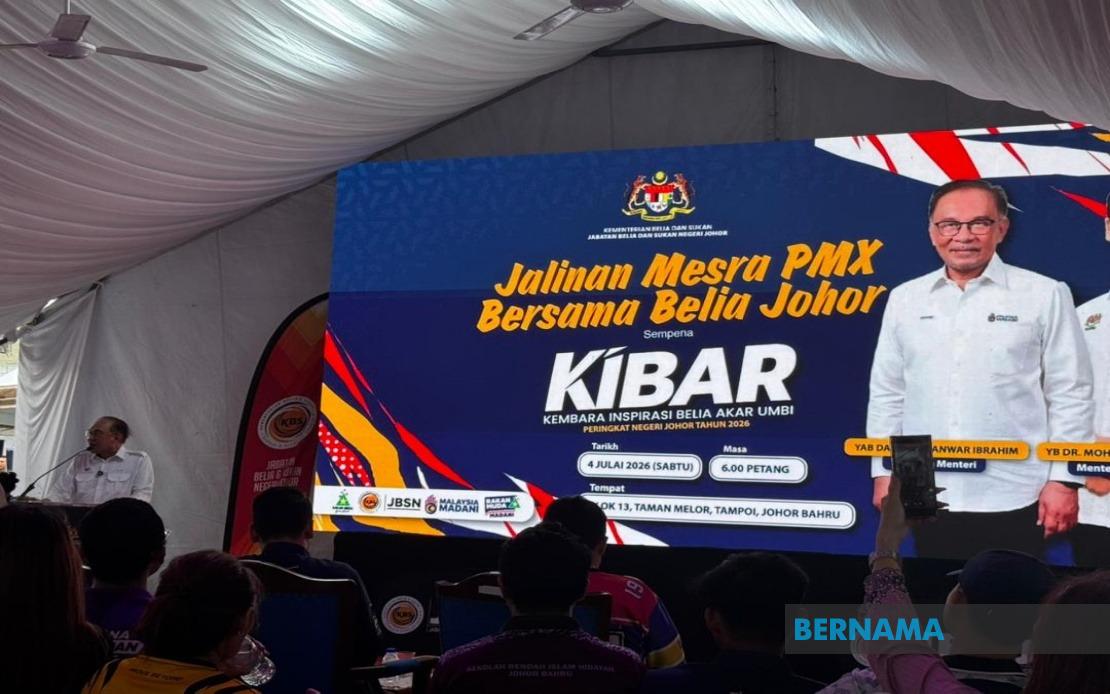
Prime Minister Datuk Seri Anwar Ibrahim has issued a pointed rebuke to political parties that deploy Malay supremacy rhetoric as an election tool whilst simultaneously allowing Malay reserve land to pass into other hands. Speaking in Johor Bahru on July 4, Anwar challenged parties claiming to champion Bumiputera interests to demonstrate their commitment through verifiable policy outcomes and transparent governance rather than populist slogans timed to election cycles.
The Prime Minister's remarks, delivered at a gathering with Johor youth during the 2026 Johor-level Kembara Inspirasi Belia Akar Umbi (KIBAR) programme at Taman Melor, Tampoi, represented a direct critique of what he characterised as performative politics disconnected from substantive action. Anwar expressed particular frustration that defending Malay and Bumiputera interests had become a tool for mobilising voter support during campaigns, only to be abandoned once parties secured electoral victory.
Central to his argument was the question of Malay reserve land, a constitutionally protected asset intended to safeguard Bumiputera economic interests. Anwar pointedly asked which parties could demonstrate recent efforts to create new Malay reserve land allocations, contrasting this with the documented erosion of existing reserves. His observation that "a great deal of Malay reserve land has been lost to others" underscores a longstanding challenge in Malaysian property and land governance where protective measures have failed to prevent gradual transfer of ownership outside intended communities.
The timing of Anwar's intervention carries significance for Malaysia's political landscape. As the nation approaches 2026 state-level elections in Johor and other territories, parties across the spectrum prepare campaign strategies. Anwar's comments serve as both a policy declaration and a political positioning move, signalling that his administration views substantive Bumiputera advancement as distinct from rhetorical chest-thumping. This distinction matters because Malay and Bumiputera rights remain central to Malaysian political identity, yet implementation often lags behind campaign promises.
Anwar's critique implicitly challenges the opposition and other political actors to move beyond what he regards as hollow invocations of Bumiputera protection. By elevating the question of tangible outcomes—creation of reserves, awarding contracts, developing projects—he sets a standard against which political parties can be measured. This approach shifts debate from who speaks most loudly about protecting Malay interests to who actually delivers measurable protections through governance and policy design.
The issue resonates particularly in Johor, Malaysia's southernmost state and a crucial electoral battleground where Bumiputera concerns intersect with rapid urbanisation and economic development pressures. Young Johor voters, whom Anwar directly addressed, face the practical question of whether their economic opportunities will be genuinely advanced through Bumiputera provisions or merely rhetorical commitments. Anwar's emphasis on youth engagement through the KIBAR programme suggests his administration views younger Malaysians as a constituency demanding authenticity and measurable progress rather than campaign theatre.
Presence at the event of Selangor Menteri Besar and Pakatan Harapan (PH) Johor State Election director Datuk Seri Amirudin Shari, alongside Youth and Sports Minister Dr Mohammed Taufiq Johari, reinforced the multi-level political machinery behind Anwar's message. The gathering functioned as both policy articulation and coalition-building, demonstrating that PH's approach to Bumiputera advancement carries endorsement from state and federal leadership.
The underlying tension Anwar identified reflects a persistent Malaysian governance challenge: the gap between constitutional promises enshrined in the Federal Constitution's provisions on Malay and Bumiputera rights and their practical implementation in a complex, competitive economy. Market forces, urbanisation, financial pressures on individuals, and bureaucratic inefficiencies have historically conspired to erode the protective effectiveness of Bumiputera mechanisms. Anwar's intervention suggests frustration that political rhetoric has failed to mobilise sufficient administrative will to reverse these trends.
For Malaysian readers concerned with equitable economic development and authentic political accountability, Anwar's challenge raises important questions about measuring political sincerity. Claims about defending group interests can be evaluated against concrete evidence: Are new Malay reserve lands being created or existing ones preserved? Are contract and project awards to Bumiputera entities increasing? Do policy frameworks actually empower intended beneficiaries? These metrics, Anwar implies, matter more than campaign speeches.
The Prime Minister's comments also acknowledge implicit criticism within Malay-Muslim communities about whether existing political structures genuinely serve Bumiputera advancement. By directly confronting parties invoking Bumiputera rhetoric without delivering results, Anwar positioned his administration as willing to name this problem publicly. Whether subsequent policy changes translate this critique into structural reform remains the test of sincerity.
Anwar's appeal to action over slogans reflects a broader governance philosophy emphasising transparency and measurable outcomes. In the Malaysian context, where communal concerns remain politically salient and trust in institutions faces periodic challenges, such emphasis on demonstrable policy effectiveness carries particular weight. For Southeast Asian observers, this debate illustrates how constitutional provisions protecting specific groups can lose practical force without consistent political commitment and administrative capacity.
Looking toward the 2026 electoral cycle, Anwar's remarks establish a benchmark against which both the ruling coalition and opposition will be judged regarding Bumiputera advancement. Parties will find it difficult to retreat into pure rhetorical claims without addressing his pointed questions about concrete outcomes. This shift toward performance-based assessment of Bumiputera policy represents a potential evolution in how Malaysian political discourse engages with constitutional protections and communal interests.

