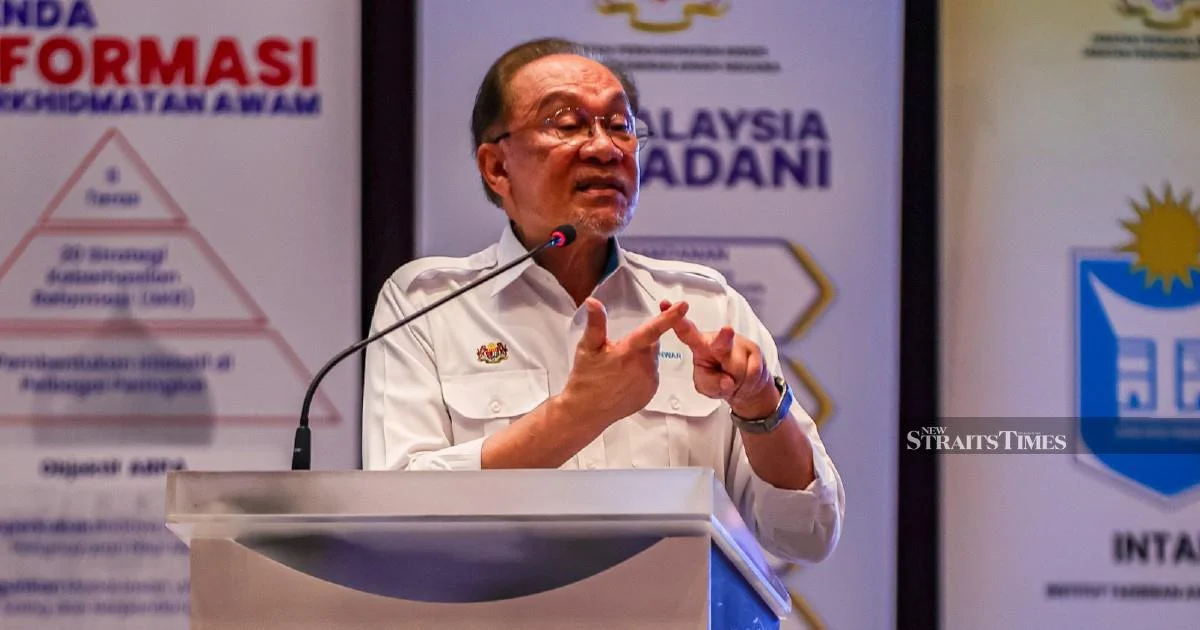
Prime Minister Datuk Seri Anwar Ibrahim has stepped in to defuse growing friction within the Pakatan Harapan coalition, defending Amanah president Datuk Seri Mohamad Sabu against claims that his remarks during a recent candidate announcement carried mocking undertones towards fellow coalition members. Speaking in Alor Gajah on Saturday, the Premier sought to reassure party members and the wider coalition that no disrespect had been intended during the speech delivered at the PH gathering in Tangkak the previous day.
The incident highlights the delicate balancing act Anwar must maintain as head of government while simultaneously managing a multi-party coalition. Pakatan Harapan, the ruling bloc that brought Anwar to power, comprises diverse political entities with sometimes competing interests and messaging strategies. Tensions between coalition partners, whether real or perceived, can quickly escalate in Malaysia's highly charged political environment, where statements are frequently dissected for hidden meanings or alleged slights. The Prime Minister's immediate intervention demonstrates the seriousness with which such rifts are treated at the highest levels of government.
Matthew Sabu, who heads Amanah as its president, has long been a significant figure within the coalition's left-leaning faction. His speeches and public positions carry considerable weight among party faithful and the broader progressive constituency that forms part of PH's support base. Comments attributed to him, particularly during formal party events like candidate announcements, become the subject of intense scrutiny from competing political factions eager to amplify any sign of internal discord. The timing of this incident, coming during what is typically a period of heightened political activity as parties prepare for electoral contests, adds another layer of complexity to coalition management.
The Tangkak candidate announcement itself represents the ongoing effort by PH to consolidate its electoral machinery ahead of key elections. Such events serve multiple purposes: they energize party supporters, signal unity to voters, and lay out policy directions that the coalition hopes to advance. When controversial moments emerge from these carefully choreographed occasions, they can distract from the substantive campaign messages parties wish to communicate. This particular incident appears to have generated the kind of secondary debate that political strategists generally seek to avoid.
Anwar's public reassurance carries particular weight given his position as both Prime Minister and de facto leader of the broader coalition. His ability to maintain harmony among disparate coalition partners directly impacts government stability and legislative effectiveness in parliament. Malaysia's political structure often requires governments to maintain clear parliamentary majorities, and any perceived fracturing within a ruling coalition can invite opportunistic maneuvers from opposition benches. The opposition, currently comprising largely PAS-led Perikatan Nasional and independent members, watches closely for signs of coalition weakness that might be exploited to their advantage.
The underlying dynamics within Pakatan Harapan reflect broader ideological and strategic differences between its constituent parties. DAP, with its urban-based support base and secular orientation, operates somewhat differently from PKR's more eclectic membership and Amanah's roots in Islamic progressive politics. Managing these differences while maintaining a unified front requires constant communication and diplomatic skill. When members of different coalition parties make statements that could be interpreted as critical of partners, however unintentionally, it can create unnecessary distraction from coalition priorities.
For Malaysian observers, particularly those tracking coalition stability, such incidents offer insight into the internal workings of government. While Anwar's intervention may seem routine, it underscores the ongoing effort required to keep a multi-party government functioning smoothly. Coalition governance in Malaysia remains relatively novel in many respects; the structures and conventions for managing intra-coalition disputes continue to evolve. The Prime Minister's appeal for calm and unity, therefore, serves not just an immediate tactical purpose but contributes to establishing norms for how coalition tensions should be handled.
The episode also reflects the broader media environment in Malaysia, where political statements are rapidly amplified through social media and interpreted through various partisan lenses. What may have been intended as a routine remark at a party event became the subject of coalition-wide concern, demonstrating how political communication operates in the contemporary digital age. This amplification effect means that even minor controversies can develop momentum quickly unless addressed promptly by senior leadership.
Moving forward, the incident may prompt coalition partners to exercise greater care in public statements, particularly at events with mixed party attendance. The PH leadership may also recognize the need for ongoing dialogue mechanisms to prevent miscommunications from creating unnecessary tensions. For the government's legislative agenda and public policy initiatives, maintaining coalition cohesion remains paramount. As Malaysia approaches various electoral cycles and parliamentary sessions, the stability of Pakatan Harapan will continue to be scrutinized by both allies and adversaries.
Anwar's intervention ultimately sends a signal that despite occasional friction, the ruling coalition remains committed to unified governance. Whether this latest tension represents a minor hiccup or a symptom of deeper coalition strains remains to be seen. What is clear is that the Prime Minister views preserving coalition harmony as essential to his government's credibility and effectiveness in addressing pressing national challenges. His public defense of Mat Sabu, therefore, serves as both an immediate damage-control measure and a reaffirmation of the coalition's commitment to working together.

