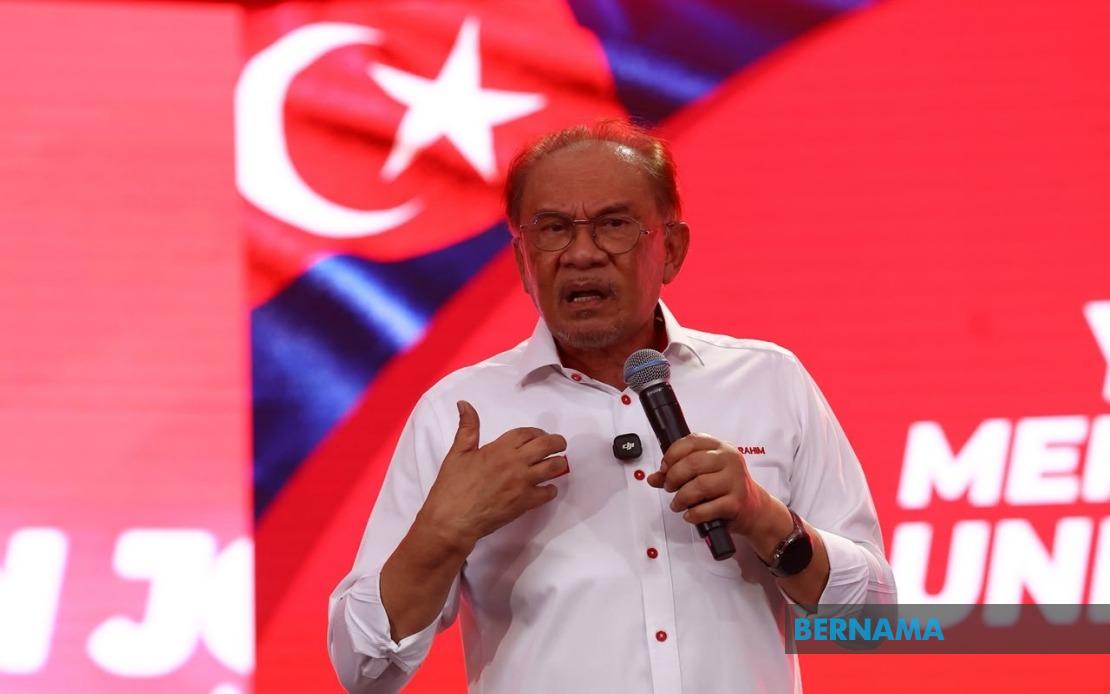
Prime Minister Datuk Seri Anwar Ibrahim firmly rejected claims circulating on social media that he had acquired a luxury BMW vehicle for his own use, describing the allegations as deliberate misinformation during an election campaign event in Batu Pahat. Speaking at the 'Yok! Meriahkan Johor! Undi Harapan' programme in Senggarang on July 9, Anwar addressed the persistent rumours head-on, emphasising that the vehicle in question was neither new nor purchased by him personally. He characterised the claims as lies designed to undermine his public commitment to assisting ordinary Malaysians, particularly those in lower income brackets.
The Prime Minister seized the opportunity to distinguish between the various vehicles at his disposal, providing clarity on each one's ownership status and source. He explained that the BMW referenced in the social media posts was an existing government asset that predated his tenure, not a newly acquired official vehicle as critics had suggested. This distinction matters significantly in the context of public accountability, as it speaks to the difference between inheriting institutional resources and making new expenditures on luxury items. Anwar stressed that as a leader advocating for the welfare of struggling citizens, purchasing expensive personal vehicles would be fundamentally contradictory to his stated values and political platform.
Regarding the Mercedes-Benz that currently serves as his primary official vehicle, Anwar provided a fuller explanation of its provenance and legal status. He acknowledged that the car was bestowed upon him as a gift by His Majesty Sultan Ibrahim, King of Malaysia, but made the crucial point that he did not register it under his personal name. Instead, he formally registered the vehicle with the Prime Minister's Department, treating it as an institutional asset rather than claiming private ownership. This administrative decision reflects an approach to public resources that Anwar believes distinguishes his governance from that of predecessors he implicitly criticised for enriching themselves through misappropriation of state funds.
The Prime Minister's Department and the Ceremonial and International Conference Secretariat Division (BIUPA) had previously released an official statement on Monday addressing the BMW controversy directly. Their clarification confirmed that the vehicle in question was indeed an existing government asset managed under BIUPA's jurisdiction, designated for official logistics purposes rather than personal transportation. This formal government response preceded Anwar's public remarks and provided institutional backing for his subsequent denial, establishing that multiple official channels were aligned in countering the social media narrative. The distinction between old and new vehicles, between personal and institutional ownership, and between gift and purchase has become politically significant in Malaysian political discourse where questions of leadership propriety frequently dominate public discussion.
Anwar's comments appeared strategic within the broader context of the Johor state election campaign, which was proceeding toward polling day scheduled for the following Saturday. The Prime Minister's remarks served dual purposes: directly addressing voter concerns about leadership integrity while simultaneously framing such allegations as typical negative campaigning tactics. By taking questions about vehicle ownership head-on rather than dismissing them entirely, Anwar demonstrated a willingness to engage with public concerns, albeit while maintaining his preferred framing of the issue. The campaign event itself provided an ideal platform for such clarifications, allowing him to reach supportive constituents while generating media coverage that would carry his version of events to broader audiences.
Packatan Harapan (PH) was contesting all 56 seats in the Johor state assembly election, with several coalition representatives present at the Senggarang event alongside the Prime Minister. Communications Minister Datuk Fahmi Fadzil, who also serves as PH communications director, attended alongside the party's candidates for three closely watched constituencies. These included Onn Abu Bakar in Senggarang, Mohd Khuzzan Abu Bakar in Semerah, and Felicia Poh Rui Ling in Penggaram. The presence of multiple party figures underscored PH's commitment to the Johor campaign, a state where electoral fortunes have shifted considerably in recent years and where regaining ground remains strategically important for the coalition's national political positioning.
The vehicle controversy reflects broader tensions within Malaysian politics regarding the transparency and proper management of state resources. Questions about leadership lifestyles and spending habits carry particular weight in a country where memories of previous administrations' alleged excesses remain fresh in public consciousness. Anwar's explicit contrast between his administrative approach and that of predecessors who allegedly engaged in financial impropriety serves as a core element of his political messaging. Whether voters accept this framing depends partly on their broader trust in his government and partly on whether subsequent scrutiny uncovers evidence contradicting his claims about vehicle ownership and registration procedures.
The social media nature of these allegations illustrates how information, misinformation, and political narratives now circulate during Malaysian election campaigns. Without centralised media gatekeeping, claims about leadership behaviour spread rapidly through unverified channels, forcing politicians to respond publicly even to allegations they might previously have ignored. Anwar's decision to address the BMW issue directly during a campaign event, rather than through a written statement or indirect responses, indicates recognition that such narratives can influence voter perceptions if left uncontested. This approach to political communication reflects evolving campaign dynamics where leaders must engage with grassroots information flows and demonstrate accessibility to public concerns.
For Malaysian and regional observers, the incident highlights ongoing debates about governance standards and leadership accountability in Southeast Asian democracies. Questions about how public officials acquire vehicles, the distinction between personal and official assets, and the transparency of such arrangements remain relevant across the region where questions of governance quality feature prominently in political competition. Anwar's emphasis on registering the Mercedes-Benz under institutional rather than personal ownership represents one approach to addressing such concerns, though critics might argue that clearer asset disclosure requirements would provide greater transparency than voluntary administrative choices. The interplay between legal compliance and public perception continues to shape how political leaders in the region navigate questions of propriety and personal conduct.

