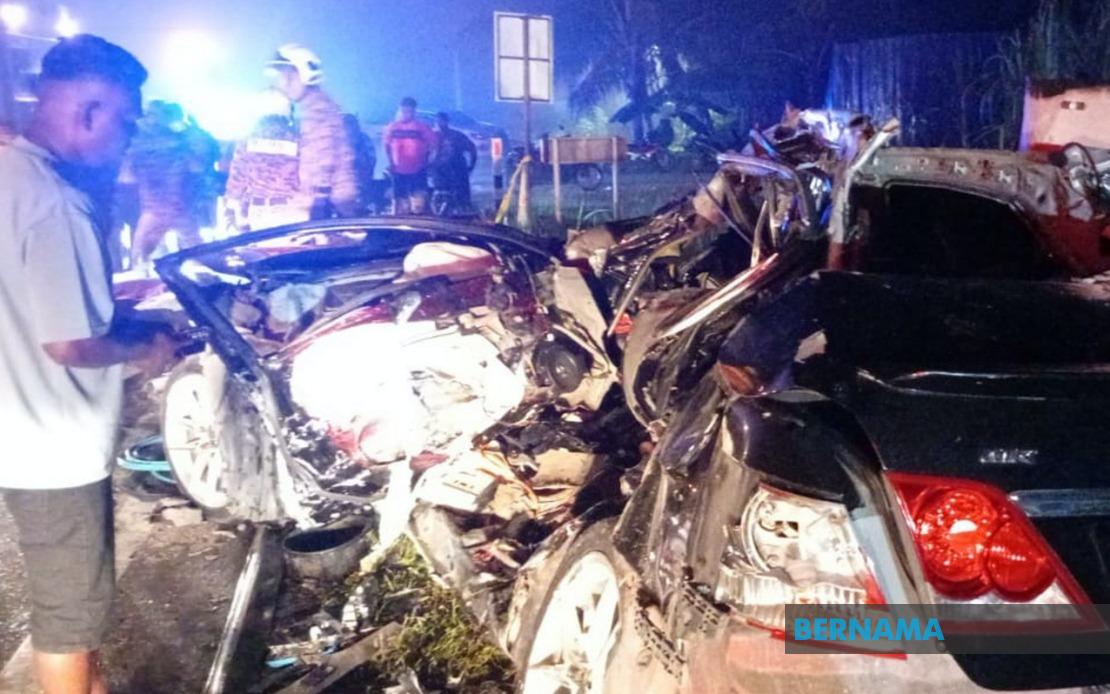
Prime Minister Datuk Seri Anwar Ibrahim has expressed profound sorrow over a tragic road accident in Bentong, Pahang that claimed the lives of six young men in the early hours of a recent morning. Through a message posted on social media platform X, the Prime Minister extended his sympathies to the bereaved families, whilst also acknowledging the suffering of those who sustained injuries in the collision. He was joined in his expression of grief by his wife, Datuk Seri Dr Wan Azizah Wan Ismail, underscoring the gravity with which the nation's leadership regards such incidents.
The fatal collision occurred at approximately 4 am along Jalan Karak Lama near Klink Desa Jambu Rias in Bentong, as a white Toyota Vios carrying six passengers ventured along the route connecting Kuantan to Kuala Lumpur. The vehicle, operated by driver V. Mugilan aged 25, collided with a one-tonne lorry travelling in the opposite direction whilst descending a downhill section of the highway. All six occupants of the saloon car—comprising the driver and five passengers—were pronounced dead at the scene, making this one of the more devastating road tragedies recorded in the region.
The victims represented a cross-section of ages that highlights the indiscriminate nature of road accidents. Passengers K. Dineshvaran, 22, K. Alaganathan, 21, A. Kanabati Raja, 19, S. Kiisven, 17, and M. Paranthaman, 16, all perished alongside driver Mugilan. The youngest victim was merely 16 years old, a tragic reminder that such incidents can strike without regard to age or circumstance. The lorry driver, a 31-year-old operator, survived the impact but sustained serious injuries requiring medical intervention.
Police investigations conducted in the aftermath of the collision revealed preliminary findings suggesting that the Toyota Vios had inadvertently strayed into the opposing traffic lane whilst navigating the hillside section of the route. This shift into oncoming traffic brought the vehicle into direct collision with the one-tonne lorry, resulting in the catastrophic impact that proved fatal for all occupants of the smaller vehicle. The investigation underscores questions about whether driver fatigue, road conditions, vehicle maintenance, or visibility challenges may have contributed to the loss of directional control on this particular stretch of highway.
In his statement, the Prime Minister stressed that such calamities must serve as wake-up calls for the entire nation regarding the critical importance of road safety. He called for a collective recommitment to safe driving practices, implicit acknowledgment that Malaysia's road safety record requires sustained attention and improved preventative measures. The reference to the tragedy serving as a reminder that road safety cannot be treated as a peripheral concern signals governmental intent to address systemic issues that continue to plague Malaysian highways.
The Jalan Karak Lama corridor, which connects the eastern state of Pahang to the capital region, experiences significant traffic volumes daily, particularly during early morning hours when long-distance commercial and passenger vehicles frequently traverse the route. The downhill sections noted in this incident are recognised as particularly challenging segments requiring heightened driver vigilance and appropriate vehicle speed management. The concentration of fatal accidents at such locations has been a persistent concern for transport authorities and road safety advocates.
The Prime Minister's public statement carries significance beyond the expression of condolences, functioning as a platform to reinforce the government's messaging on transportation safety at a time when road accident fatality rates remain a substantial public health concern across the region. By invoking both personal sympathy and the broader national responsibility for accident prevention, the message attempts to elevate public consciousness about the choices made behind the wheel. The inclusion of his wife's sentiments further amplifies the emotional weight of the leadership's response.
For Malaysian readers and regional observers, this incident exemplifies the ongoing challenge that developing and middle-income nations face in managing rapid motorisation alongside evolving infrastructure. The presence of heavy commercial vehicles sharing roadways with passenger cars, compounded by lengthy journeys undertaken during late-night and early-morning hours when driver alertness may be compromised, creates a particularly hazardous combination. Highway designs that include challenging terrain and elevation changes demand consistent investment in maintenance, safety barriers, and driver education initiatives.
The call for strength and recovery extended by the Prime Minister to the families and injured parties reflects recognition of the profound trauma that such incidents inflict. Beyond the immediate loss of life, communities and families face extended periods of emotional and financial hardship. The hospital treatment required for the injured lorry driver, alongside the long-term support needs of grieving families, represents an ongoing social cost beyond the immediate tragedy. Such incidents prompt broader conversations about whether current prevention strategies, enforcement mechanisms, and driver licensing standards adequately protect road users across Malaysia's expanding highway network.

