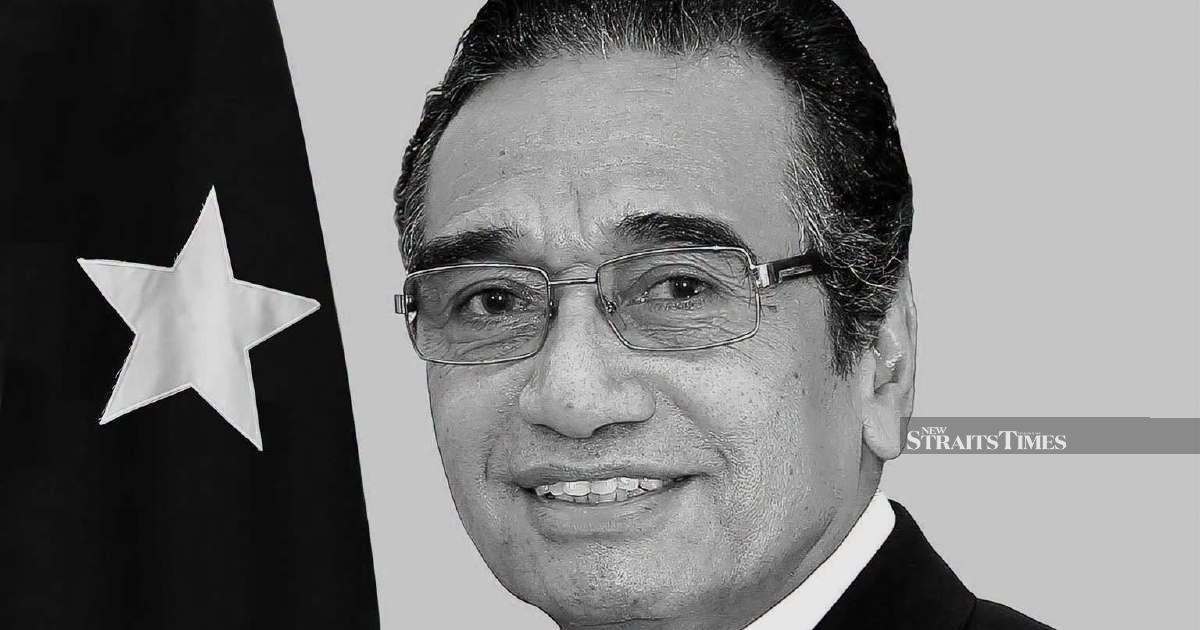
Prime Minister Datuk Seri Anwar Ibrahim has conveyed Malaysia's condolences to the government and people of Timor-Leste following the passing of former president Francisco Guterres, marking a moment of diplomatic acknowledgment between the two Southeast Asian nations.
Guterres, who served as Timor-Leste's head of state, played a significant role in the young nation's political development during a formative period in its post-independence journey. The former president's death represents a notable loss for Timor-Leste's political establishment and underscores the broader interconnectedness within the Southeast Asian region.
Malaysia's gesture through Anwar reflects the established protocols of regional diplomacy and the importance that the Malaysian government places on maintaining cordial relations with fellow ASEAN member states. Such expressions of sympathy, though ceremonial in nature, serve as important reaffirmations of solidarity and mutual respect between neighbouring countries during times of national loss.
Timor-Leste, officially the Democratic Republic of Timor-Leste, achieved full independence in 2002 after more than two decades of Indonesian occupation and a violent transition period. The nation's early years were marked by challenges of state-building and institutional development, with various political figures, including Guterres, contributing to the process of establishing democratic governance structures.
The condolence message from Malaysia's leadership carries particular significance given the regional context. ASEAN member states maintain a tradition of acknowledging major events in one another's political spheres, whether celebrations of independence or moments of national mourning. This practice helps reinforce the bonds of regional community and demonstrates respect for the sovereignty and dignity of fellow member nations.
Guterres's tenure as president encompassed a period during which Timor-Leste was navigating complex questions of national identity, resource management, and regional integration. His role in the country's political history reflects the broader narratives of Southeast Asian nations working to consolidate democratic institutions while managing legacies of conflict and foreign intervention.
The relationship between Malaysia and Timor-Leste, while not as high-profile as some other bilateral partnerships within ASEAN, remains part of the broader framework of regional cooperation and mutual engagement. Both nations share interests in maritime security, economic development, and the maintenance of stable political environments conducive to regional prosperity.
Timor-Leste's president serves as a ceremonial head of state within a semi-presidential system where executive power is shared between the president and prime minister. This constitutional arrangement reflects the nation's commitment to democratic principles and the separation of powers, elements that have been subject to ongoing refinement and negotiation throughout the country's political history.
The death of a former national leader often prompts reflections on a country's trajectory and the individuals who have shaped its development. In Timor-Leste's case, Guterres represented a generation of leaders who witnessed the nation's transformation from a territory under foreign control to an independent member of the international community, a transition that required diplomatic skill and political determination.
Anwar's condolence message, while brief in ceremonial terms, represents Malaysia's acknowledgment of this historical significance and its commitment to maintaining respectful diplomatic relations with all ASEAN neighbours. Such gestures, when offered by senior political figures, carry weight in the diplomatic landscape and help sustain the networks of goodwill essential to regional stability.
For Timor-Leste, the international recognition of the loss of a former leader reinforces the nation's standing within the ASEAN community and the wider international system. The country has worked consistently since independence to strengthen its institutional capacities and regional relationships, and continued engagement from neighbours like Malaysia supports this broader developmental agenda.
The expression of sympathy from Malaysia's Prime Minister also reflects the value that ASEAN places on personal and institutional relationships between leaders and governments. Such diplomatic courtesies, though sometimes viewed as mere formalities, serve important functions in maintaining the threads of cooperation that bind the region together and facilitate more substantive forms of engagement across political, economic, and security domains.

