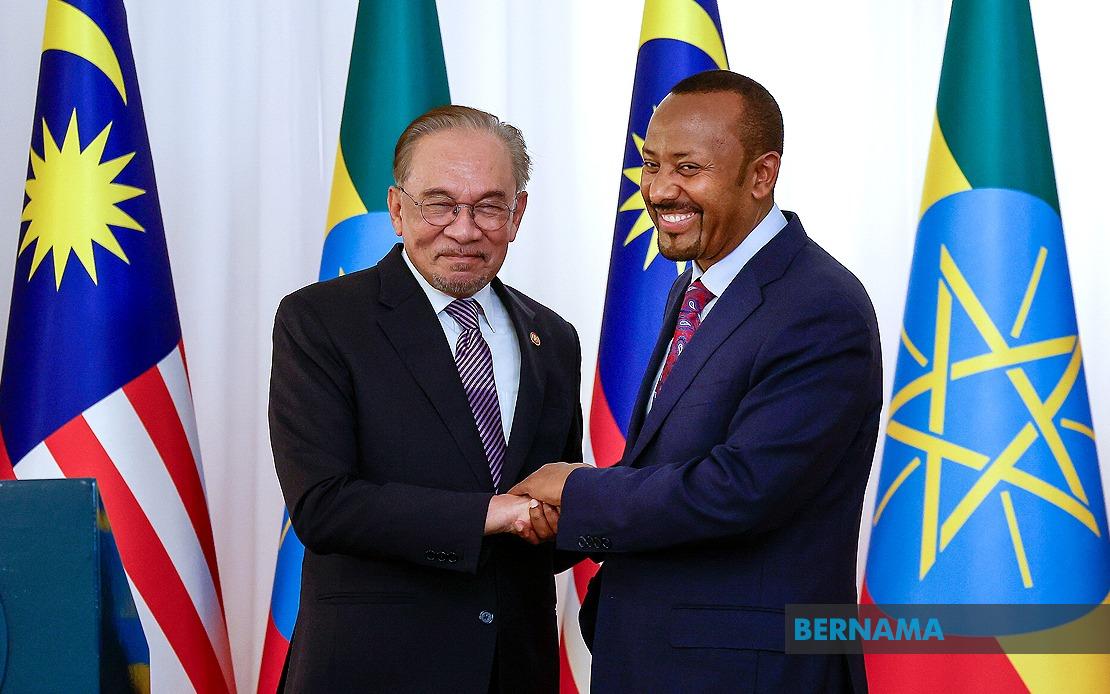
Prime Minister Datuk Seri Anwar Ibrahim has sent official congratulations to Ethiopian Prime Minister Abiy Ahmed Ali and the Prosperity Party following their victory in Ethiopia's recent general election, signalling Malaysia's ongoing commitment to strengthening diplomatic relationships across the African continent and the developing world.
In remarks posted on social media, Anwar reflected warmly on his landmark visit to Addis Ababa the previous year, which held particular significance as the first such trip by a sitting Malaysian prime minister to the Horn of Africa nation. The journey underscored Malaysia's deliberate pivot toward expanding engagement with African economies and political leadership, a strategic priority that has gained momentum under his administration.
The Prime Minister highlighted the positive personal rapport established during those discussions, noting that he and Abiy had identified considerable common ground in their perspectives on global affairs and the strategic interests of developing nations. This convergence of views carries implications for how Malaysia positions itself within broader South-South cooperation frameworks, where smaller and medium-sized economies collectively amplify their influence in international affairs.
Anwar emphasised that nations of the Global South possess untapped potential through coordinated partnership conducted on a footing of mutual respect and equality. This philosophical approach reflects Malaysia's broader diplomatic doctrine under his leadership—one that seeks to position the country as a bridge-builder among developing economies rather than remaining tethered exclusively to traditional Western partnerships. By articulating this vision at the bilateral level with Ethiopia, Malaysia signals its commitment to a multipolar world order where emerging markets drive their own agendas.
The timing of Anwar's message carries strategic weight within the context of Ethiopia's domestic political trajectory. Under Abiy's leadership since 2018, Ethiopia has undergone significant institutional reforms, though the country experienced profound instability during the civil conflict that erupted in 2020. The Prosperity Party's electoral success represents a consolidation of his political mandate following those tumultuous years. For Malaysia, maintaining strong ties with a stabilised Ethiopia offers opportunities for increased commercial engagement and cultural exchange across the Indian Ocean region.
Ethiopia's significance to Malaysia extends beyond bilateral relations. As the headquarters of the African Union and home to one of Africa's oldest Christian traditions alongside a substantial Muslim population, Ethiopia serves as a crucial diplomatic hub for advancing Malaysia's soft power initiatives on the continent. Strengthened relations with Ethiopia can facilitate Malaysia's access to broader African markets and institutions, particularly as Chinese and European powers intensify their competition for African resources and political influence.
Anwar's reference to initiatives set in motion during his previous visit suggests concrete projects or partnerships remain under development. These could encompass trade agreements, cultural exchanges, educational scholarships, or cooperation within multilateral forums. The language of carrying forward shared endeavours indicates that both nations view their relationship as dynamic rather than ceremonial, with tangible deliverables expected to materialise.
The congratulatory message also reflects a broader Malaysian diplomatic strategy of maintaining and expanding influence in regions historically dominated by non-aligned and developing nations. Africa, home to 54 nations and approximately 1.4 billion people, represents an increasingly important arena for global competition and development partnerships. Malaysia's engagement, though modest compared to China's infrastructure investments or India's historical ties, represents a deliberate effort to establish Malaysia as a serious player in African affairs.
For Malaysian business interests, an election victory by Abiy and the Prosperity Party provides continuity and predictability in Ethiopia's political environment—critical factors for companies considering long-term investments or partnerships. Malaysian corporations operating in sectors ranging from palm oil to technology services benefit from stable political conditions that facilitate contract enforcement and regulatory consistency.
The development also carries implications for Malaysia's standing within the Organisation of Islamic Cooperation, a grouping where both Malaysia and Ethiopia maintain significant influence. Stronger bilateral ties enhance Malaysia's capacity to coordinate positions on multilateral issues affecting Muslim-majority nations and communities across Africa.
Anwar's diplomatic overture demonstrates how Malaysia under his administration has recalibrated its foreign policy to emphasise South-South solidarity while maintaining pragmatic engagement across ideological and geopolitical divides. By publicly celebrating Abiy's electoral success and reaffirming commitment to the bilateral relationship, Malaysia positions itself as a reliable, consistent partner to African nations during pivotal political transitions—an approach that accumulates diplomatic capital over time and enhances Malaysia's ability to mobilise support for its own initiatives within African and broader developing-world forums.

