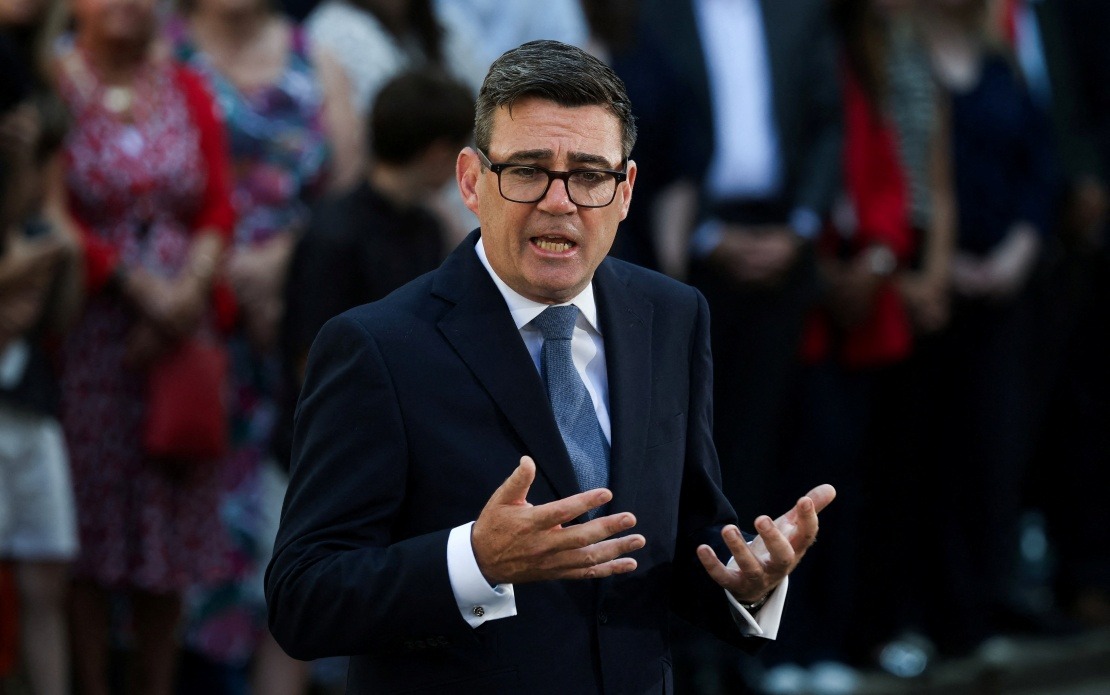
Prime Minister Datuk Seri Anwar Ibrahim has congratulated Andy Burnham following his elevation to the position of United Kingdom Prime Minister, signalling Malaysia's intention to strengthen bilateral ties between the two nations. In remarks shared on Facebook, Anwar expressed enthusiasm about collaborating with Burnham across multiple sectors of mutual interest, underscoring Kuala Lumpur's commitment to deepening one of Southeast Asia's most established Western partnerships.
The Malaysian leader outlined an ambitious agenda for enhanced cooperation, identifying several priority areas for joint development. Chief among these is the completion of a Digital Trade Agreement, which would facilitate commerce and technology exchange between the two economies. Beyond trade frameworks, Anwar emphasised the importance of broadening collaboration in artificial intelligence, a sector where both nations possess developing capabilities and growing strategic interests. The partnership would also encompass digitalisation initiatives, clean energy projects, and defence cooperation—issues that reflect contemporary geopolitical and economic realities across the region.
Anwar's statement revealed particular appreciation for Burnham's public acknowledgment regarding Britain's initial handling of the Gaza crisis. The Malaysian Premier noted that Burnham's candid assessment, in which the new PM admitted that the United Kingdom's response had been insufficient, demonstrated moral clarity at a moment when many Western leaders have struggled to articulate coherent positions. Anwar framed this acknowledgment as significant, describing it as a necessary first step towards more balanced international discourse on Middle Eastern affairs.
The Prime Minister further referenced Burnham's renewed advocacy for intensifying pressure on the Israeli regime, aligning this stance with Malaysia's longstanding positions on Palestinian rights and Middle Eastern geopolitics. This convergence of perspective suggests potential areas of diplomatic alignment that could influence bilateral discussions on regional issues, particularly as Malaysia navigates its role within ASEAN and the broader Global South.
Anwar seized on the symbolic significance of upcoming anniversaries in the bilateral relationship. The year 2025 will mark seven decades since Malaysia and the United Kingdom established formal diplomatic relations, a milestone the Malaysian leader characterised as an opportune moment to reaffirm both nations' commitment to their partnership. This framing suggests that Malaysia intends to move beyond routine diplomatic courtesy, positioning the anniversary as a catalyst for substantive renewed engagement and forward-looking collaboration.
The timing of Anwar's overture carries particular relevance for Southeast Asia's engagement with developed economies. As the region seeks to diversify its international partnerships and secure technology transfer in critical sectors, Malaysia's proactive cultivation of ties with a major Western power demonstrates strategic acumen. The emphasis on digital trade and artificial intelligence reflects regional awareness that technological capability increasingly determines economic competitiveness and geopolitical influence.
An often-overlooked dimension of this announcement concerns Malaysia's diplomatic positioning. By promptly acknowledging Burnham's appointment and outlining concrete cooperation frameworks, Anwar has signalled that Malaysia views the transition in British leadership as an opportunity rather than a disruption. This contrasts with more reactive diplomatic approaches and suggests Kuala Lumpur's confidence in its ability to maintain continuity while advancing new initiatives under changed circumstances.
Anwar also extended formal appreciation to Keir Starmer, Burnham's predecessor, acknowledging his contributions to strengthening Malaysia-UK relations during his tenure as Prime Minister. This courtesy reflects Malaysia's diplomatic professionalism and recognises that relationship-building requires consistency across different administrations. By commending Starmer's efforts, Anwar has subtly underscored the bipartisan nature of Malaysia-UK cooperation and suggested that bilateral ties transcend the domestic political transitions inevitable in Westminster politics.
Burnham's ascension to the premiership followed a rapid sequence of events within British politics. He assumed leadership of the Labour Party on Friday before receiving formal appointment as Prime Minister on Monday, making him the seventh person to hold this office within the past decade. His appointment followed Keir Starmer's resignation at Buckingham Palace, representing the latest in a series of significant political transitions that have characterised recent British governance.
For Malaysian policymakers and observers, Burnham's arrival at Number 10 carries implications extending beyond ceremonial courtesies. The new Prime Minister inherits complex challenges in domestic governance, economic management, and international relations. Malaysia's early engagement, coupled with its articulation of specific cooperation frameworks, positions Kuala Lumpur to influence the shape of Britain's engagement with Southeast Asia during a crucial period of regional development.
The Digital Trade Agreement referenced by Anwar warrants particular attention. Such agreements have become central mechanisms through which nations negotiate technology flows, data governance standards, and e-commerce frameworks. For Malaysia, securing such an agreement with a developed economy like the United Kingdom could establish precedents and create regulatory harmonisation that benefits Malaysian businesses and workers in increasingly digital sectors.
Clean energy cooperation similarly reflects shared interests amidst global sustainability imperatives. Malaysia possesses significant potential for renewable energy development, while the United Kingdom brings technological expertise and investment capacity. Joint initiatives in this sphere could support both nations' commitments to net-zero transitions while creating commercial opportunities for Malaysian companies in the green economy.
The broader context of these announcements suggests that Malaysia remains committed to maintaining substantive engagement with developed Western democracies whilst advancing its own developmental and geopolitical interests. By framing bilateral cooperation around technology, trade, and contemporary challenges rather than colonial legacies or Cold War alignments, Anwar has positioned Malaysia-UK relations as forward-looking and mutually beneficial partnerships suited to twenty-first-century realities.

