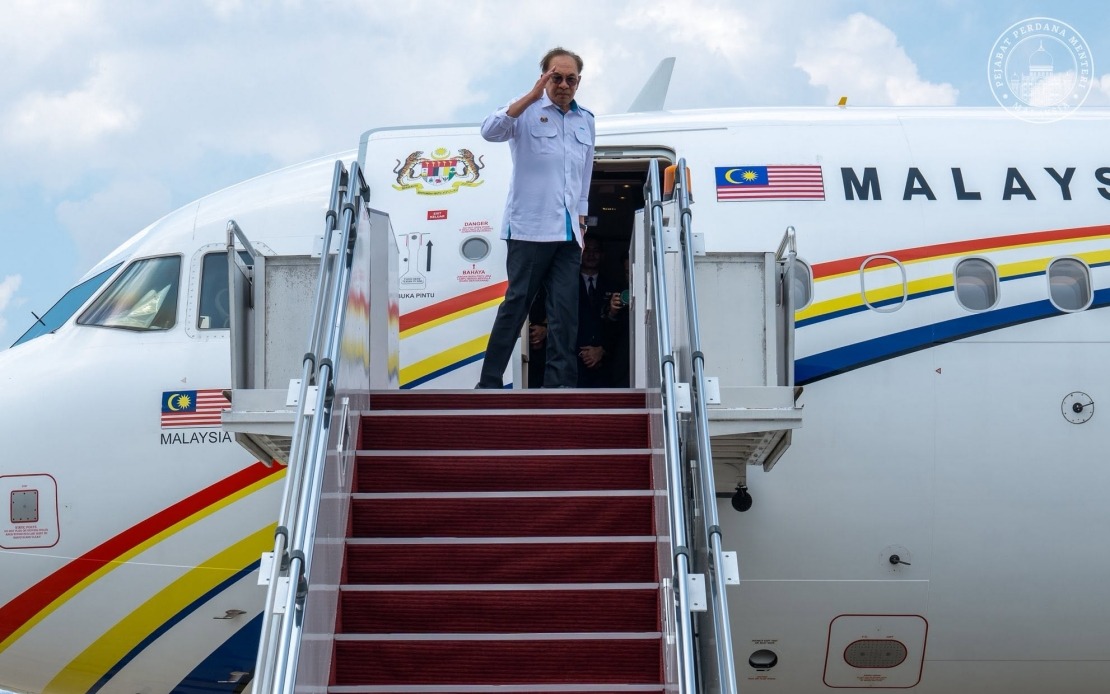
Prime Minister Datuk Seri Anwar Ibrahim left Kuala Lumpur on Sunday from Subang Air Base for Kazan, Russia, where he will represent Malaysia at a significant diplomatic gathering celebrating three and a half decades of ASEAN-Russia engagement. The journey marks an important moment in Southeast Asian diplomacy, as ASEAN looks to strengthen its position amid broader geopolitical shifts in the Indo-Pacific region. Anwar's attendance underscores Malaysia's commitment to maintaining balanced relations across diverse international partners, particularly as the bloc navigates complex relationships with major powers.
The ASEAN-Russia Commemorative Summit, scheduled for June 17 and 18, will commemorate the establishment of diplomatic ties between the ten-member Southeast Asian organisation and Moscow in 1991, an accord that was formalised in Kuala Lumpur. This milestone provides a structured opportunity for both sides to assess the trajectory of their partnership over the past three decades and to outline collaborative priorities for the coming years. The timing of the summit reflects Moscow's continued interest in deepening engagement with Southeast Asia, a region of increasing strategic importance in contemporary global affairs.
According to statements from Wisma Putra, the Foreign Ministry, Anwar will lead a high-level Malaysian delegation that includes Datuk Seri Johari Abdul Ghani, Minister of Investment, Trade and Industry, and Economy Minister Akmal Nasrullah Mohd Nasir. This composition signals Malaysia's intention to emphasise economic and commercial dimensions of the bilateral relationship alongside traditional diplomatic channels. The inclusion of senior economic officials suggests that trade expansion, investment opportunities, and sectoral cooperation will feature prominently in discussions.
Among the key items expected to be addressed during the summit are practical measures to boost cooperation across multiple domains. Trade and investment frameworks will likely receive significant attention, as ASEAN nations seek to diversify their economic partnerships and reduce dependency on any single trading bloc. Energy cooperation represents another critical area, given Russia's substantial hydrocarbon reserves and Southeast Asia's substantial energy requirements. Food security has emerged as a pressing concern for the region, particularly following disruptions to global supply chains, and Moscow's agricultural potential could feature in negotiations.
The summit agenda also encompasses contemporary challenges such as digital economy development, science and technology collaboration, and cultural exchanges. These sectors reflect the evolving nature of international engagement, moving beyond traditional resource trade toward innovation and knowledge-sharing partnerships. Educational programmes and people-to-people connections serve as crucial bridges for building long-term understanding and sustained cooperation between societies. Tourism cooperation, meanwhile, addresses mutual commercial interests and people-to-people engagement in an era of resumed travel.
Anwar is scheduled to hold bilateral discussions with Russian President Vladimir Putin, a meeting that will test the relationship between Malaysia and Russia at the highest political level. Such encounters provide opportunities to address specific bilateral concerns, discuss regional security matters, and explore avenues for deepened cooperation. The bilateral setting allows leaders to speak candidly about shared interests and potential areas of friction, away from the broader multilateral framework of the summit.
Beyond the formal summit proceedings, Anwar will also participate in the Russia-ASEAN Business Forum, a platform designed to facilitate direct engagement between government officials and commercial stakeholders from both sides. Business forums serve as crucial venues for identifying concrete investment opportunities, establishing partnerships, and creating networks that can sustain economic ties over the long term. Malaysian entrepreneurs and investors will have direct access to Russian counterparts to explore collaboration possibilities across various sectors.
Following the conclusion of activities in Kazan, Anwar's diplomatic itinerary extends to Ashgabat, Turkmenistan, where he will undertake an official visit at the invitation of President Serdar Berdimuhamedow. This leg of the journey demonstrates Malaysia's broader engagement strategy in Central Asia, a region that has received increased attention from Southeast Asian governments in recent years. Turkmenistan, with its substantial natural gas reserves and position along regional trade corridors, represents an emerging frontier for Malaysian diplomatic and economic engagement.
The simultaneous pursuit of engagement with both Russia and Turkmenistan illustrates Malaysia's foreign policy approach of maintaining pragmatic relationships across diverse geopolitical blocs. At a time when great power competition intensifies and nations face pressure to choose sides, Malaysia's strategy of balanced engagement allows it to retain agency and pursue national interests without surrendering flexibility. This approach reflects the broader ASEAN principle of strategic autonomy, whereby the bloc seeks to cooperate with multiple partners while avoiding exclusive alignments that could constrain policy options.
Malaysia's participation in the ASEAN-Russia summit carries particular significance given the country's recent elevation of its engagement with Russia despite Western sanctions and international pressure. The visit demonstrates that despite regional and global tensions, ASEAN members, including Malaysia, view Russia as a legitimate and important partner across multiple domains. This stance reflects practical considerations regarding energy security, trade opportunities, and regional stability, all of which inform Malaysian decision-making in foreign policy.
The 35-year trajectory of ASEAN-Russia relations provides a foundation upon which to build, though the relationship has experienced periods of varying intensity and focus. Recent years have witnessed renewed attention to deepening ties, particularly as both sides recognise mutual interests in maintaining regional stability and promoting economic cooperation. The commemorative nature of the summit serves not merely as a historical reflection but as a launching point for articulated partnerships adapted to contemporary challenges and opportunities.
From a Malaysian perspective, strengthening ASEAN-Russia cooperation offers tangible benefits in terms of access to energy resources, investment capital, technology transfer, and market opportunities. Russia's interest in Southeast Asian markets complements ASEAN's need for diversified partnerships, particularly as trade tensions between major powers create uncertainty in traditional supply chains. Enhanced engagement could also facilitate regional initiatives such as the Regional Comprehensive Economic Partnership, which includes major powers and requires coordinated approaches to complex global issues.
The diplomatic mission underscores Malaysia's position as an active participant in shaping regional and global developments. Through sustained engagement with diverse partners, Malaysia influences dialogue and cooperation patterns that affect not only its own prosperity but also the stability and prosperity of the broader Southeast Asian region. The balance between maintaining relationships with different centres of power, while advancing national interests and regional stability, remains central to Malaysia's diplomatic strategy in an increasingly multipolar world.

