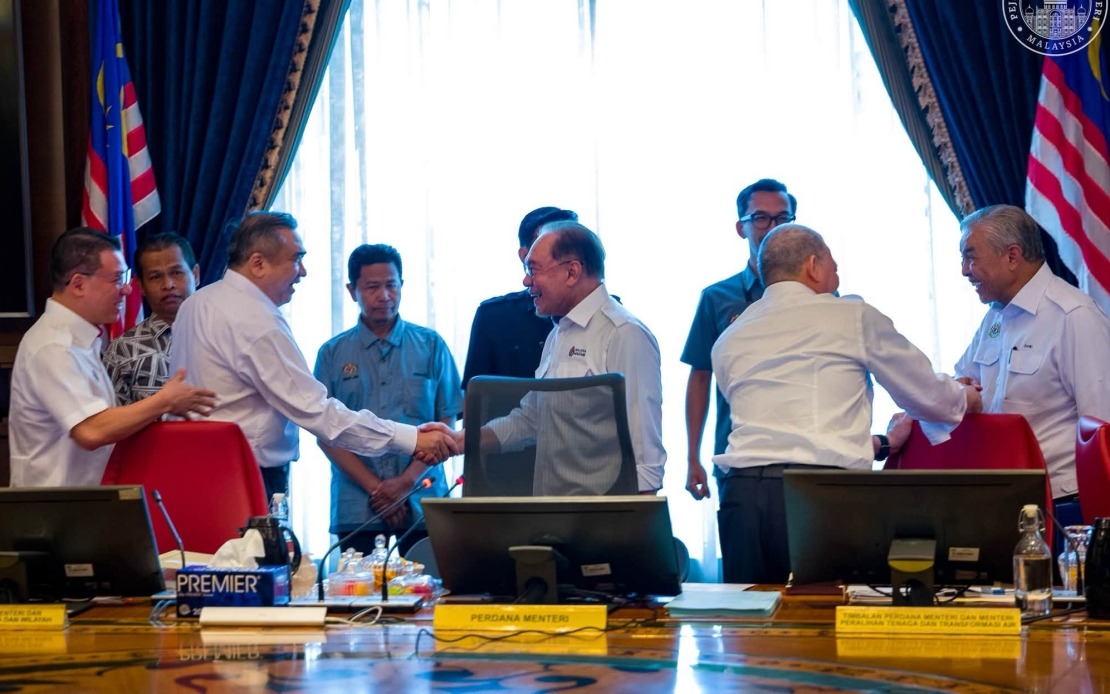
Prime Minister Datuk Seri Anwar Ibrahim has sought to underline the importance of cohesion and shared purpose through a poetic message shared on social media, posting a traditional four-line Malay pantun that celebrates the bonds of friendship and the value of collective agreement. The gesture, made public on his official Facebook account, represents a carefully calibrated signal about maintaining stability within Malaysia's governing structures even as rival factions prepare for electoral combat.
The pantun, a centuries-old form of Malay verse characterised by its distinctive rhyme scheme and often witty or philosophical content, carries particular cultural resonance in Malaysia. By choosing this medium rather than conventional political messaging, Anwar appears to have deliberately invoked a form of communication that resonates across generational and educational divides, lending his message an air of cultural authenticity that technical or bureaucratic language might lack. The accompanying post featured photographs from a Cabinet meeting including Deputy Prime Minister Datuk Seri Dr Ahmad Zahid Hamidi and Transport Minister Anthony Loke, both pictured in relaxed, collegial settings that visually reinforced the textual message about harmony.
The timing of Anwar's post carries significant political weight, arriving at a juncture when the Federal Unity Government faces its most substantial internal test since its formation. Pakatan Harapan, the coalition chaired by Anwar, is contesting all 36 state seats in the Negeri Sembilan state election, while Barisan Nasional, led by Ahmad Zahid, is fielding candidates in 25 constituencies and has additionally negotiated a pact with Perikatan Nasional. Despite the intensity of this electoral competition, both coalitions remain bound together at the federal level, a structural tension that requires careful management.
The State Assembly in Negeri Sembilan was dissolved on June 5, setting in motion a campaign schedule that culminates in polling on August 1, with early voting scheduled for July 28. The relatively compressed timeframe and competing interests of the two major federal partners have created a complex political environment in which maintaining the appearance of unity becomes strategically important. Anwar's intervention through artistic and cultural expression serves multiple purposes: it affirms his commitment to the stability of federal governance whilst allowing both coalitions to campaign with vigour in the state contest.
The response to Anwar's social media post demonstrated considerable public engagement, accumulating more than 11,500 likes within the first two hours of publication. The comments section generated substantial interaction, with more than 1,700 responses recorded. Notably, several commentators chose to respond in pantun themselves, indicating that the Prime Minister's choice of medium successfully resonated with audiences and invited reciprocal cultural participation rather than mere passive consumption of political messaging.
The analytical framing of Anwar's message by observers reveals how the post was understood to function as a broader statement about preserving governmental continuity and cohesion amid factional competition. Rather than being dismissed as mere cultural decoration, the pantun and accompanying imagery were interpreted as substantive political communication, a reminder that despite the vigorous contest unfolding in Negeri Sembilan, the Federal Unity Government's foundational purpose of maintaining stability and preventing political fragmentation remains paramount. This reading suggests that Malaysian audiences increasingly recognise nuanced forms of political signalling.
From a regional perspective, Anwar's approach to managing intra-coalition tensions through cultural and poetic expression offers an interesting contrast to more confrontational models of political management. Southeast Asian democracies frequently struggle with the challenge of maintaining coalition governments across diverse political constituencies, and Malaysia's experience demonstrates how symbolic communication and cultural resonance can serve as tools for political cohesion. The success of Anwar's pantun in generating positive engagement suggests that there remains appetite among Malaysian voters and political observers for leadership that emphasises dignity, cultural authenticity, and consensus-building.
The lyrics of the 1980s song accompanying the post, which the original report references but does not specify, likely carries its own connotations of unity, nostalgia, or shared national experience. The combination of traditional poetic form with contemporary popular culture creates a layered message that appeals across different demographic and generational segments of the Malaysian population. This multimedia approach to political communication demonstrates sophistication in understanding how messages propagate and resonate in digital environments.
For the Negeri Sembilan state election itself, Anwar's intervention appears designed to establish narrative boundaries that protect federal stability from being destabilised by state-level electoral outcomes. Whatever the result of the August 1 polling, the Prime Minister has preemptively established that the competition, whilst genuine, occurs within parameters set by the larger imperative of federal governance. This framing is particularly important given that both Pakatan Harapan and Barisan Nasional have significant stakes in the outcome, with each seeking to strengthen its position within the federal coalition.
The enthusiastic public reception of Anwar's message, as reflected in engagement metrics and the quality of responses, indicates that messaging emphasising unity and cultural pride resonates with substantial segments of the Malaysian electorate. In an era when political discourse often deteriorates into acrimony and personal attack, the choice to communicate through elevated, culturally rooted language appears to have struck a chord with audiences seeking substance and dignity in their leadership's public utterances. The pantun format, by requiring brevity whilst demanding poetic precision, forces political communication into more considered and memorable forms than conventional discourse typically permits.
Looking forward, Anwar's demonstrated success in generating positive engagement through culturally grounded messaging may influence how Malaysian political leaders approach communication challenges. As Malaysia navigates its coalition government arrangements and prepares for potential electoral contests, the premium placed on maintaining governmental stability whilst permitting political competition remains high. The Negeri Sembilan state election will serve as a crucial test of whether the Federal Unity Government can sustain its core purpose whilst accommodating the legitimate competitive interests of its constituent parts.

