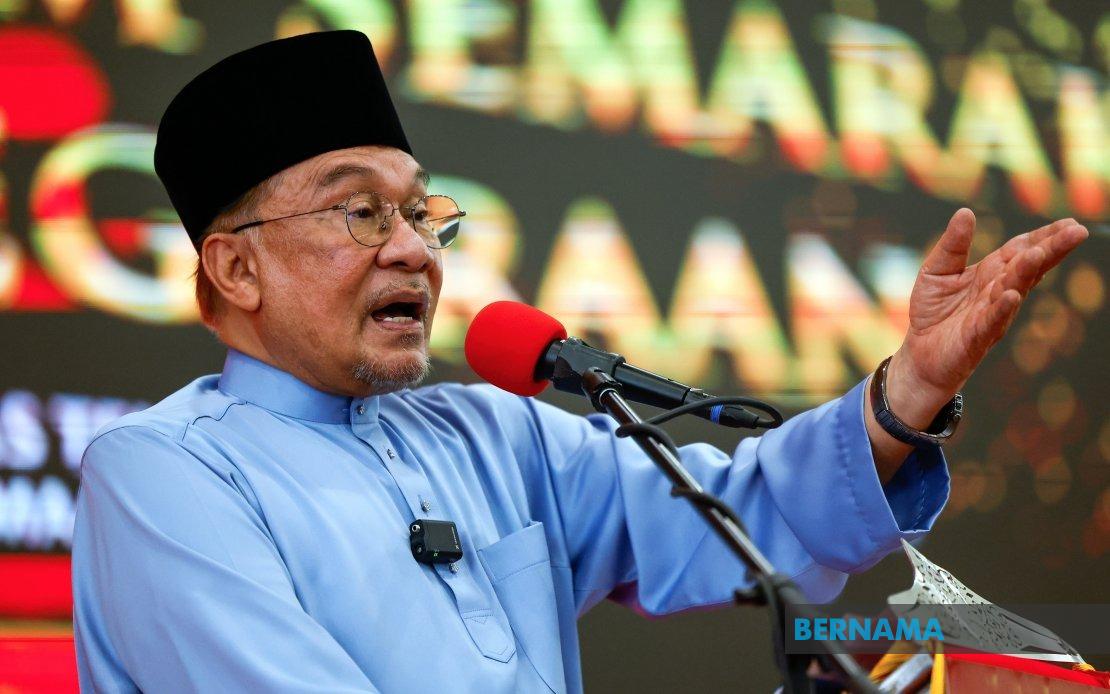
Prime Minister Datuk Seri Anwar Ibrahim is deploying his political capital across Negeri Sembilan with an ambitious campaign itinerary on July 29, signalling the high stakes and competitive nature of the state election scheduled for the following Saturday. As chairman of Pakatan Harapan, Anwar's presence represents more than mere ceremonial campaign engagement—it underscores the coalition's determination to consolidate support and counter momentum from rival political forces in the crucial final days before voters head to the polls.
The Prime Minister's day begins in Jelebu with an afternoon community engagement at Chennah, where he will host a tea session designed to facilitate direct conversation with residents. This grassroots approach reflects contemporary campaign methodology, moving beyond large rallies to create intimate, personal interactions that foster voter connection. The Temu Anwar programme scheduled for the Islamic Dakwah Centre Hall in Paroi follows immediately after, indicating a deliberate strategy to build momentum through consecutive engagements across different communities and constituencies.
Evenings bring further targeted outreach, with Anwar attending a dinner reception hosted by the Indian community at Klana Resort. This deliberate sectarian engagement acknowledges the diverse demographic composition of Negeri Sembilan's electorate and the necessity for coalition candidates to secure support across multiple community lines. In Malaysian electoral dynamics, ethnic-based community engagement remains a critical mobilisation strategy, particularly in states where no single community commands an overwhelming majority.
The campaign schedule crescendos with back-to-back late-night rallies designed to maximise visibility and generate media coverage during the final 48 hours of the campaign period. Anwar will lead proceedings at Betaria Business Centre in Seremban at 9 pm, before proceeding to Desa Cempaka Night Market in Nilai at 10.30 pm. This compressed timeline, running up to the 11.59 pm campaigning deadline on Friday, reflects the pressure-cooker environment of final campaign hours, where parties attempt to dominate the information environment and secure last-minute voter commitments.
Accompanying Anwar are senior party figures whose presence amplifies the message and demonstrates coalition unity. Negeri Sembilan Menteri Besar Datuk Seri Aminuddin Harun, contesting the Linggi seat, brings incumbent credibility and administrative achievements to the platform. DAP secretary-general Anthony Loke Siew Fook, who is competing in Chennah, adds the coalition's urban-based, multi-ethnic component to proceedings. Their joint appearances underscore Pakatan Harapan's federal-state coordination and suggest confidence in the coalition's competitive positioning within the state.
The extended supporting cast—including Amanah president Datuk Seri Mohamad Sabu, PKR vice-president Datuk Seri Amirudin Shari, and communications director Datuk Seri Fahmi Fadzil—reflects the breadth of the coalition's organisational depth. In Malaysian politics, where state elections often determine the competitive balance and serve as mid-term assessment of federal government performance, maximising visible party leadership communicates seriousness and internal cohesion to both supporters and the broader voting public.
Packatan Harapan's electoral strategy in Negeri Sembilan involves a comprehensive approach, with the coalition contesting all 36 state assembly seats. The seat distribution—16 from PKR, 11 from DAP, and nine from Amanah—reflects negotiated power-sharing arrangements and strategic calculation about where each component party maintains strongest electoral performance. This comprehensive candidacy demonstrates confidence and commitment, though it also creates pressure for coalition candidates to deliver majorities across diverse constituencies.
The electoral environment itself encompasses considerable scale and complexity. With 103 candidates competing for 36 seats and approximately 867,151 ordinary voters registered to participate, the Negeri Sembilan contest represents a significant electoral exercise that extends beyond merely local significance. State elections in Malaysia function as opinion polls on federal government performance, and Anwar's personal investment of time and political capital indicates sensitivity to the potential electoral consequences of underperformance in the Pahang-adjacent state.
Geographically and demographically, Negeri Sembilan presents distinct challenges and opportunities. The state encompasses urban constituencies in Seremban and Nilai alongside rural areas with different electoral calculus. Communities in the state include significant Indian and Chinese populations, meaning coalition performance depends on mobilising across ethnic lines—a particular challenge given perceptions of ethnic-based politics in Malaysian electoral behaviour. The deliberate engagement with the Indian community, in particular, suggests recognition that particular groups require explicit outreach and reassurance of coalition commitment.
The timing of Anwar's intensive campaign blitz reflects standard Malaysian electoral practice, where final days witness maximum leadership visibility. However, the specific focus on Negeri Sembilan and the breadth of Anwar's personal engagement suggest particular vulnerability or perceived opportunity. If opinion polling or internal surveys indicate tight races or slipping support in crucial constituencies, such concentrated leadership deployment becomes necessary to stabilise voter sentiment or recover ground lost to competing narratives.
For Malaysian and Southeast Asian observers, the Negeri Sembilan election offers early indication of whether Pakatan Harapan can maintain its 2022 federal election momentum or whether state-level dynamics demonstrate slippage in coalition performance. Public perception of federal government effectiveness, economic management, and internal coalition harmony all become tested through voting behaviour, making this state election consequential for understanding Malaysia's evolving political trajectory beyond the immediate contest itself.

