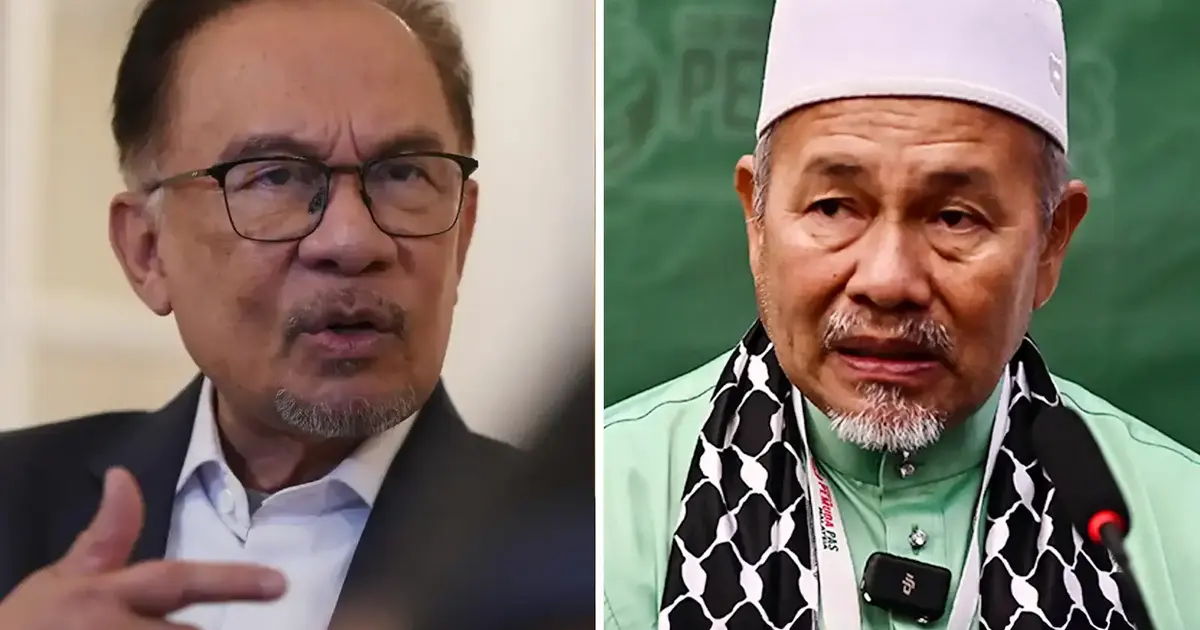
Prime Minister Anwar Ibrahim has escalated tensions within Malaysia's ruling coalition by issuing a formal 48-hour ultimatum to PAS Deputy President Tuan Ibrahim, demanding an apology and retraction of what he characterises as defamatory claims. The confrontation centers on accusations that Anwar allegedly wielded undue influence over police investigations and intervened improperly in the process to select the Negeri Sembilan ruler, allegations the Prime Minister flatly denies and considers damaging to his reputation.
The dispute highlights underlying strains within the coalition government formed following the 2022 general election, in which PAS emerged as a significant political force and secured multiple cabinet positions. Tuan Ibrahim's allegations, though specific allegations have not been fully detailed in public statements, strike at concerns that have periodically surfaced regarding executive overreach and the independence of key institutions. For Anwar, the charges represent a fundamental attack on his integrity at a time when his administration is attempting to consolidate legitimacy and push forward with economic and governance initiatives.
Anwar's threat of legal action carries significant weight, as defamation suits have become increasingly common in Malaysian politics when public figures believe their reputation has been materially harmed. The Prime Minister appears determined to set a clear boundary regarding what accusations he will tolerate from coalition partners, signalling that internal political disagreements do not exempt senior figures from accountability under civil law. This approach reflects broader tensions between maintaining coalition unity and defending personal standing against what Anwar views as baseless attacks.
The allegations concerning police investigations are particularly sensitive given Malaysia's ongoing efforts to improve public confidence in law enforcement institutions. Any suggestion that political leaders are directing police probes risks undermining institutional independence and public trust. Similarly, the question of ruler selection touches on constitutional matters of considerable delicacy in Malaysia's monarchy system. The protocols governing such selections involve complex constitutional procedures, and any implication of improper political interference would raise serious governance concerns that extend beyond party politics.
Tuan Ibrahim's position as PAS Deputy President adds weight to these claims from a political standpoint, as he speaks with authority within one of Malaysia's most influential religious-based political parties. PAS has grown increasingly important in Malaysian politics and controls several state governments, making internal PAS figures significant players in national affairs. The party's coalition with the government has provided stability, but also created friction points where divergent interests and ideologies occasionally clash publicly.
The 48-hour deadline creates immediate pressure for a response that will likely have repercussions across the political landscape. Should Tuan Ibrahim comply with the ultimatum, it would represent a significant public retreat that could weaken his standing within PAS and embolden Anwar's position within the coalition. Conversely, if Tuan Ibrahim refuses to apologise and retract, the Prime Minister is signalling that he will follow through with legal action, a move that would intensify internal coalition tensions and potentially destabilise the government arrangement that has provided Malaysia with stability since 2022.
For ordinary Malaysians observing this dispute, the confrontation exemplifies recurring concerns about whether coalition governments can function effectively when senior members engage in public character attacks. The matter also raises questions about how institutional independence is actually maintained in practice, particularly when high-ranking political figures make competing claims about their respective roles in sensitive matters. Public confidence in both police and the judiciary depends partly on perceptions that these institutions operate free from political manipulation, making accusations of such interference inherently damaging to democratic functioning.
The timing of this ultimatum is noteworthy given Malaysia's broader political context. The nation continues navigating post-pandemic economic recovery, managing inflation, and addressing longstanding governance reforms. Internal coalition squabbles of this nature distract from policy priorities and create uncertainty among investors and the international community about the stability of the government. Both Anwar and his coalition partners have incentives to resolve such disputes quietly, yet the very public nature of this confrontation suggests that behind-the-scenes negotiations have failed.
Regionally, Malaysia's political stability matters for Southeast Asian equilibrium, as the country occupies a significant position in the region's strategic and economic architecture. Prolonged internal political conflict, particularly involving threats of legal action between coalition partners, can create uncertainty that ripples beyond national borders. Foreign observers will be watching whether the Malaysian government can contain such disputes and maintain the coalition partnership that underpins current governance arrangements.
The resolution of this dispute will likely set a precedent for how future disagreements between Anwar and other senior coalition partners are handled. If legal action proceeds, it would mark a notable escalation in Malaysian political practice, as sitting prime ministers do not frequently pursue defamation suits against fellow coalition members. The outcome will communicate important signals about the boundaries Anwar is willing to defend and the consequences coalition partners face for public criticism. Both the threat of legal action and the possibility of its execution will shape how other PAS leaders and coalition members calculate their political strategies moving forward.

