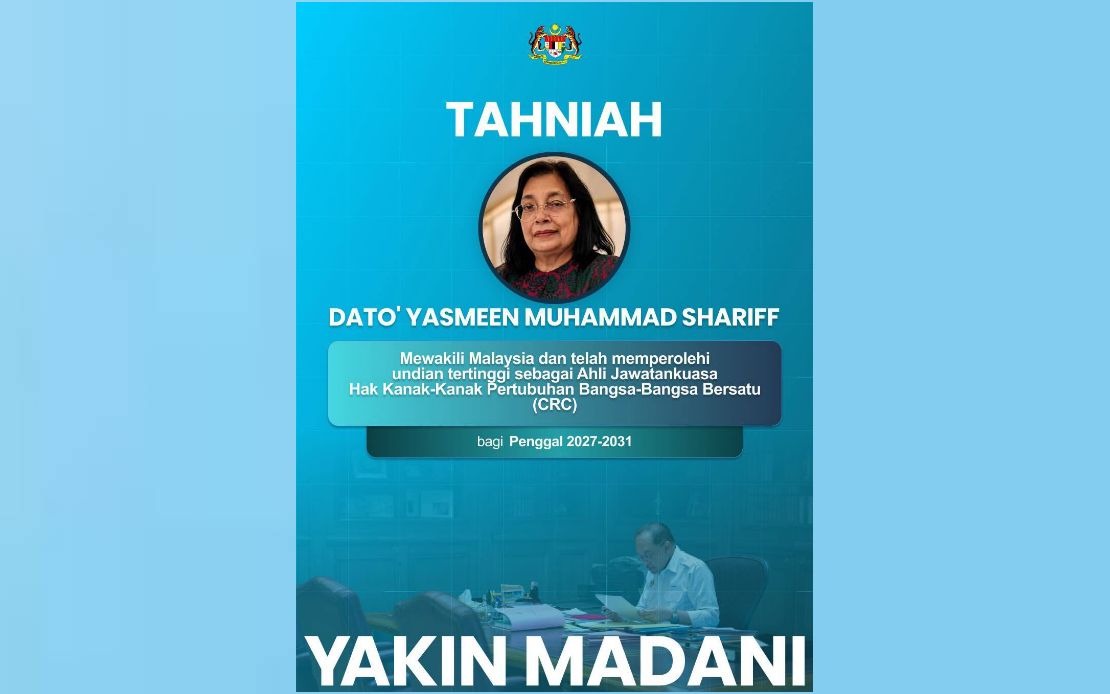
Prime Minister Datuk Seri Anwar Ibrahim has publicly commended Datuk Yasmeen Muhamad Shariff following her successful election to the United Nations Committee on the Rights of the Child, marking a significant diplomatic achievement for Malaysia on the international stage. The appointment, which covers the 2027-2031 term, represents recognition from the global community of Malaysia's dedication to advancing child welfare standards and maintaining a credible voice in multilateral forums focused on human rights protection.
Yasmeen's victory at the ballot came during the 21st Meeting of States Parties to the Convention on the Rights of the Child held at UN headquarters in New York. She garnered a robust 136 votes from 189 member states that participated in the election, demonstrating substantial international backing for her candidacy and Malaysia's broader child protection agenda. This commanding support reflects the confidence that nations across diverse regions place in her expertise and the credibility Malaysia has built within the UN's human rights mechanisms.
In his congratulatory message posted on social media, Anwar framed the election as validation of Malaysia's commitment to global governance structures. He emphasized that Yasmeen's achievement extends beyond personal recognition, positioning it instead as evidence of the nation's growing influence in international affairs and its sustained dedication to advancing values-based initiatives on the world stage. The Prime Minister's public endorsement underscores the government's priority on child protection and rights advocacy as core pillars of Malaysia's foreign policy positioning.
The Ministry of Women, Family and Community Development, which oversees Malaysia's women and children's portfolios, highlighted the historic dimensions of Yasmeen's appointment. This marks her second term serving on the committee, having previously been elected for the 2013-2017 period, establishing her as a returning expert whose prior contributions to the body's work warranted reconfirmation by the international community. Her re-election demonstrates continuity in Malaysia's approach to international child rights advocacy and provides institutional memory within the committee.
As a committee member, Yasmeen will discharge her responsibilities in an independent capacity as a technical expert, serving without direct governmental instruction despite her previous ministerial portfolio associations. This distinction is crucial in UN committee frameworks, where members are expected to act as impartial professionals applying their specialized knowledge rather than as diplomatic representatives of their home nations. Such independence enhances the credibility of the committee's monitoring and advisory functions while allowing Malaysia's perspectives on child rights implementation to be represented through substantive professional channels.
The Committee on the Rights of the Child functions as one of the UN's core human rights monitoring bodies, responsible for examining how states comply with the Convention on the Rights of the Child—the most widely ratified international human rights treaty. Committee members conduct country reviews, issue concluding observations addressing implementation gaps, and provide guidance on emerging challenges affecting children globally. Malaysia's participation through experts like Yasmeen ensures that Southeast Asian perspectives and developmental contexts inform the committee's deliberations and recommendations.
For Southeast Asia specifically, Yasmeen's appointment carries implications for how child protection issues across the region are understood and addressed within UN processes. With significant populations of children in developing and transitional economies, the region faces distinctive challenges related to child labor, education access, protection from trafficking, and vulnerability within migrant communities. Having a regionally-grounded expert with familiarity of local governance structures and implementation capacities helps ensure that the committee's guidance remains contextually relevant when applied to countries navigating resource constraints and institutional development stages.
Anwar's public recognition of this achievement aligns with the government's broader strategy of elevating Malaysia's profile in international forums and demonstrating competence in multilateral participation. The administration has invested in positioning Malaysia as a credible voice on development, governance, and human rights matters, and successfully placing nationals in UN technical bodies contributes substantively to that objective. Such appointments require sustained diplomatic engagement and substantiation of national-level expertise, making them valuable indicators of foreign service effectiveness.
The election process itself reflects how UN member states collectively shape the composition of oversight bodies by selecting candidates they perceive as qualified, impartial, and likely to advance legitimate international norms. Yasmeen's strong vote count suggests that her professional standing, prior committee experience, and perceived independence converged to make her an attractive candidate across different geopolitical groupings within the UN membership. This cross-regional appeal is particularly valuable for committee credibility, as it indicates acceptance beyond any single bloc of nations.
Moving forward, Yasmeen's role during the 2027-2031 period will encompass monitoring compliance with child rights standards, engaging in technical dialogues with government delegations, and contributing to the committee's development of general comments that interpret treaty obligations. Her particular value will likely center on articulating how provisions of the convention apply to middle-income and developing country contexts where Malaysia itself operates, ensuring that international standards remain practically implementable rather than divorced from governance realities.
For Malaysian stakeholders engaged in child protection, education policy, and social development, Yasmeen's appointment provides a potential avenue for elevating domestic innovations to international attention through formal UN channels. The committee's recognition of Malaysia's expertise also creates external validation for local policy initiatives and can facilitate knowledge exchange with other nations addressing similar developmental challenges in child welfare.

