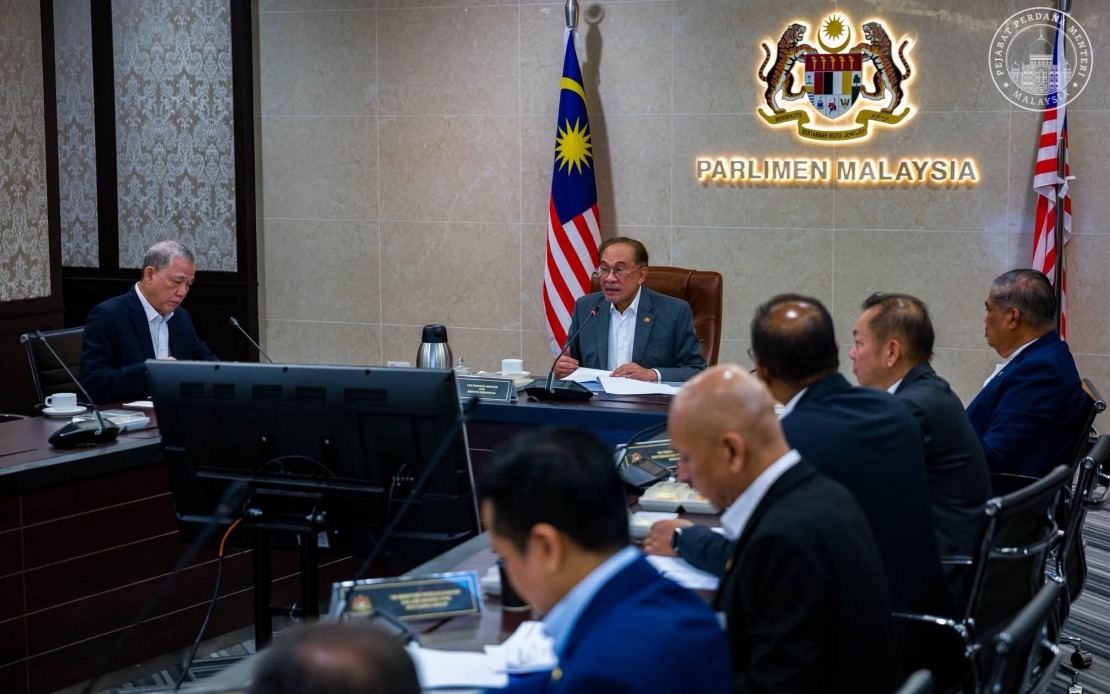
Prime Minister Datuk Seri Anwar Ibrahim has instructed the Ministry of Agriculture and Food Security to rapidly develop a comprehensive action plan to counteract the anticipated effects of the Super El Niño phenomenon, which climate forecasters expect to begin affecting Malaysia in November. The directive emerged from the maiden National Food Security Council Meeting held under his chairmanship, signalling the administration's determination to protect domestic agricultural output and shield farming communities from potential economic hardship during the climatic event.
The Super El Niño phenomenon represents a significant meteorological challenge for Southeast Asia's agricultural sector, typically bringing altered rainfall patterns, prolonged dry spells in some regions, and water stress that disrupts crop production cycles. For Malaysia, which relies substantially on domestic agricultural output to meet basic food requirements whilst maintaining export competitiveness, the approaching weather system poses tangible risks to multiple production chains. The tropical nation's vulnerable sectors include rice cultivation in key granary regions, vegetable production in both highland and lowland zones, and aquaculture operations that depend on stable water conditions and salinity levels.
Anwar's emphasis on expediting mitigation measures reflects broader recognition within government circles that reactive responses prove insufficient when managing large-scale natural phenomena. Instead, proactive planning—encompassing water management strategies, crop diversification initiatives, and contingency supply arrangements—offers the most effective pathway to minimising disruption. The Prime Minister's instruction specifically mandated that the agriculture ministry work through established channels whilst maintaining uncompromised standards for food safety and product quality, indicating that crisis response will not come at the expense of consumer protection or regulatory oversight.
The National Food Security Council Meeting's agenda extended beyond weather preparedness to encompass regional cooperation mechanisms. Deliberations included ongoing fisheries partnerships with Thailand, underscoring the interconnected nature of food security within the Association of Southeast Asian Nations region. Cross-border agricultural and aquatic trade relationships mean that disruptions in neighbouring jurisdictions can cascade into Malaysian supply chains, making regional coordination and transparent communication essential components of comprehensive food security strategy.
Thailand collaboration represents a particularly important dimension given the two nations' integrated aquaculture and fisheries markets. The Prime Minister explicitly noted the imperative to maintain continuous dialogue with fishing communities to ensure their production methods and products align with established quality benchmarks. This engagement reflects an understanding that small-scale and artisanal producers often lack independent capacity to implement compliance measures and require government guidance and potentially financial support to upgrade facilities and practices whilst maintaining their economic viability.
Strengthening Malaysia's agrifood sector competitiveness emerged as a recurring theme throughout council deliberations, touching on the government's broader vision for sustainable agricultural development. The administration recognises that domestic producers must not merely survive environmental shocks but emerge capable of competing effectively in regional and international markets. This requires systematic adoption of technology—including precision agriculture techniques, climate-resilient crop varieties, and data-driven resource management—alongside innovation in value-added processing and supply chain efficiency.
The governance structure through which food security policy flows merits attention. Establishing a dedicated National Food Security Council headed by the Prime Minister signals institutional elevation of agricultural and food-related concerns from technical ministry matters to high-level political priorities. This elevation facilitates inter-ministerial coordination, ensures resource allocation reflects strategic importance, and enables faster decision-making during crises. The council mechanism also creates accountability frameworks where multiple agencies must demonstrate progress toward defined food security objectives rather than operating in isolation.
Malaysian farmers, padi growers, livestock breeders, and fishing communities collectively form a substantial constituency dependent on government policy coherence and support mechanisms. These producers operate within complex ecosystems of market forces, climatic variability, and policy constraints that often transcend their individual control. Government initiatives targeting technological adoption and best practice implementation must therefore include capacity-building components, financial mechanisms for infrastructure investment, and extension services capable of translating research findings into practical farm-level applications.
The anticipated November arrival of Super El Niño creates a concrete timeline for implementation. This compressed preparation window necessitates focusing resources on highest-impact interventions rather than comprehensive systemic overhaul. Water conservation infrastructure, emergency crop varieties, alternative livelihood pathways for affected producers, and enhanced market information systems represent priority areas where relatively rapid deployment could yield meaningful protective benefits. Coordination with state governments, which maintain jurisdiction over agricultural land use and water resources in many instances, becomes critical to translating federal directives into ground-level action.
Longer-term implications of the council's deliberations extend beyond immediate weather preparedness toward structural resilience building. Climate science suggests that extreme weather events like Super El Niño will increase in frequency under warming atmospheric conditions, making agricultural adaptation permanent rather than temporary policy concern. The government's emphasis on technology adoption and innovation reflects implicit acknowledgment that Malaysia cannot rely indefinitely on traditional farming methods and environmental conditions that have underpinned agricultural prosperity across recent decades.
For Malaysian consumers and the broader economy, successful navigation of the Super El Niño period carries substantial implications. Food price inflation disproportionately affects lower-income households and can destabilise social stability if perceived as resulting from government mismanagement. Conversely, demonstrable competence in managing agricultural challenges builds public confidence in institutional capacity and justifies continued investment in food security infrastructure. The council's activities therefore represent more than technical bureaucratic exercises but constitute essential political and economic governance.

