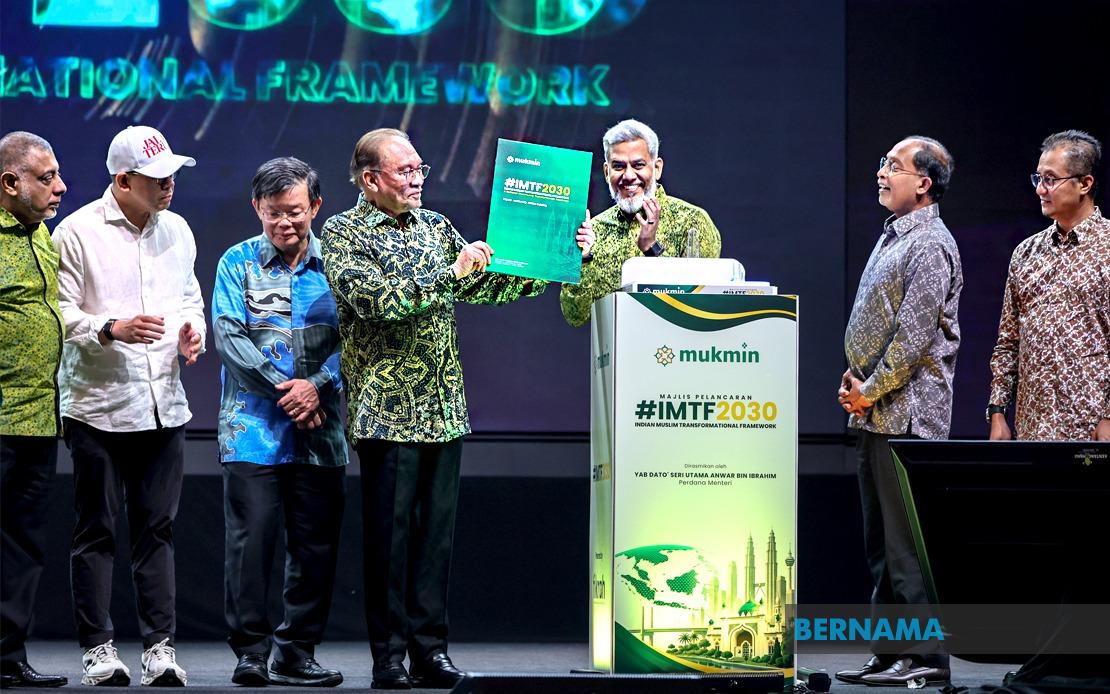
Prime Minister Datuk Seri Anwar Ibrahim has given Malaysia's government departments exactly one month to untangle the complex issues surrounding foreign worker recruitment, with particular emphasis on addressing severe labour shortages in the restaurant industry. Speaking at the launch of the Indian Muslim Transformational Framework 2030 at the PICCA@Arena Butterworth Convention Centre in Penang on July 24, Anwar stressed that the resolution must follow a clear prioritisation system, beginning immediately from Monday following his announcement.
The Prime Minister's directive reflects a growing tension within government policy on migrant labour. While acknowledging the genuine operational difficulties faced by restaurant owners and operators struggling to maintain service levels, Anwar carefully emphasised that accelerating foreign worker approvals cannot mean abandoning prudent management altogether. He articulated this delicate balance by warning against completely opening Malaysia's borders to unskilled foreign labour when the country already hosts what he characterised as an excessive migrant population. This framing suggests government concern that poorly controlled recruitment could exacerbate social and economic pressures rather than solve them.
The restaurant sector's particular inclusion in this fast-track process underscores how acutely labour constraints have affected Malaysia's hospitality industry. With domestic workers scarce and wages not rising sufficiently to attract local talent in food service roles, many restaurant operators have found themselves unable to maintain normal operations. The government's recognition of this urgency represents an acknowledgment that existing procedures have created bottlenecks that practical businesses cannot tolerate indefinitely. Yet by setting a hard deadline rather than opening applications immediately, Anwar's approach suggests the government wants reforms that remain controlled and temporary rather than permanent relaxations.
This initiative builds on earlier signals from Communications Minister Datuk Seri Fahmi Fadzil, the government spokesperson, who had previously announced that the cabinet would conduct a comprehensive review of foreign worker requirements across multiple sectors. Beyond restaurants, the government has indicated willingness to examine construction and other industries where labour shortages pose significant operational challenges. However, the focus and urgency devoted to restaurants in Anwar's announcement indicates that sector faces the most pressing immediate difficulties.
Malaysia's approach to foreign workers has long been governed by numerical targets and percentage-based caps. The 12th Malaysia Plan stipulates that foreign workers cannot constitute more than 15 per cent of the national workforce. More ambitiously, the 13th Malaysia Plan sets a target of reducing this proportion to just 10 per cent by 2030, reflecting broader government policy to create a labour market increasingly reliant on local workers. These frameworks create the regulatory context within which the current fast-track review must operate. Any solutions developed within the one-month window must somehow accommodate both the practical needs of immediate labour shortages and these longer-term reduction targets.
The challenge facing the relevant ministries and departments is therefore not merely administrative but fundamentally strategic. They must devise procedures that expedite approvals for genuinely necessary foreign workers while simultaneously implementing safeguards that prevent the kind of loose recruitment patterns that could undermine Malaysia's workforce development objectives. This requires careful vetting of applications, transparent criteria for priority sectors, and mechanisms to prevent the kind of permit inflation that often characterises migrant labour programmes in Southeast Asia. The one-month timeline suggests these solutions must be pragmatic rather than comprehensive.
Anwar's comments also reveal government sensitivity to social and political concerns about foreign workers. Malaysia has experienced periodic tensions around migrant populations, particularly regarding their impact on wages, working conditions, and cultural integration. By framing the foreign worker issue as requiring controlled, temporary solutions rather than permanent expansion, the government signals awareness that public opinion would not support wholesale opening of labour markets. The emphasis on prioritisation and careful management serves to reassure constituencies worried about unchecked migration.
The announcement came during Anwar's participation in the Indian Muslim Transformational Framework 2030 launch, an initiative seeking to improve education, entrepreneurship, and leadership outcomes for Malaysia's Indian Muslim community. During the same event, Anwar allocated RM2 million to MUKMIN, the Pertubuhan Gabungan MUKMIN Nasional, for programmes supporting children from economically disadvantaged families. This juxtaposition of foreign worker policy discussions with education initiatives for marginalised local communities suggests the government views labour market reform within a broader context of inclusive development and social equity.
The attendance of Penang Chief Minister Chow Kon Yeow, alongside ministers for higher education, entrepreneurship, and other portfolio holders, reflected the multi-agency coordination required for this initiative. Such high-level involvement signals that Anwar and his cabinet view the foreign worker question as sufficiently important to command senior attention and cross-departmental collaboration. This administrative approach should accelerate decision-making but also suggests the government has not yet developed detailed solutions, instead asking departments to work collectively within the compressed timeline.
For Malaysian business operators and workers, the one-month deadline creates both opportunity and uncertainty. Restaurants and other labour-dependent sectors that successfully petition for foreign worker allocations may find temporary relief from staffing constraints. However, the temporary nature of these solutions and the underlying commitment to eventual workforce localisation means businesses cannot treat this as a long-term labour supply fix. Instead, they should treat it as a bridge period during which to invest in training, mechanisation, and labour retention strategies that reduce future dependence on migrant workers.
The regional implications of Malaysia's foreign worker policy choices extend beyond national borders. Other Southeast Asian nations facing similar labour shortages in hospitality, construction, and service sectors watch how Malaysia manages its approach. A model that balances operational necessity with integration and social stability could influence regional thinking on labour migration. Conversely, if Malaysia's liberalisation creates negative social outcomes or wage pressures for local workers, it may prompt neighbour states to reconsider their own policies.
The government's decision to impose a specific deadline rather than leaving the review process open-ended demonstrates determination to move quickly. However, success will depend on whether the relevant ministries can genuinely streamline processes or whether they can only approve additional worker quotas within existing lengthy approval timelines. The true test of this initiative will be whether restaurants and other sectors actually receive approvals within the 30-day window and whether these expedited processes become permanent fixtures or revert to slower normal procedures after the deadline passes.

