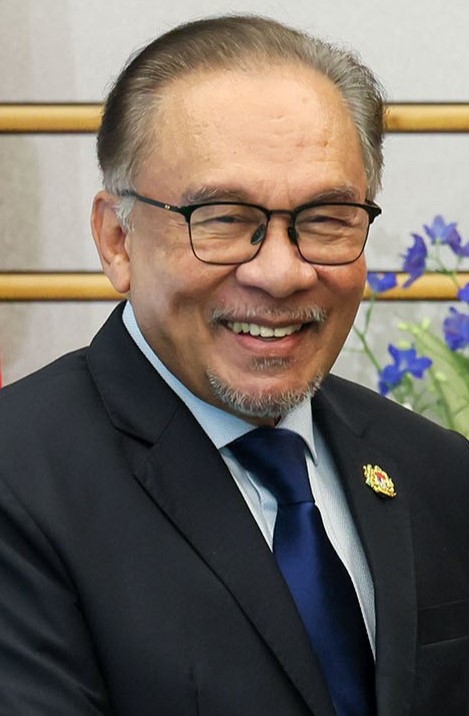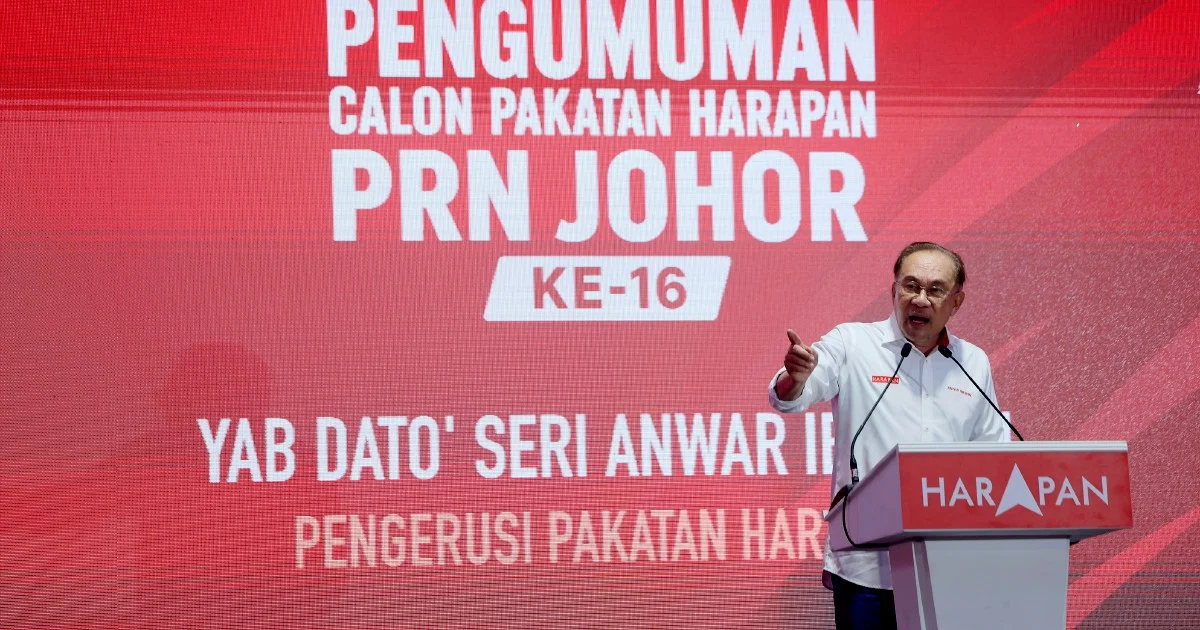
Prime Minister Datuk Seri Anwar Ibrahim has called on Johor's state leadership to demand clarity from the previous Barisan Nasional and Perikatan Nasional federal administrations regarding longstanding complaints that the state failed to receive its equitable allocation of national revenue. Speaking during a visit to Tangkak, Anwar emphasised the importance of holding past governments accountable for fiscal decisions affecting Johor's development and economic capacity.
The Prime Minister's remarks underscore a persistent tension within Malaysia's federal-state fiscal architecture, where resource allocation has frequently become a flashpoint in political negotiations and intergovernmental relations. Johor, as one of Malaysia's largest and economically significant states, has historically argued that its contributions to the national treasury do not translate proportionally into federal disbursements and development allocations. This structural imbalance has fuelled grievances among state-level policymakers across different political coalitions and administrations.
Anwar's directive to the Johor executive councillor signals the Pakatan Harapan-led federal government's readiness to engage with state-level concerns about fiscal equity, particularly as Johor navigates its transition toward greater economic diversification beyond its traditional sectors. The call also reflects the current administration's broader political strategy of distinguishing itself from its predecessors through enhanced accountability mechanisms and more transparent governance frameworks.
The revenue distribution question carries particular weight in Johor, where the state government has pursued ambitious infrastructure and industrial development projects that require substantial capital investment. When federal revenue transfers fall short of expectations or allocations, state-level initiatives face constraints, potentially affecting employment generation, infrastructure quality, and overall economic competitiveness within the region. This dynamic creates political pressure on both federal and state administrators to justify resource distribution decisions.
Historically, Johor's relationship with the federal centre has been complex, shaped by the state's significant economic output, its status as a manufacturing and logistics hub, and its proximity to Singapore. These factors have occasionally positioned Johor as a negotiating power within federal corridors, enabling state leaders to advocate for preferential treatment or corrective fiscal measures. However, the effectiveness of such advocacy has varied depending on the political alignment between state and federal governments and the broader priorities within the national budget cycle.
The previous Barisan Nasional administration, which governed federally for decades before 2018, established fiscal frameworks that Johor and other states have contended reflect outdated formulae and inadequate contemporary needs. Subsequently, the Perikatan Nasional government, which took office in 2020, operated within inherited structures while facing its own fiscal constraints during the COVID-19 pandemic and economic recovery period. Both administrations, according to state-level critiques, failed to address structural inequities in revenue distribution that disadvantaged Johor relative to its economic contribution.
Anwar's intervention suggests the current federal government intends to revisit these fiscal arrangements as part of its governance platform. However, any comprehensive reform of Malaysia's federal revenue-sharing formula would necessitate complex negotiations, careful actuarial analysis, and political consensus among multiple stakeholders. The formula itself involves considerations beyond simple proportionality, including population distribution, development needs, and historical agreements, making wholesale revision technically and politically challenging.
For Johor's executive councillor and state administration, the directive presents an opportunity to formally escalate documented grievances and demand substantive explanations from previous federal governments. Such accountability exercises, whether conducted through parliamentary mechanisms, public inquiries, or intergovernmental forums, could establish a factual record and potentially inform discussions about prospective reforms to Malaysia's fiscal federalism architecture.
From a Southeast Asian perspective, Johor's fiscal situation mirrors challenges faced by resource-producing and economically significant subnational entities throughout the region, where centre-periphery negotiations over revenue allocation frequently shape political stability and development outcomes. The state's experience highlights how federal-state fiscal relationships interact with broader questions of political legitimacy, economic equity, and regional development parity.
The Prime Minister's remarks also carry implications for other Malaysian states observing this engagement, signalling that the federal government may be receptive to revisiting fiscal grievances more broadly. States that have maintained documented concerns about revenue allocation fairness may view this moment as an opportune window for presenting evidence and arguments to the current administration, potentially catalysing more comprehensive reviews of Malaysia's intergovernmental financial arrangements.
Moving forward, the substance of any dialogue between Johor's state government and the federal administration will likely determine whether this represents substantive policy recalibration or primarily symbolic political engagement. Tangible outcomes might include independent audits of historical allocations, adjusted transfer formulae, or enhanced transparency mechanisms, each carrying different fiscal and political implications for Johor and other states navigating Malaysia's complex federal system.