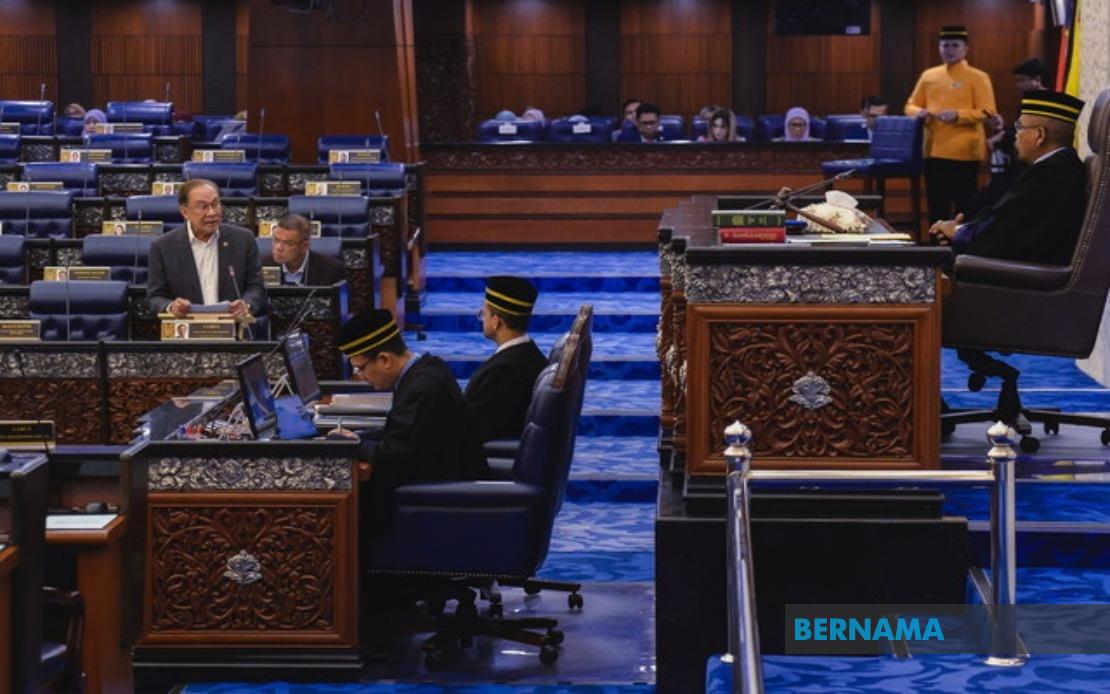
Prime Minister Datuk Seri Anwar Ibrahim has reinforced the government's commitment to upholding electoral integrity by prohibiting the announcement of new projects or policies during election campaign periods. Speaking during Minister's Question Time in the Dewan Rakyat, Anwar clarified that this restriction remains a cornerstone of Malaysia's election framework and will be strictly enforced as the country prepares for state elections in Johor, Melaka, and Negeri Sembilan.
The legal foundation for this prohibition is Section 24B of the Election Offences Act 1954, which establishes clear boundaries for government activity during campaign windows. Anwar emphasised that once nomination day is declared, while campaigning itself may commence, there exists a categorical prohibition against the announcement or promise of fresh initiatives or policy measures affecting the state in question. This distinction is crucial for maintaining public confidence that electoral competition occurs on a level playing field.
The Prime Minister was responding to a parliamentary question from Datuk Seri Dr Shahidan Kassim (PN-Arau), who sought clarification on whether the longstanding ban on announcing government allocations or projects after nomination day remained enforceable and how the government intended to ensure compliance throughout the election period. Dr Shahidan's inquiry underscores ongoing political interest in how these restrictions are practically implemented across different levels of governance.
Crucially, Anwar distinguished between newly conceived projects and those already approved or funded through preceding federal budgets. Initiatives that have previously received formal approval and financial allocation do not constitute violations of election law, even when formally announced during campaign periods. This clarification provides necessary flexibility for government operations while maintaining the spirit of electoral fairness. It allows the administration to communicate previously committed expenditures without creating artificial delays that could inconvenience the public or disrupt planned development timelines.
Government machinery at all levels must refrain from utilising administrative resources to publicise new initiatives during campaign periods. This directive applies comprehensively across municipal councils, state governments, and the federal apparatus. The restriction acknowledges a fundamental democratic principle: that state resources should not be deployed to provide incumbent parties with electoral advantage through the announcement of tangible benefits or popular programmes timed strategically to influence voter behaviour.
For Malaysian observers of electoral politics, this reiteration carries particular significance given the competitive nature of state elections in the peninsula's southern and central regions. These contests represent important tests of political support across demographically and economically diverse constituencies. The prohibition on new project announcements attempts to neutralise one mechanism through which incumbent governments might seek to consolidate voter loyalty through promises of immediate material benefit.
The enforcement of these restrictions requires coordination across multiple government bodies and levels of administration. State governments, federal agencies, and local authorities must all align their communication and announcement strategies with the electoral calendar. While the legal framework exists, practical compliance depends on institutional discipline and clear internal guidelines communicated to all officials with public-facing roles. The challenge intensifies given Malaysia's federal structure, where coordination between different tiers of governance can sometimes prove complex.
Anwar's reaffirmation also responds to broader concerns about electoral conduct in Malaysian democracy. Opposition political parties and civil society observers periodically raise questions about whether incumbent administrations fully observe electoral restrictions. By publicly restating the government's position in parliament, the Prime Minister signals commitment to these principles and creates a record against which future conduct can be measured. This transparency serves an accountability function.
The distinction Anwar drew between new and previously approved projects illustrates how election law attempts to balance democratic values against practical governance realities. Governments cannot simply freeze all activity during campaign periods; citizens require continuity of services and infrastructure development. The law accommodates this reality by permitting announcements of pre-existing commitments while blocking new promises that might constitute electoral inducements.
These election laws reflect Malaysia's evolution toward strengthening democratic institutions and processes. Section 24B of the Election Offences Act 1954 represents decades of accumulated electoral experience and international best practice. The provision recognises that while electoral competition is inherently partisan, the state apparatus should not be weaponised to advance particular political interests through strategic revelation of government benefits.
For voters in the targeted states, understanding these restrictions provides context for interpreting government communications during the campaign period. Announcements of new initiatives should prompt scrutiny of when approvals were obtained; announcements of existing projects merit less suspicion of electoral manipulation. This literacy about electoral rules strengthens democratic culture by enabling citizens to distinguish genuine governance communication from political campaigning that inappropriately deploys state resources.
The upcoming elections in Johor, Melaka, and Negeri Sembilan will test whether these principles are consistently applied across different administrative structures. Observers from political parties, civil society organisations, and the media will presumably monitor government communications to identify potential violations. This public scrutiny itself serves a disciplinary function, encouraging compliance among government officials who recognise that breaches may invite criticism and regulatory attention.
Anwar's parliamentary statement establishes clear expectations for government conduct as these campaigns progress. The consistency with which this prohibition is enforced will likely influence how subsequent administrations approach the intersection of electoral law and government communication, potentially establishing precedents that shape electoral culture for years to come.

