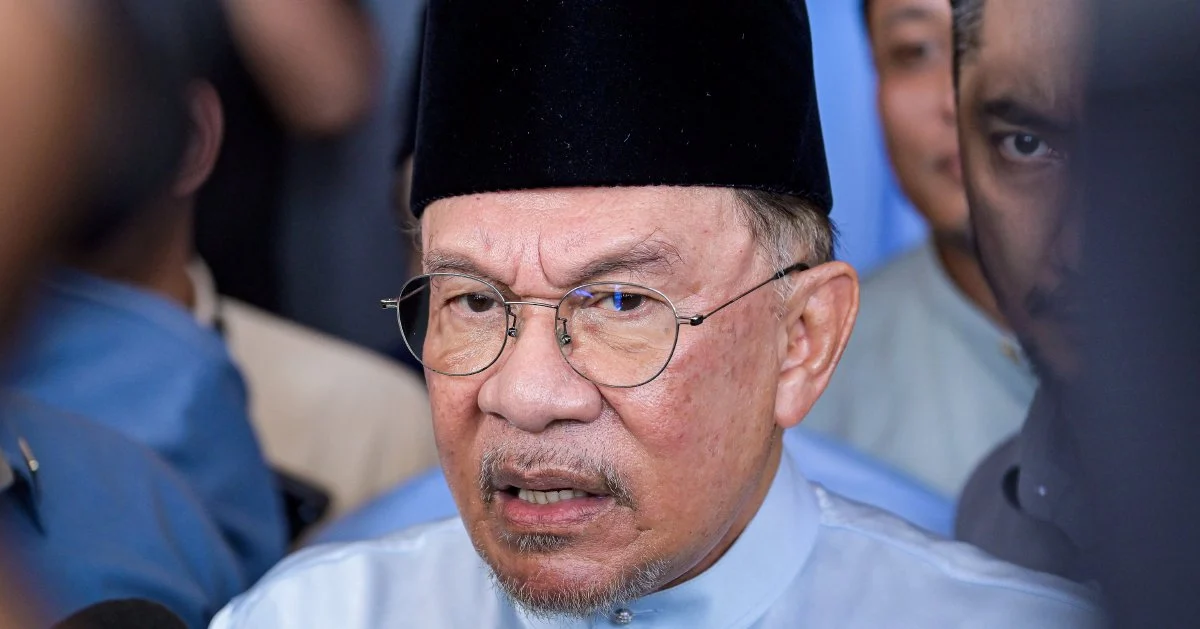
Prime Minister Datuk Seri Anwar Ibrahim has firmly rejected allegations suggesting that caretaker Johor Menteri Besar Datuk Onn Hafiz Ghazi was deliberately prevented from attending functions or accessing Felda settlements, addressing the controversy during remarks in Dengkil.
The denial comes amid growing political tensions in Johor as the state navigates the post-election period. Such claims carry particular weight in the context of ongoing uncertainty surrounding state-level governance and the management of strategic institutions like Felda, which holds substantial influence over rural and agricultural constituencies throughout the peninsula.
The incident highlights broader friction within the political landscape, where access to government facilities, events, and developmental programmes has become a contested terrain between rival political factions. Felda settlements represent significant repositories of political capital, as hundreds of thousands of settlers rely on the organisation for land management, development initiatives, and livelihood support. Control over Felda-related events and announcements thus carries implications that extend well beyond ceremonial significance.
Onn Hafiz has held the position of caretaker Menteri Besar following electoral outcomes that left Johor's political situation in flux. His status as a caretaker leader, rather than a fully installed chief minister, places him in a uniquely vulnerable position—neither fully empowered nor entirely removed from office. This liminal standing may have contributed to the perception that he faced exclusion, whether intentionally orchestrated or simply arising from administrative procedures.
The Prime Minister's intervention to address these allegations personally underscores the seriousness with which the federal leadership views the matter. Rather than allowing the claim to circulate unchallenged, Anwar's direct rebuttal signals both concern about the broader implications and determination to project an image of inclusive governance that transcends factional boundaries. This approach reflects an attempt to project unity and propriety, particularly important during periods of political transition.
The Felda controversy emerges within a wider context of Malaysian politics where perceptions of fair play and institutional neutrality remain fragile. Federal intervention in state-level disputes, or allegations thereof, frequently generate concerns among opposition-aligned observers about the impartial functioning of government machinery. The very fact that such claims gain traction suggests underlying anxieties about potential misuse of state apparatus for political advantage.
For Malaysian stakeholders and international observers, these developments carry relevance beyond Johor's immediate political dynamics. The manner in which transitional governance arrangements function—particularly regarding access to state institutions and public resources—sets precedents for how power transfers are managed at the state level. This impacts the broader trajectory of Malaysia's democratic institutions and the resilience of constitutional norms during periods of political uncertainty.
The timing of this controversy also warrants consideration. Electoral transitions frequently generate disputes over resource allocation, institutional access, and symbolic recognition. How federal and state authorities navigate such contested moments influences public confidence in the impartiality of government institutions and the rule of law. When allegations of exclusion or obstruction emerge, they potentially undermine institutional legitimacy, regardless of their factual foundation.
Onn Hafiz's situation as caretaker leader merits examination in this context. Caretaker arrangements by definition represent temporary measures pending fuller political settlement. The ambiguity surrounding the extent of a caretaker's authority and prerogatives can inadvertently create situations where exclusion appears justifiable under one interpretation but appears partisan under another. Clarifying these procedural norms would serve the broader interests of transparent governance.
The Prime Minister's response, however, essentially closes off immediate scrutiny by asserting that no such instruction existed. This categorical denial, delivered at what appears to be an official engagement, represents the government's definitive public position on the matter. Whether this satisfies all stakeholders, particularly those disposed toward skepticism of federal intentions, remains uncertain.
Moving forward, these dynamics illustrate the continuing salience of institutional access and resource control within Malaysian politics. As federal-state relations evolve and electoral competition intensifies, managing perceptions of fairness becomes increasingly critical for maintaining legitimacy. The Felda controversy, whether ultimately substantiated or not, highlights vulnerabilities in current arrangements and the persistent risk that procedural ambiguities will be exploited for partisan advantage.

