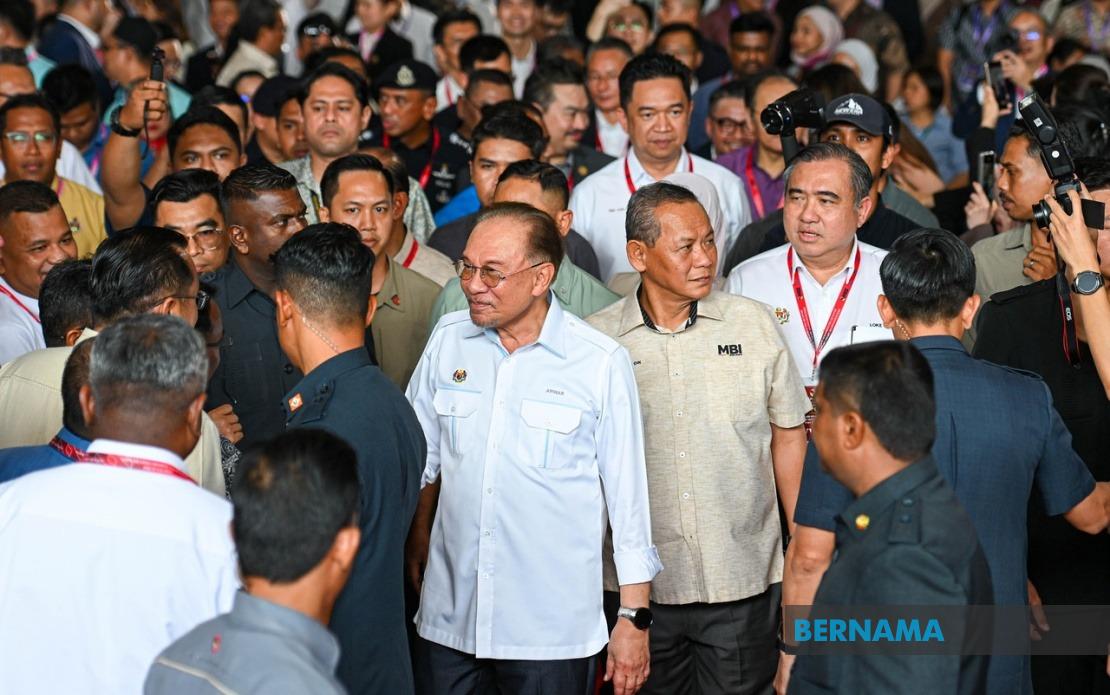
Prime Minister Datuk Seri Anwar Ibrahim has made a direct appeal to Melaka DAP to shelve its controversial decision to exit the state government administration, arguing that the withdrawal threatens to disrupt ongoing development initiatives and public welfare programmes. Speaking after inaugurating the AI-powered Midport Smart Container Terminal project in Port Dickson on July 14, Anwar appealed for restraint and dialogue, positioning himself as a mediator in what has become a significant test of coalition cohesion within Pakatan Harapan's governance structure.
The timing of Anwar's intervention highlights the delicate politics governing Malaysia's most tightly balanced state administrations. Melaka DAP had announced its immediate departure from the state government following the passage of constitutional amendments by the Melaka State Legislative Assembly that would permit the appointment of nominated assemblymen. For DAP, which has long championed democratic principles and electoral competition, the move represented a fundamental betrayal of its ideological foundations. Party chairman Khoo Poay Tiong framed the withdrawal as a principled stand against what DAP characterizes as an anti-democratic provision that undermines the integrity of electoral processes and popular representation.
Yet Anwar's response reveals a contrasting calculus. As Pakatan Harapan chairman navigating the complexities of a fragile ruling coalition, the Prime Minister faces pressure to preserve governmental stability in Melaka while simultaneously managing tensions with DAP. His consultations with DAP secretary-general Anthony Loke and Melaka Chief Minister Datuk Seri Ab Rauf Yusoh suggest efforts behind the scenes to broker a compromise that might satisfy both DAP's democratic concerns and the government's desire for administrative continuity. The invitation to postpone rather than abandon the withdrawal indicates Anwar's preference for deferring the crisis rather than resolving the underlying constitutional disputes.
Anwar's public framing of the dispute downplays its significance, characterizing disagreements among coalition partners as inevitable within any governing arrangement. His suggestion that ideological differences on certain issues need not derail the broader economic and welfare agenda reflects a pragmatic political philosophy that prioritizes immediate governance objectives over abstract principles. This stance, however, risks alienating DAP's core constituency, which has consistently emphasized the party's commitment to democratic governance and constitutional safeguards. The contradiction between Anwar's minimization of the constitutional controversy and DAP's principled opposition exposes deeper fault lines within Pakatan Harapan's coalition.
The constitutional amendment itself warrants closer examination, as nominated assemblymen represent a departure from purely elected representation. Such provisions can theoretically enable non-electoral pathways to legislative seats, potentially diluting the democratic mandate. For DAP, historically skeptical of institutional mechanisms that circumvent electoral processes, the amendment constitutes a betrayal of the democratic principles that justified its participation in the Melaka government. The party's withdrawal, therefore, represents not merely a tactical disagreement but a fundamental reassessment of its coalition partnership.
For Anwar personally, the Melaka situation arrives at a vulnerable moment in his premiership. His government maintains razor-thin parliamentary majorities dependent on cooperation from independent and opposition legislators. Any destabilization in state governments allied with Pakatan Harapan threatens to erode the coalition's perceived organizational coherence and governance capacity. A DAP departure from Melaka could trigger cascading effects, emboldening other component parties to reconsider their own coalition commitments or reinvigorating opposition calls for snap elections.
The constitutional amendment reflects broader tensions in Malaysian politics regarding the balance between democratic principles and executive stability. Different coalition components have historically weighted these considerations differently, with DAP emphasizing democratic fundamentals while other partners prioritize governmental continuity and institutional flexibility. These philosophical differences have simmered beneath Pakatan Harapan's surface since its 2018 formation, occasionally erupting during moments of constitutional disagreement or institutional redesign.
Moreover, the Melaka dispute carries implications for Southeast Asia's broader democratic landscape. Malaysia, as the region's oldest continuous democracy, faces scrutiny regarding its commitment to democratic governance even within progressive coalitions. A compromise that permits constitutional amendments reducing electoral representation while keeping DAP nominally within government could signal that pragmatic coalition management supersedes democratic principles, potentially normalizing similar maneuvers elsewhere in the region.
Anwar's appeal for postponement rather than resolution leaves unresolved the fundamental question of whether the constitutional amendment should proceed. By encouraging negotiation and delay, Anwar implicitly suggests that compromise remains possible, though he offers no indication of substantive concessions that might satisfy DAP's democratic objections. Whether DAP will accept postponement depends on whether party leaders believe negotiations might actually address their concerns or whether the appeal merely represents tactical delay pending subsequent unilateral implementation.
The coming weeks will reveal whether Anwar's intervention succeeds in keeping DAP within the Melaka government or whether the party proceeds with its withdrawal. Either outcome carries consequences for coalition stability and democratic governance. A successful negotiation might preserve administrative continuity while undermining DAP's democratic credibility. A completed withdrawal would demonstrate DAP's principled commitment to democracy while potentially destabilizing the broader coalition and exposing Pakatan Harapan's internal fractures ahead of future electoral contests.
Ultimately, the Melaka situation encapsulates the enduring tension between democratic principles and pragmatic governance that continues to shape Malaysian coalition politics. Anwar's mediation attempt acknowledges both imperatives while satisfying neither fully, suggesting that deeper reconciliation of these competing values remains unresolved within Pakatan Harapan's governing framework.

