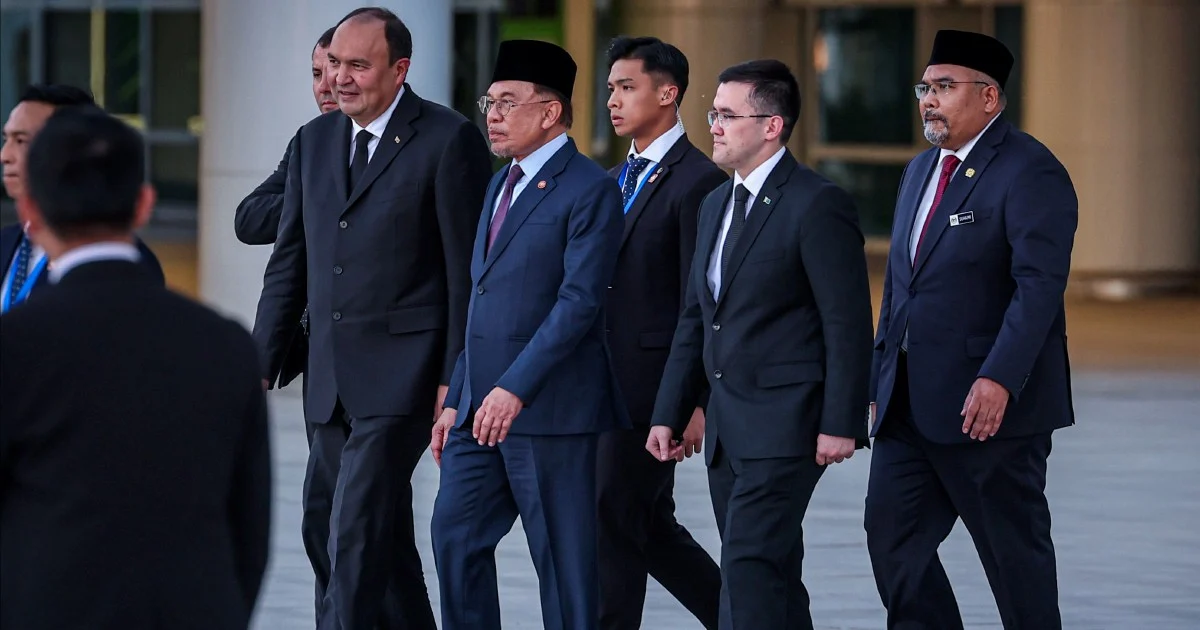
Prime Minister Datuk Seri Anwar Ibrahim's official state visit to Turkmenistan enters its final phase with a series of substantive bilateral meetings aimed at elevating economic cooperation between Malaysia and the energy-rich Central Asian nation. The closing day of engagements in Ashgabat underscores the Malaysian government's strategic pivot toward deepening ties with lesser-known yet economically significant markets beyond Southeast Asia's conventional sphere.
Turkmenistan occupies a geographically and economically distinctive position as one of Central Asia's most resource-endowed nations, with vast natural gas reserves that position it as a critical player in global energy markets. The country's location along the Caspian Sea's eastern littoral makes it a crucial junction for regional commerce and energy transit, connecting markets across Central Asia, the Caucasus, and beyond. For Malaysia, a nation heavily dependent on energy imports and seeking diversified trade partnerships, Turkmenistan represents both a potential energy supplier and an emerging market for Malaysian goods and services.
The timing of Anwar's visit reflects a broader Malaysian foreign policy strategy to expand economic partnerships across Asia's less-explored regions. The meetings scheduled during the final day will encompass discussions on bilateral trade frameworks, potential investment opportunities in sectors ranging from energy and petrochemicals to technology and manufacturing, and collaborative initiatives that could benefit both economies. Such high-level state visits typically facilitate the signing of memorandums of understanding and agreements that create the institutional scaffolding for longer-term business relationships.
From Malaysia's perspective, establishing stronger ties with Turkmenistan opens pathways to accessing Central Asian markets more broadly. The region remains relatively underpenetrated by Southeast Asian businesses, presenting first-mover advantages for Malaysian companies willing to engage with Turkmen enterprises and government bodies. Conversely, Turkmenistan's leadership has shown increasing interest in diversifying its international partnerships beyond traditional Russian and Chinese relationships, making this moment opportune for Malaysian engagement.
The energy dimension carries particular significance for Malaysia's economic interests. With domestic petroleum reserves gradually declining, Malaysia has prioritised securing reliable energy partnerships globally. Turkmenistan's vast natural gas reserves—among the world's largest—theoretically position it as a potential supplier, though infrastructure and geopolitical complexities currently limit direct energy flows to the region. Nevertheless, Malaysian involvement in Turkmen energy projects, whether through service provision, technological expertise, or downstream investment, could emerge as a tangible outcome of closer bilateral relations.
Beyond hydrocarbons, the meetings likely address investment opportunities in Turkmenistan's nascent manufacturing and technology sectors. The Central Asian nation has been gradually opening its economy to foreign direct investment and seeking technological partnerships to modernise infrastructure and industrial capabilities. Malaysian companies with expertise in electronics manufacturing, palm oil processing, telecommunications, and financial services could find receptive audiences among Turkmen officials keen to attract credible Asian investors.
The bilateral talks also carry implications for Malaysia's regional standing in Central Asia. Southeast Asia's economic footprint in Central Asia remains minimal compared to China, Russia, and increasingly Turkey. By establishing closer ties with Turkmenistan, Malaysia positions itself as an alternative source of investment and technical expertise, potentially strengthening Southeast Asia's collective influence in a region historically dominated by either immediate neighbours or distant major powers. This aligns with Malaysia's broader vision of being a bridge between Southeast Asia and emerging markets.
Turkmenistan's political stability and sovereign wealth fund mechanisms—accumulated through decades of energy revenue—also render it an attractive destination for Malaysian capital seeking returns and portfolio diversification. For Malaysian institutional investors and sovereign wealth vehicles, Turkmen development projects in infrastructure and urban expansion offer potential channels for deploying capital in a relatively stable, energy-wealthy environment.
The visit underscores how Prime Minister Anwar Ibrahim's administration continues executing a foreign economic policy centred on pragmatism and opportunity-seeking. Rather than confining Malaysia's business diplomacy to established trading blocs, this approach recognises that growth and prosperity require proactive engagement with diverse markets across Asia, including those in Central Asia that remain unfamiliar to many Southeast Asian audiences. The discussions in Ashgabat thus represent more than ceremonial engagement; they constitute potentially foundational moves in establishing enduring commercial relationships that could generate meaningful economic benefits for Malaysian businesses and workers.
As the visit concludes, the outcomes—whether measured through signed agreements, joint committees established, or business delegations scheduled—will indicate the depth of commitment both nations harbour toward expanding their economic partnership. For Malaysia's broader economic strategy, success in cultivating Central Asian partnerships demonstrates the viability of Look East policies redefined for contemporary geopolitics, where energy security, investment diversification, and market expansion converge in regions historically overlooked by Southeast Asian economies.

%22%2F%3E%3C%2Fpattern%3E%3C%2Fdefs%3E%3Crect%20width%3D%22100%25%22%20height%3D%22100%25%22%20fill%3D%22url(%23ph4l0mzg)%22%2F%3E%3Crect%20width%3D%22100%25%22%20height%3D%22100%25%22%20fill%3D%22url(%23ph4l0mzp)%22%2F%3E%3Ctext%20x%3D%2250%25%22%20y%3D%2250%25%22%20text-anchor%3D%22middle%22%20dominant-baseline%3D%22central%22%20fill%3D%22rgba(255%2C255%2C255%2C0.95)%22%20font-family%3D%22Georgia%2C%20'Times%20New%20Roman'%2C%20serif%22%20font-weight%3D%22700%22%20font-size%3D%22272%22%20letter-spacing%3D%22-0.02em%22%3EAnwar%3C%2Ftext%3E%3C%2Fsvg%3E)