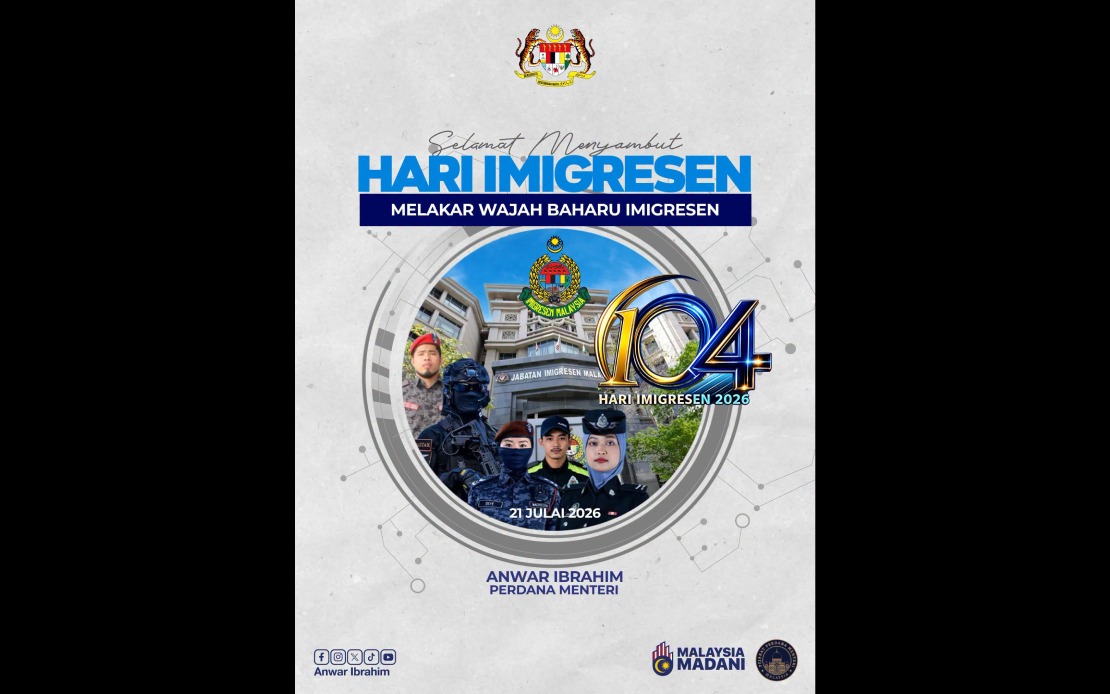
Prime Minister Datuk Seri Anwar Ibrahim has issued a direct appeal to all personnel within the Immigration Department to conduct their duties with unwavering integrity and to categorically reject any form of misconduct or corrupt practices. The message, delivered on Immigration Day, represents a significant public commitment from the nation's leader to maintain ethical standards within one of Malaysia's crucial border control agencies.
The timing of Anwar's statement carries particular weight given the ongoing national discourse surrounding public sector accountability. Immigration departments worldwide face persistent challenges in combating corruption, from border officials soliciting bribes to irregularities in visa processing and permit issuance. By publicly addressing these concerns, Anwar has signalled that the government recognises the importance of maintaining public confidence in immigration systems and the broader civil service apparatus.
Beyond merely condemning corruption, the Prime Minister introduced a framework emphasising compassion alongside rigour. This dual approach suggests recognition that effective immigration administration requires both strict adherence to regulations and sensitive, respectful treatment of citizens and legitimate travellers. The inclusion of compassion in his statement acknowledges that immigration personnel interact daily with vulnerable populations, including migrant workers, refugees, and families seeking to reunite across borders.
The 2026 Immigration Day theme, "Charting a New Face for Immigration," signals an institutional transformation agenda. This suggests the department is positioning itself for modernisation and reform, moving beyond traditional perceptions of immigration work. For Malaysia's growing diaspora and the millions of foreign workers in the country, institutional reform carries tangible implications for service efficiency and fairness.
Anwar's emphasis on efficient and courteous service delivery addresses a persistent criticism of Malaysian immigration bureaucracy. Long processing times, perceived inconsistency in decision-making, and complaints about staff professionalism have historically characterised public feedback on the Immigration Department. By explicitly tying professional service standards to the immigration day commemoration, the Prime Minister has created a public benchmark against which departmental performance can be measured.
The sovereignty protection element highlighted by Anwar remains the cornerstone of any immigration system's mandate. Malaysia's immigration function extends far beyond visa processing; it encompasses security screening, human trafficking prevention, and border integrity maintenance. Emphasising this responsibility reminds personnel that their work directly contributes to national security and public safety, potentially elevating the perceived status of immigration work as a profession.
For Southeast Asia's labour mobility context, this statement carries regional significance. Malaysia hosts one of the largest migrant worker populations in Asia, with millions of foreign nationals working across manufacturing, construction, domestic service, and other sectors. The integrity of immigration administration directly affects how effectively Malaysia can manage this complex movement of people, combat exploitation, and maintain orderly labour market access.
The public nature of Anwar's appeal through social media represents a modern approach to institutional leadership. By addressing immigration personnel directly through a widely accessible platform rather than through internal memoranda, the Prime Minister demonstrates accountability to the public and reinforces that ethical standards are not merely administrative requirements but community expectations. This transparency approach can strengthen institutional culture by making ethics a public conversation rather than a behind-the-scenes concern.
Corruption within immigration systems often operates through networks of complicity, where compromised officials facilitate human trafficking, document fraud, or illegal border crossing. When leadership publicly commits to integrity and signals zero tolerance for irregularities, it theoretically disrupts these networks and raises the perceived risk of participation for would-be offenders. However, translating public statements into sustained institutional change requires comprehensive implementation mechanisms, training programmes, and accountability structures.
The reference to elevating Malaysia's international reputation through immigration work suggests awareness that a country's immigration administration contributes to its global standing. Nations perceived as maintaining secure, fair, and efficient borders attract legitimate investment and skilled talent while deterring criminal activity. For Malaysia, which competes regionally for foreign direct investment and professional talent, immigration system credibility represents a tangible economic asset.
Looking forward, the challenge for the Immigration Department lies in translating the Prime Minister's directives into sustained operational change. This requires addressing root causes of corruption, including adequate personnel compensation, clear career progression pathways, and manageable workloads. Without addressing systemic pressures that sometimes drive officials toward corrupt practices, repeated calls for integrity may yield limited results.
The intersection of integrity, compassion, and sovereignty protection articulated by Anwar reflects international best practice in immigration governance. Progressive democracies increasingly recognise that secure borders and humane treatment are complementary rather than contradictory objectives. For Malaysia's continuing development as a sophisticated economy integrating global labour flows and managing complex migration patterns, this balanced approach offers a constructive framework for institutional evolution.

