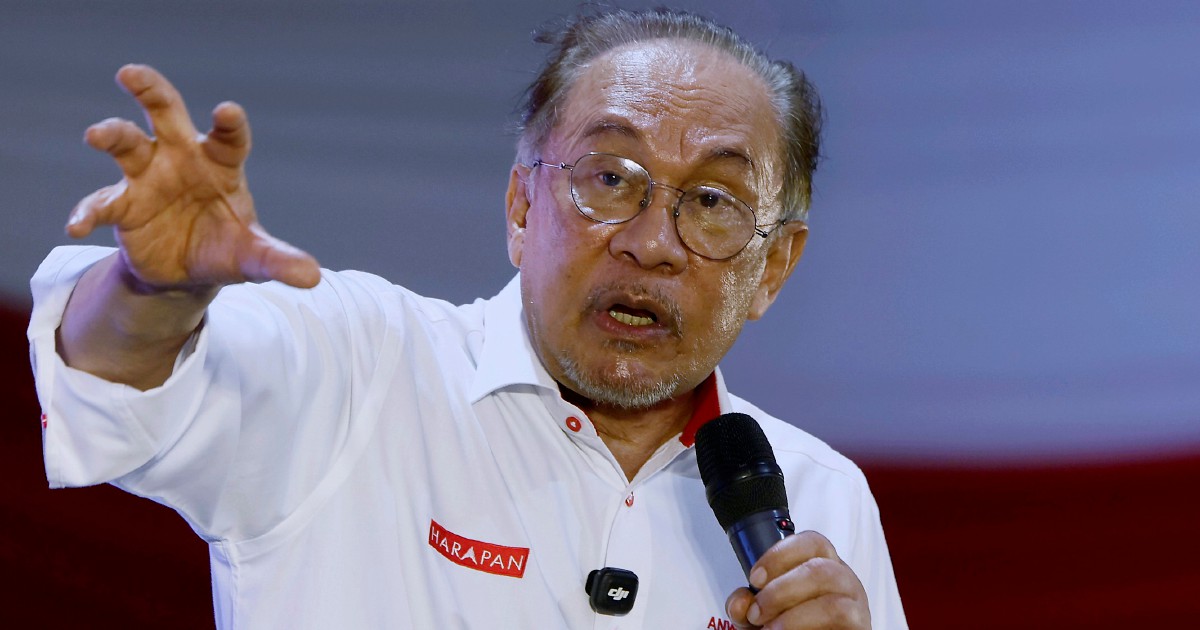
Prime Minister Datuk Seri Anwar Ibrahim has called upon all political parties competing in the upcoming Johor state election to abstain from capitalising on the contentious matter of Datuk Seri Najib Razak's release during their campaign activities. Speaking in Kulai, the Prime Minister sought to establish boundaries around what he views as an unproductive line of political debate, as parties prepare their messaging strategies for the polls.
The release of the former Prime Minister, who had been serving a prison sentence related to his 1Malaysia Development Berhad (1MDB) convictions, has emerged as a sensitive and divisive topic within Malaysian politics. His conditional freedom has become a flashpoint for different political factions, each interpreting the development through their own ideological and strategic lenses. The controversy underscores the lingering divisions in Malaysian society over issues of governance accountability and the handling of high-profile criminal cases involving prominent political figures.
Anwar's intervention reflects a broader concern about maintaining the integrity of electoral contests. Election campaigns in Malaysia have historically been prone to provocative messaging designed to inflame existing tensions and polarise the electorate. By explicitly asking parties to avoid weaponising the Najib matter, the Prime Minister appears to be signalling that such tactics undermine constructive political discourse and could damage the democratic process itself. His appeal suggests awareness that the Johor election could become unnecessarily acrimonious if this particular issue remains central to campaign narratives.
The Johor state election holds particular significance within Malaysia's broader political landscape. Johor remains a traditionally strong Barisan Nasional state, though recent electoral shifts have altered the political dynamics across the country. The upcoming polls will test the current political coalition's grip on the crucial state, where multiple parties are vying for voter support. Campaign messaging and the tone of political debate during this period could influence not only state-level outcomes but also reflect broader patterns in Malaysian electoral behaviour.
For Anwar's government specifically, the plea for restraint on the Najib matter carries multiple implications. His administration has maintained a hands-off approach to the judicial proceedings and conditional release decisions affecting his predecessor, positioning itself as supporting institutional independence. By requesting that campaigns avoid this divisive subject, the Prime Minister reinforces that stance while simultaneously attempting to preserve political cohesion within the ruling coalition, which includes parties with varying relationships to the former premier and differing views on how his case should be treated.
The issue of how former leaders should be treated by the justice system remains deeply contentious in Malaysian politics. Some view Najib's conditional freedom as warranted compassion for a former statesman, while others regard it as insufficient accountability for actions they believe damaged national interests. This fundamental disagreement about justice and governance reflects broader fault lines in Malaysian society that extend far beyond individual personalities. These divisions have proven difficult to bridge through political dialogue alone.
Political parties contesting the Johor election face a strategic calculation regarding Anwar's request. For some factions, avoiding the Najib matter might represent a genuine acceptance of the Prime Minister's call for restraint. For others, maintaining silence on a topic they view as critical could prove politically costly with their respective voter bases. Different parties have different stakes in how this issue plays out, both in terms of electoral support and in maintaining their own internal cohesion among supporters with divergent views on the matter.
The timing of Anwar's statement, made during active campaigning preparations, suggests an attempt to establish norms before the election campaign enters its most intense phase. Once campaigns are in full swing with intensive rallies, media buys, and social media engagement, controlling narrative focus becomes significantly more difficult. By making this appeal now, the Prime Minister hopes to establish expectations that political parties will self-regulate their messaging, thereby avoiding the need for formal intervention later.
Myalaysian election campaigns have increasingly become arenas where sensitive historical and political grievances are revisited and weaponised for electoral advantage. The request to deprioritise the Najib release issue reflects a broader tension in Malaysian democracy between the desire for accountability and reconciliation on the one hand, and the need for political stability and functional governance on the other. How parties respond to Anwar's call will indicate whether there exists sufficient political maturity and consensus around managing these deeply divisive issues constructively.
The success of Anwar's appeal will become evident in the coming weeks as campaign activities intensify across Johor. Whether parties honour this request will communicate important signals about the health of Malaysia's political institutions and the willingness of political actors to prioritise democratic values over short-term electoral advantage. The Johor election may ultimately serve as a test case for whether Malaysian politics can address past injustices while simultaneously moving toward a more unified electoral future.

