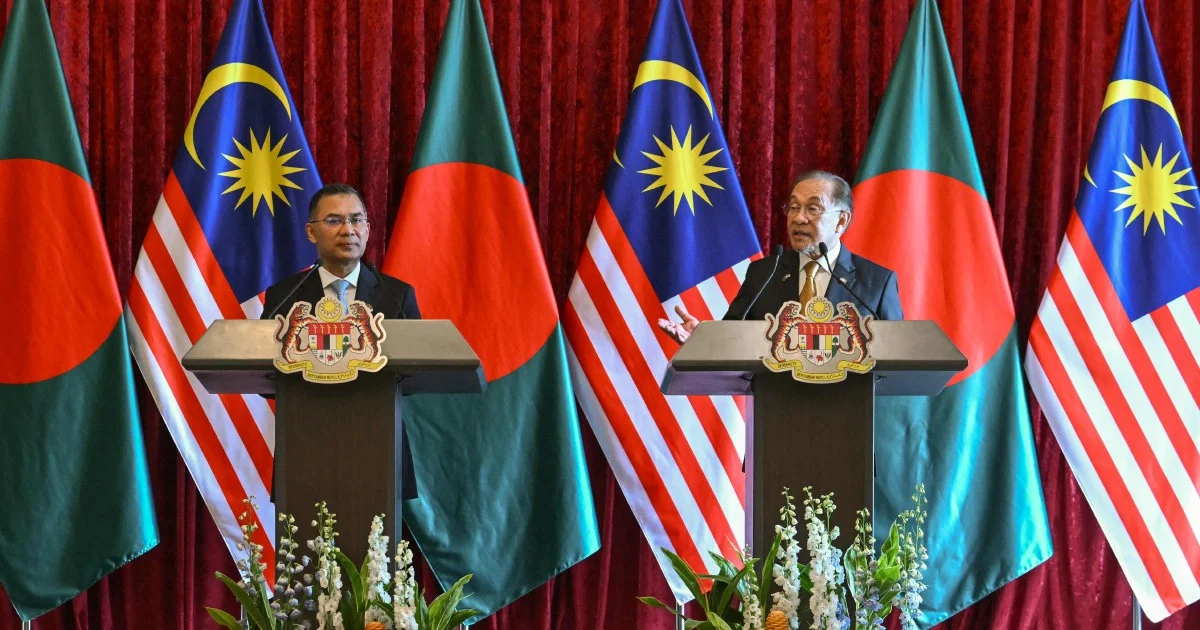
Prime Minister Datuk Seri Anwar Ibrahim has committed to dismantling systemic exploitation affecting Bangladeshi migrant workers, recognising their fundamental importance to Malaysia's continued economic productivity and development.
Anwar's pledge represents a significant statement of intent from the nation's highest political office regarding the treatment of foreign labour. The Prime Minister framed his commitment within the broader context of Malaysia's reliance on migrant workers, positioning the protection of Bangladeshi nationals as both a moral imperative and an economic necessity. His remarks underscore growing awareness among Malaysia's leadership of the critical role that migrant labour plays in sustaining growth across multiple sectors of the economy.
Bangladeshi workers form one of the largest migrant labour populations in Malaysia, contributing substantially to construction, manufacturing, domestic work, and agriculture. Their presence has become structurally embedded in Malaysia's labour market, making any disruption to their working conditions or supply a potential risk to economic stability. The Prime Minister's explicit acknowledgement of this dependency signals a shift towards recognising migrant workers not as peripheral labour, but as core contributors to national prosperity.
The issue of worker exploitation in Malaysia has drawn increasing scrutiny from international labour organisations and human rights groups in recent years. Documented cases of wage theft, unsafe working conditions, contract violations, and restrictions on movement have prompted calls for stronger enforcement of existing protections and the introduction of new safeguards. Anwar's public commitment to stamp out such abuses indicates that the federal government is responding to mounting pressure to address these systemic failures.
Malaysia's track record on migrant worker protection remains mixed, with enforcement mechanisms often hampered by resource constraints, corruption, and the informal nature of much migrant employment. Previous administrative efforts to regulate the sector have achieved limited results, partly because vulnerabilities in visa systems, housing arrangements, and wage payment mechanisms create opportunities for exploitation before worker protections can take effect. Anwar's pledge will be tested against the capacity of government agencies to implement meaningful change.
The Bangladesh government has maintained ongoing diplomatic engagement with Malaysian authorities over working conditions and wage issues affecting its citizens abroad. Remittances from Malaysian employment represent a significant income source for many Bangladeshi families, making labour mobility crucial to poverty reduction efforts in Bangladesh. Any deterioration in working conditions or wages could affect both bilateral relations and Bangladesh's economic development trajectory.
For Malaysian employers, particularly in labour-intensive sectors, clearer standards and compliance mechanisms could ultimately strengthen the integrity of the migrant labour supply chain. While stricter enforcement may impose transition costs on certain businesses, it could reduce the reputational risks associated with exploitation and enhance Malaysia's standing as a responsible employer of foreign labour. This framing potentially positions worker protection as beneficial to responsible businesses rather than merely imposing costs.
Regional dynamics also influence how Malaysia approaches migrant worker issues. Vietnam, Thailand, and Indonesia all manage substantial outflows of migrant labour, and Malaysia's regulatory approach sets a precedent for how Southeast Asian host countries treat foreign workers. A commitment to stronger protections could enhance Malaysia's soft power standing in the region and demonstrate leadership on labour standards that competitor nations might feel compelled to match.
The effectiveness of Anwar's pledge will depend significantly on resource allocation, inter-agency coordination, and the establishment of accessible complaint mechanisms that migrant workers can utilise without fear of retaliation or deportation. Previous initiatives have foundered partly because workers lacked confidence in reporting mechanisms or faced employer retaliation when attempting to raise grievances. Building trust between migrant communities and enforcement authorities represents a prerequisite for meaningful change.
Implementing stronger protections also requires engagement with the informal networks through which much migrant recruitment and employment occurs. Labour brokers, sub-contractors, and employment agencies—many of which operate outside formal oversight—play substantial roles in connecting Bangladeshi workers to Malaysian employers. Addressing exploitation at source requires extending regulatory reach into these informal channels and establishing clearer accountability for intermediaries.
The Bangladesh-Malaysia labour relationship carries historical weight and mutual importance that extends beyond employment data. Strengthening worker protections aligns with international labour standards advocated by the International Labour Organization and reflects Malaysia's broader positioning as a developing economy with responsibility to other emerging nations. Anwar's commitment can be understood as part of a larger effort to establish Malaysia's credentials on labour rights and sustainable development.
Moving forward, the credibility of this pledge will be measured through concrete policy changes, enforcement outcomes, and improvements in working conditions reported by Bangladeshi workers themselves. The Malaysian government will need to demonstrate sustained commitment through budgetary allocations, staff training, and genuine coordination among multiple agencies responsible for labour matters, from the Ministry of Human Resources to local enforcement authorities.

