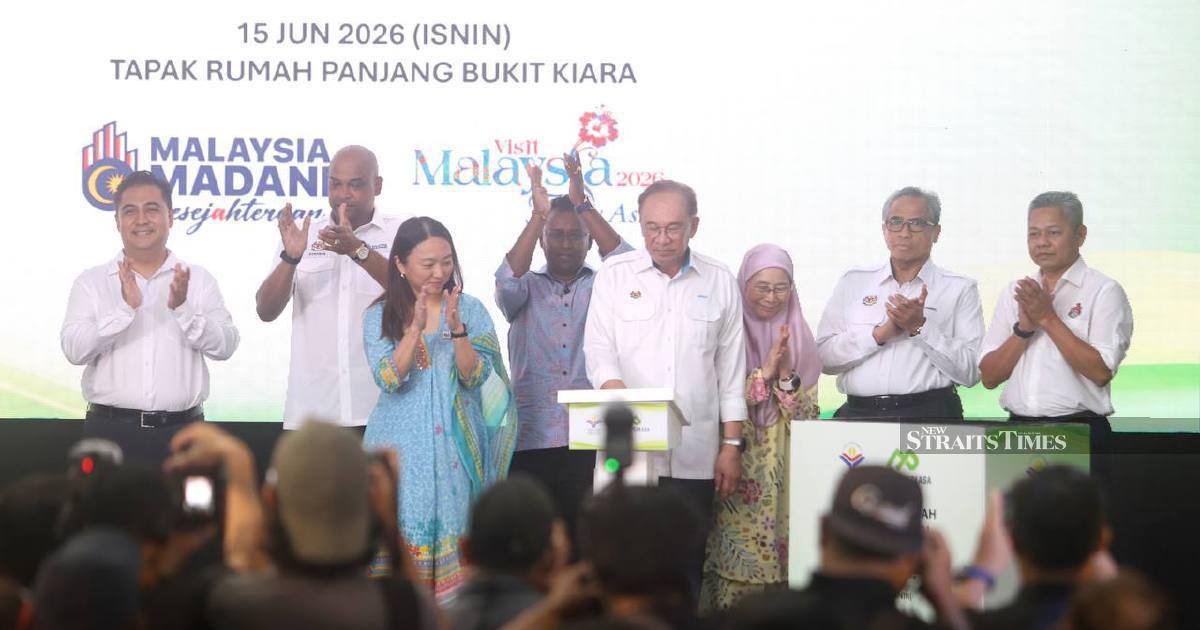
Prime Minister Datuk Seri Anwar Ibrahim has issued a stark warning to the Malaysian public about the dangers of allowing politicians to weaponise racial grievances for electoral advantage. Speaking to constituents, the premier stressed that communities across the country suffer disproportionately when political actors prioritise divisive messaging over constructive governance.
Anwar's intervention comes at a time of heightened political competition in Malaysia, with various factions employing increasingly polarising rhetoric. The Prime Minister's message targets not just individual politicians but the broader ecosystem that enables such campaigns to gain traction. By appealing directly to voters, Anwar attempts to shift the narrative away from zero-sum racial framing toward a more inclusive national conversation.
The economic implications of racial polarisation have become increasingly apparent in Malaysian discourse. When communities retreat into ethnic enclaves and distrust deepens across group lines, investment hesitates, tourism suffers, and labour mobility declines. Small and medium enterprises, which form the backbone of Malaysia's economy, operate most efficiently in environments of social cohesion and cross-community trust. Anwar's warning reflects an understanding that short-term political gains from divisive campaigns carry steep long-term costs for national prosperity.
Malaysia's historical experience with communal tensions provides sobering context for the Prime Minister's message. The nation's social fabric has, over decades, developed a largely functional if occasionally fragile equilibrium. This balance depends not on artificial suppression of identity but on mutual respect and institutional mechanisms that prevent competition over resources from devolving into ethnic conflict. Recent years have seen external pressures and domestic political opportunism test these mechanisms repeatedly.
Anwar's positioning on this issue reflects broader strategic calculations within his administration. The Prime Minister leads a coalition government built on cross-community support and depends on maintaining that coalition's stability. Political movements that exploit racial resentment threaten not only social harmony but the specific governing arrangements that sustain his administration. His warnings thus serve both principled and pragmatic purposes.
The resilience of Malaysian voters against divisive messaging remains a contested question in political analysis. While opinion surveys suggest most Malaysians value unity and worry about communal violence, localised mobilisation around ethnic or religious issues has repeatedly proven effective in specific constituencies. Anwar's appeal essentially argues that while tactical exploitation of grievances may yield short-term electoral returns, these gains come at the expense of broader prosperity and stability that ultimately benefits no community.
Regional implications of Malaysia's internal political dynamics extend beyond national borders. Southeast Asia contains numerous multi-ethnic democracies grappling with similar challenges. Malaysia's approach—neither enforcing uniformity nor allowing unchecked identity-based mobilisation—offers lessons for the region. If Malaysia experiences a degradation of its historical consensus on managing diversity, the repercussions would reverberate through ASEAN's relatively peaceful regional order.
Young voters, who constitute an increasingly large demographic segment, appear somewhat less susceptible to traditional ethnic-based campaigning than older cohorts. Anwar's message targets this generation alongside others, suggesting that appeals to shared interest and national dignity may resonate where older voting blocs proved receptive to divide-and-rule strategies. Digital platforms have complicated this landscape, enabling both coalition-building and micro-targeted divisive messaging simultaneously.
Civil society organisations and religious leaders have complementary roles to play in reinforcing Anwar's message. When community leaders across ethnic and faith lines publicly endorse inclusive governance, they create social pressure against politicians employing divisive tactics. Malaysia's relatively organised civil society offers potential for coalition-building around shared values of harmony and prosperity that cuts across traditional demographic lines.
The medium-term political challenge involves translating such warnings into institutional changes that make divisive politics less attractive. This might include reforms to electoral systems, media regulation, or campaign finance rules that reduce incentives for polarising rhetoric. Without structural adjustments, relying on periodic appeals to voters' better instincts may prove insufficient as political competition intensifies.
Opposition figures will likely respond that Anwar's warnings apply selectively and that his government itself engages in community mobilisation around certain issues. The credibility of such messaging depends partly on whether voters perceive it as coming from a government genuinely committed to transcending communal politics or one attempting to monopolise particular constituencies while preaching unity.
Looking forward, the sustainability of Anwar's coalition government may ultimately depend on whether his anti-divisive messaging translates into material improvements in Malaysians' daily lives. When economic opportunities expand, employment grows, and public services improve across communities, the appeal of blame-oriented politics naturally diminishes. Conversely, if communities experience stagnation or declining opportunities, even strong warnings from leadership may prove insufficient to counteract resentment-based mobilisation.
The Prime Minister's intervention represents an important restatement of principles that underpin Malaysia's social contract. Whether these principles can withstand contemporary political and economic pressures remains the central question facing the nation's future direction.

