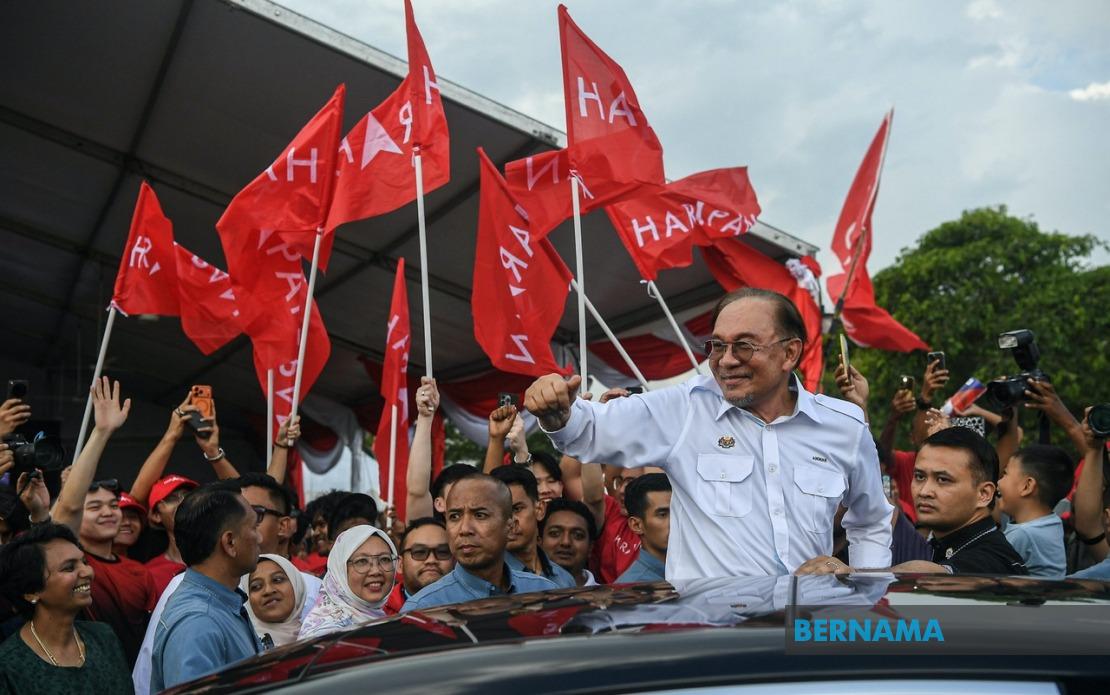
Prime Minister Datuk Seri Anwar Ibrahim's intensive campaign schedule across Johor has delivered a tangible momentum boost to Pakatan Harapan's bid to consolidate power in the state, Communications Minister Datuk Fahmi Fadzil reported this week. The visible enthusiasm from voters encountered during the coalition's campaign trail suggests the PH chairman's direct engagement with communities is translating into measurable political dividends as the 16th Johor State Election approaches its climax.
Fahmi, who doubles as PH's communications director, witnessed firsthand the spontaneous warmth extended to the Prime Minister during recent stops in the Batu Pahat district. His observations paint a picture of voters actively seeking connection with national leadership, a factor that campaign strategists believe could prove decisive in a closely contested electoral contest. The most striking anecdote involved an elderly resident who transported his wife by trishaw specifically to greet Anwar, exemplifying the grassroots appeal the Prime Minister continues to command in the state.
The intensity of Anwar's involvement in the Johor campaign underscores the strategic importance Kuala Lumpur places on maintaining PH's control of this crucial southern state. Between Saturday and Sunday in the first week of July, the Prime Minister participated in 15 separate campaign events spanning the state, a gruelling schedule designed to energise party machinery and demonstrate coalition commitment to Johor's electorate. This hands-on approach contrasts with campaigns where national leaders maintain a more circumscribed presence, suggesting confidence in Anwar's personal appeal across demographic groups.
Fahmi characterised the community responses as reflecting deeper acceptance of Pakatan Harapan's broader campaign narrative throughout the election period. Rather than viewing enthusiastic turnouts as mere curiosity-seeking, the communications minister interpreted the evident appetite to meet and hear from the Prime Minister as indicating genuine interest in PH's policy platform and vision for Johor's development. This interpretation carries implications for how party strategists anticipate voter behaviour on election day, suggesting they believe engagement with Anwar translates into actual electoral support rather than passive interest.
The scale of PH's electoral ambitions in Johor remains substantial. The coalition has fielded candidates across all 56 State Legislative Assembly constituencies, positioning itself as the only major contender presenting a comprehensive slate of representatives to voters. This full-strength approach differs markedly from opposition parties that have opted for more selective fielding strategies, and reflects confidence that the PH machinery has recovered sufficiently from previous electoral disappointments to compete vigorously in every corner of the state.
The overall electoral contest involves 172 candidates competing for the 56 available seats, creating a fragmented field where vote distribution and tactical voting could prove decisive. Early voting commenced immediately prior to Fahmi's remarks, with the main polling day scheduled for Saturday, July 11. This compressed timeline means the final week of campaigning becomes particularly crucial for parties seeking to consolidate voter support or peel away uncommitted voters from rival coalitions.
Anwar's campaigning record in Johor carries historical significance given his long association with the state and his profile among its diverse communities. His presence serves not merely as ceremonial endorsement of local candidates but as a direct appeal to voters based on his personal standing and track record. For supporters of the coalition, his participation reinforces perception of central government engagement with state-level concerns; for uncommitted voters, his accessibility offers opportunity to assess leadership capability directly rather than through mediated messaging.
The strategic calculation underlying this high-profile campaign intensity reflects recognition that state elections increasingly function as referendums on national government performance. Voters in Johor, like their counterparts nationwide, often use state contests to register satisfaction or dissatisfaction with federal administration, policy directions, and economic management. By inserting himself prominently into the Johor campaign narrative, Anwar positions himself directly in relation to this assessment, betting that positive voter sentiment toward his administration will translate into electoral support for PH candidates.
For Malaysian political observers, the Johor election carries significance extending beyond the state's boundaries. As one of the nation's most populous and economically significant states, Johor elections frequently serve as bellwethers for broader national political trends. A strong PH performance would consolidate the coalition's recovery from the 2020-2022 period when it faced internal fractures and loss of federal power. Conversely, setbacks would invite questions about the sustainability of the current PH-led federal administration's political base, with implications for subsequent electoral contests at both state and national levels.
The grassroots enthusiasm documented by Fahmi suggests that at least among segments of the Johor electorate encountered during campaign events, Anwar's personal popularity remains an asset to the coalition. Whether this translates into sufficient electoral advantage to secure or expand PH's state legislative majority will become apparent once voting concludes and results are tabulated. The coming days will determine whether the apparent momentum observed during the campaign period converts into actual electoral performance.

